
Multi-Step Chain Reaction Puzzle Tactics
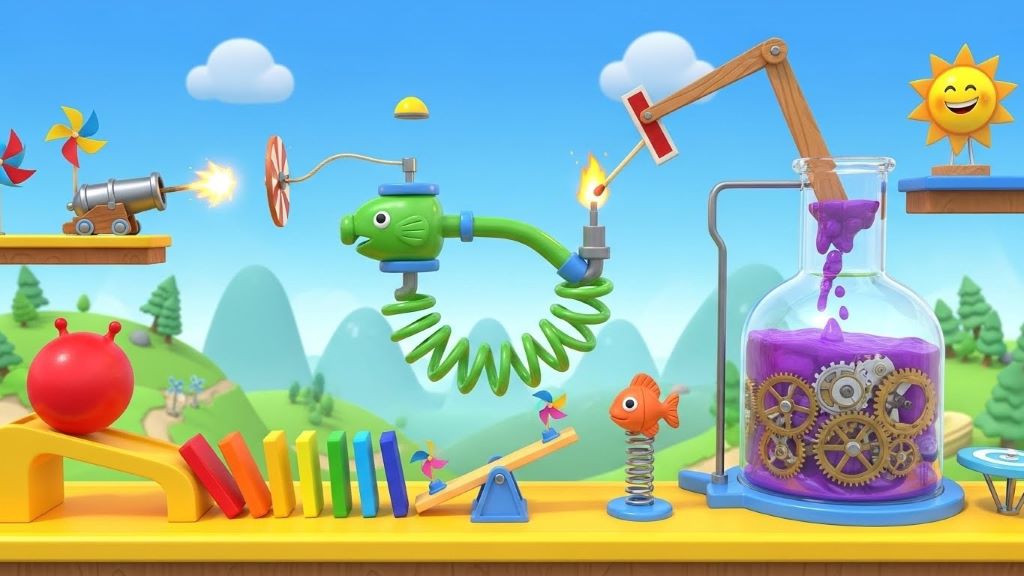
Chain reaction puzzles represent some of the most satisfying challenges in gaming. These brain-teasers require players to think several moves ahead, creating cascading effects that solve complex problems. Gaming enthusiasts at Newtibia have long celebrated these intricate designs for their ability to engage critical thinking skills. Additionally, mastering these puzzles provides a unique sense of accomplishment that keeps players coming back for more.
Understanding Chain Reaction Mechanics
Chain reaction puzzles work by connecting multiple elements in sequence. When you trigger one action, it sets off a domino effect. Therefore, success depends on visualizing the entire sequence before making your first move. This type of puzzle video game gameplay challenges players to think spatially and temporally, combining pattern recognition with strategic planning.
The beauty of these mechanics lies in their elegant simplicity. However, simple rules can create incredibly complex scenarios. Each element interacts with others in predictable ways, yet the combinations feel endless. Players must understand how different components behave individually before orchestrating them into a functioning whole.
Core Tactics for Success
Start with the End Goal
Every chain reaction puzzle has a specific objective. Consequently, working backwards often reveals the solution path. Identify what final state you need to achieve. Then, trace the steps required to reach that conclusion. This reverse engineering approach eliminates unnecessary moves and focuses your strategy.
Map Out Critical Nodes
Critical nodes are points where multiple chains intersect. These locations deserve special attention because they affect several sequences simultaneously. Therefore, positioning elements at these junctions creates maximum efficiency. Players who identify these spots early gain significant advantages in complex puzzles.
Test Individual Chains First
Breaking down complicated puzzles into smaller segments makes them manageable. Test each chain reaction independently before combining them. This methodical approach helps identify weak points in your strategy. Additionally, it builds confidence as you confirm each section works correctly.
Common Puzzle Elements and Their Functions
Timing-Based Triggers
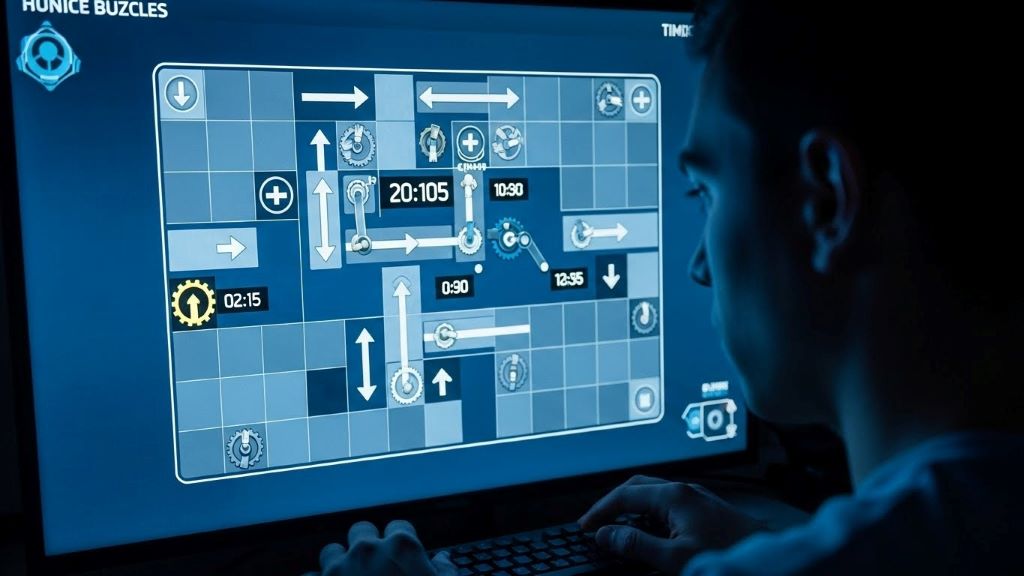
Many chain reaction puzzles incorporate timing elements. These require precise coordination between different sequences. For example, one chain might need to complete before another begins. Mastering timing means understanding delay mechanics and planning accordingly. Games like The Incredible Machine pioneered these concepts, as noted by IGN’s retrospective on puzzle game evolution.
Directional Components
Directional elements redirect forces or objects within the puzzle space. Mirrors, ramps, and tunnels fall into this category. Therefore, positioning these components correctly determines whether your chain succeeds or fails. Think of them as the plumbing of your reaction system.
Amplifiers and Reducers
Some elements increase or decrease the intensity of effects passing through them. Amplifiers multiply forces, while reducers dampen them. Balancing these opposing forces creates stability in complex chains. However, misusing them can cause the entire system to collapse.
Advanced Strategies for Complex Puzzles
Create Backup Chains
Experienced players build redundancy into their solutions. If one path fails, backup chains provide alternative routes to success. This safety net approach reduces frustration and speeds up problem-solving. Additionally, backup systems often reveal more efficient solutions than the original plan.
Utilize Parallel Processing
Running multiple chains simultaneously maximizes efficiency. Parallel processing means triggering several sequences at once rather than sequentially. This tactic becomes essential in timed puzzles where speed matters. However, it requires careful coordination to prevent chains from interfering with each other.
Exploit Environmental Features
The puzzle environment often contains hidden advantages. Gravity, momentum, and physics interactions can be leveraged creatively. Therefore, observant players gain extra tools beyond the obvious components. Look for ways the environment naturally supports your chain reactions.
Learning from Failed Attempts
Analyze Break Points
When a chain reaction fails, identify exactly where it broke down. Was the timing off? Did an element malfunction? Understanding failure points teaches valuable lessons. Each mistake reveals something about the puzzle’s underlying logic.
Iterate Quickly
Don’t spend too much time planning the perfect solution. Instead, test ideas rapidly and adjust based on results. Quick iteration builds intuition faster than theoretical planning. Moreover, hands-on experimentation often reveals unexpected solutions.
Document Successful Patterns
Keep mental or physical notes about patterns that work. Certain configurations appear repeatedly across different puzzles. Recognizing these patterns accelerates your problem-solving speed. Therefore, building a mental library of solutions proves invaluable.
Psychology of Chain Reaction Puzzles
The Satisfaction Factor
Chain reaction puzzles provide unique psychological rewards. Watching your carefully planned sequence unfold successfully triggers dopamine release. This satisfaction comes from both the planning phase and the execution. Consequently, these puzzles can be genuinely addictive in the healthiest sense.
Building Patience and Persistence
These puzzles teach valuable life skills beyond gaming. They require patience to plan carefully and persistence to keep trying after failures. Additionally, they demonstrate that complex problems often have elegant solutions. The mental discipline developed transfers to real-world problem-solving situations.
Spatial Reasoning Development
Regular engagement with chain reaction puzzles enhances spatial reasoning abilities. Players develop better mental rotation skills and improved visualization capabilities. Research from cognitive psychology, as discussed in Scientific American, suggests puzzle games can strengthen these cognitive functions over time.
Practical Tips for Beginners
Start with simpler puzzles to build foundational skills. Don’t rush into the most complex challenges immediately. Therefore, gradual progression ensures you understand basic mechanics thoroughly. Watch solution videos for puzzles that completely stump you, but only after giving them serious effort.
Practice visualizing chains before executing them. Close your eyes and imagine each step unfolding. This mental rehearsal improves your planning abilities significantly. Additionally, it helps identify potential problems before wasting time on doomed attempts.
Join online communities dedicated to puzzle games. Fellow enthusiasts share strategies, tips, and creative solutions. These communities provide support during frustrating moments and celebrate your successes. Moreover, seeing how others approach problems expands your tactical repertoire.
Common Mistakes to Avoid
Overcomplicating Solutions
Many players create unnecessarily complex chains when simpler solutions exist. Elegance often means using fewer components more effectively. Therefore, always ask whether you can achieve the same result with less. The best solutions usually feel obvious in hindsight.
Ignoring Tutorial Information
Games provide tutorials for good reasons. Skipping them means missing crucial mechanics that become essential later. Take time to absorb tutorial lessons fully. However, don’t be afraid to experiment beyond what tutorials explicitly teach.
Giving Up Too Quickly
Chain reaction puzzles sometimes require dozens of attempts. Persistence separates successful players from those who quit. Therefore, embrace the challenge rather than viewing failure negatively. Each attempt brings you closer to the solution.
Conclusion
Multi-step chain reaction puzzles offer intellectually stimulating entertainment that exercises critical thinking skills. By understanding core mechanics, applying strategic tactics, and learning from each attempt, players can master even the most complex challenges. These puzzles teach patience, spatial reasoning, and creative problem-solving while providing deeply satisfying gameplay experiences. Whether you’re a beginner or experienced enthusiast, the principles outlined here will enhance your chain reaction puzzle capabilities and deepen your appreciation for this elegant game design genre.
Frequently Asked Questions
What makes a good chain reaction puzzle?
A good chain reaction puzzle balances challenge with fairness. It should have clear rules, logical solutions, and provide that satisfying moment when everything clicks into place. The best puzzles teach mechanics gradually while offering multiple solution paths.
How long should I spend on one puzzle before looking up the solution?
This depends on personal preference, but generally, spend at least 20-30 minutes seriously attempting a puzzle. If you’re completely stuck with no new ideas, taking a break or seeking hints prevents frustration. However, pushing through difficulty builds stronger problem-solving skills.
Do chain reaction puzzles improve real-world skills?
Yes, these puzzles enhance spatial reasoning, planning abilities, and systematic thinking. The skills of breaking complex problems into manageable parts and thinking several steps ahead transfer directly to professional and personal challenges.
What are some popular games featuring chain reaction puzzles?
Classic titles include The Incredible Machine, Crazy Machines, and Rube Goldberg-style games. Modern examples include Portal 2’s puzzle elements, Baba Is You’s rule-chaining mechanics, and various physics-based puzzle games on mobile platforms.
Can chain reaction puzzles be too difficult?
While difficulty is subjective, poorly designed puzzles with unclear rules or unfair mechanics can frustrate rather than challenge. Good puzzle design provides enough information for players to logically deduce solutions, even if those solutions are complex.
Related Topics:
What Is PS5 Controller Stick Drift?
Best Apps That Teach Emotional Intelligence to Kids: A Parent’s Journey