How to Choose the Best Skateboard for First-Time Kid Riders
Watching your child take their first ride on a skateboard is exciting. However, choosing the wrong board can make the experience frustrating or even unsafe. Kids have unique needs that differ greatly from adult skaters, and picking the right equipment makes all the difference.
Many parents walk into a skate shop and feel instantly overwhelmed. There are so many sizes, styles, and brands to choose from. Therefore, knowing what to look for before you shop can save you time, money, and a lot of headaches.
This guide covers everything you need to know to choose the best skateboard for your young rider. From deck size to wheel hardness, we break it all down in simple terms.
Why the Right Board Matters for Young Beginners
Children are not just small adults. Their bodies are still growing, and their balance and coordination are still developing. A board built for a teenager or adult may be too heavy, too wide, or too stiff for a young child to handle safely.
Additionally, kids can lose confidence quickly if they struggle with their equipment. A board that is too difficult to control makes learning harder. The right board, however, builds confidence and encourages practice.
Safety is another major reason to choose carefully. The wrong board increases the risk of falls and injuries. Starting with a properly sized, age-appropriate setup gives kids a better chance of learning quickly and staying safe in the process.
Choosing the Right Deck Size for Your Child
The deck is the flat board your child stands on. Its width is measured in inches, and choosing the right size depends largely on your child’s age, shoe size, and height.
Deck Width Guidelines by Age
- Ages 5 to 7: A deck width of 6.5 to 7.0 inches works well for small children just starting out.
- Ages 8 to 10: A width of 7.0 to 7.5 inches offers better stability as kids grow.
- Ages 11 and up: A deck of 7.5 to 8.0 inches suits pre-teens approaching adult sizes.
A narrower deck is easier for small feet to control. It also weighs less, which helps younger kids manage the board more naturally. However, going too narrow removes stability, so stick within the recommended ranges.
The deck length also matters. Most kids’ decks range from 28 to 31 inches. Shorter boards are lighter and easier to maneuver, which makes them great for beginners.
Why a Lightweight Skateboard Is Best for Kids
Weight plays a huge role in how easy a board is to ride. A lightweight skateboard for kids is much easier to carry, kick, and control. Heavy boards tire young riders out quickly and make basic movements feel awkward.
Lighter boards also respond faster to movement. When a child shifts their weight or pushes off, a lighter board reacts more quickly. This responsiveness helps beginners feel more in control of what the board is doing beneath their feet.
To keep the overall weight down, look for boards made from maple wood, which provides strength without adding bulk. Avoid heavy metal hardware and oversized components. Smaller trucks and compact wheels also reduce total weight significantly.
Therefore, when comparing boards in a store or online, always check the overall weight. A complete kid-sized board should generally weigh between 3 and 5 pounds. Anything heavier may be too much for a young beginner to handle comfortably.
Understanding Wheels and Why Softness Matters
Wheels are one of the most important parts of any skateboard setup, especially for beginners. Wheel hardness is measured on a durometer scale from 1 to 100. Lower numbers mean softer wheels, while higher numbers mean harder wheels.
The Advantage of Soft Wheels for New Riders
Soft wheels skateboard setups absorb shocks and vibrations from rough surfaces much better than hard wheels. For kids who are still learning to balance, this smoothness is incredibly helpful. Cracks in the pavement and small pebbles can throw off a beginner’s balance with hard wheels.
Additionally, softer wheels provide more grip on the surface. This grip gives young riders better control, especially when turning or slowing down. Hard wheels tend to slide more, which can be dangerous for someone still learning.
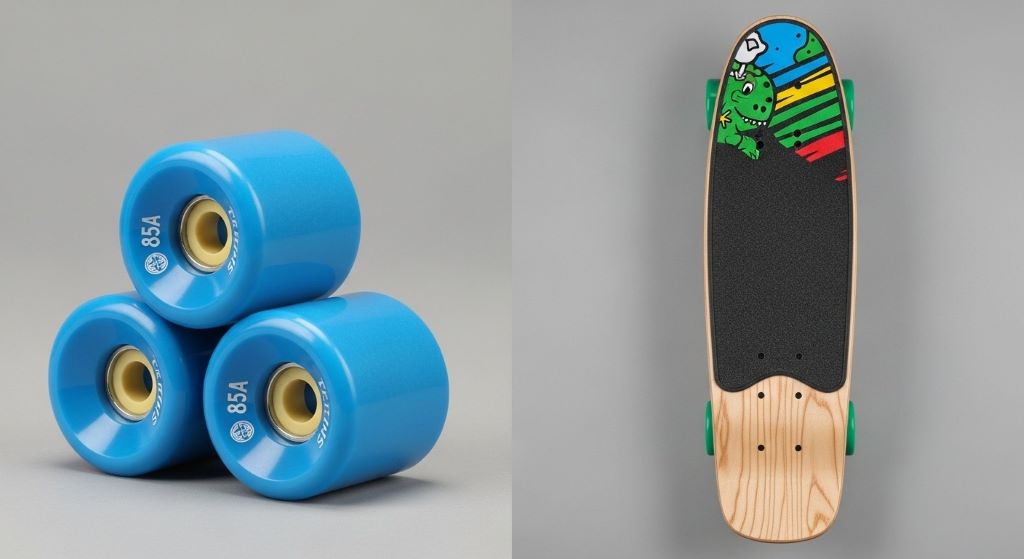
For beginners, a wheel hardness rating between 78A and 87A is ideal. These are considered soft to medium-soft wheels and work well on most outdoor surfaces including sidewalks, driveways, and skate parks with rough concrete.
Wheel size also matters. Bigger wheels roll faster and more smoothly over bumps. For kids, wheels between 52mm and 56mm offer a good balance of speed and control. Smaller wheels make tricks easier but are less forgiving on uneven surfaces.
What to Know About Trucks
Trucks are the metal axles that connect the wheels to the deck. They control how easily the board turns. For young beginners, medium-tightness trucks are often the best choice.
Trucks that are too loose make the board feel wobbly and unstable. This can frighten beginners and increase the risk of falls. On the other hand, trucks that are too tight make turning very difficult.
The width of the trucks should match the width of the deck. Trucks that are too wide or too narrow affect the balance and handling of the board. Most complete beginner boards come with correctly sized trucks already attached, which makes things simpler.
As your child improves, they may want to adjust the tightness of their trucks. This is easy to do with a skate tool. Slightly looser trucks allow for easier turning and a more fluid ride once basic balance is established.
Complete Boards vs. Custom Builds
When buying for a beginner, you have two main options. You can buy a complete pre-built board, or you can build a custom setup by choosing each component separately.
Why Complete Boards Are Usually Best for First Timers
Complete boards are designed to be balanced and functional right out of the box. All the parts are matched to work well together, which means less room for error. They are also more affordable than buying components individually.
Custom builds are ideal for experienced skaters who know exactly what they want. However, for a child just starting out, the differences between component brands are unlikely to matter much. A good quality complete board will serve them very well during the learning phase.
Look for complete boards from reputable skate brands rather than generic toy-store options. Brands like Tony Hawk, Santa Cruz, and Element offer solid beginner boards with quality parts. These boards are more durable and safer than cheap alternatives.
Toy-store boards often use low-quality plastic components that can break easily or perform poorly. Additionally, they sometimes come with hard wheels and stiff trucks that make learning more difficult. Spending a little more upfront on a real skate brand pays off in longevity and performance.
Grip Tape and Board Graphics
Grip tape covers the top surface of the deck and keeps your child’s feet from slipping. Almost all complete boards come with grip tape already applied, which is convenient.
Standard black grip tape works perfectly well for most beginners. However, colored and patterned grip tapes are available if your child wants to personalize their board. Just make sure the tape has a coarse enough texture to provide adequate grip.
Board graphics are largely a matter of personal taste. Letting your child choose a board they find visually appealing can increase their enthusiasm for skating. When kids feel connected to their board, they are more motivated to practice and improve.
Essential Safety Gear to Buy Alongside the Board
No guide to buying a kids’ skateboard would be complete without talking about safety gear. Choosing the right board is important, but protecting your child from injury is equally essential.
Every young skater should have the following protective gear:
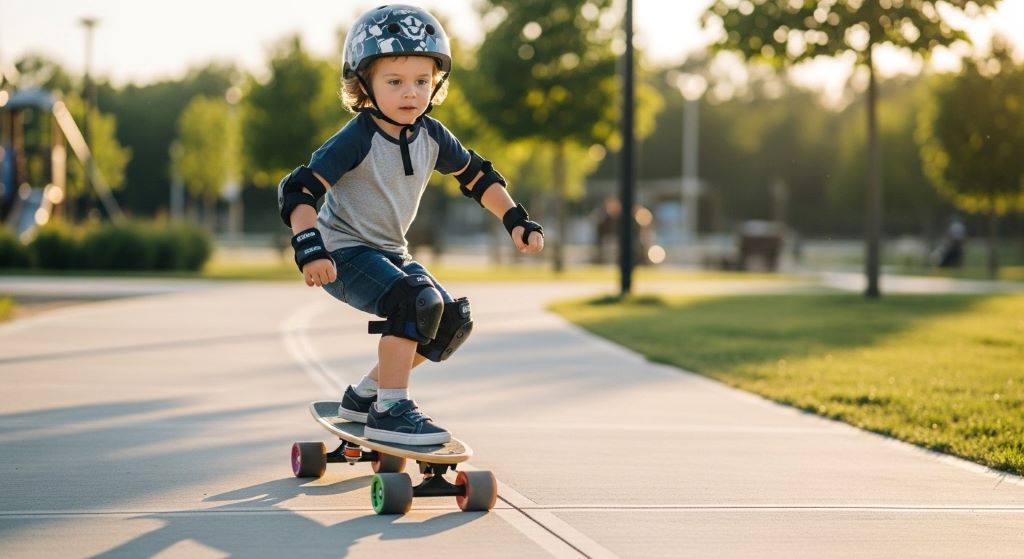
- A properly fitted helmet that meets safety standards is non-negotiable. Make sure it fits snugly and covers the forehead.
- Knee pads protect the knees during falls, which are very common for beginners. They should fit well without restricting movement.
- Elbow pads shield the elbows, which often take impact when a child tries to catch themselves during a fall.
- Wrist guards are especially useful for young skaters who instinctively reach out with their hands when falling.
Closed-toe shoes with a flat sole, such as skate shoes, also provide better grip and foot protection than sandals or soft trainers. Therefore, investing in proper footwear is worth considering alongside the board itself.
Budget Considerations and What to Expect to Spend
Skateboard pricing varies widely. You can spend as little as twenty dollars on a toy store board or well over two hundred dollars on a premium custom setup. For a beginner kid, the sweet spot is usually between forty and eighty dollars for a complete board.
In this price range, you can find boards from reputable skate brands that use quality materials. The trucks will be metal, the deck will be proper maple wood, and the wheels will be real urethane rather than hard plastic.
Additionally, safety gear typically adds another forty to eighty dollars to the budget. A good helmet alone can cost twenty to forty dollars. However, this is not a place to cut corners, as protective gear directly impacts your child’s safety.
If budget is a concern, look for bundle deals that include both the board and safety gear. Many brands offer starter packs that provide good value. Second-hand options from skate shops or online marketplaces can also be a cost-effective way to get quality equipment.
Signs Your Child Has Outgrown Their Board
Children grow quickly, and what fits perfectly one year may be too small the next. There are several clear signs that it is time to upgrade your child’s board.
- Their feet hang over the edges of the deck when standing in a normal riding position.
- They frequently complain that the board feels too small or unstable.
- Their shoe size has gone up significantly since the board was purchased.
- The deck shows signs of stress cracks or significant wear that affects performance.
Upgrading to a slightly wider or longer board as your child grows supports their continued development as a skater. It also gives them the opportunity to revisit their setup preferences as their skills and interests evolve.
Conclusion
Choosing the best skateboard for a young beginner comes down to matching the board to your child’s size, skill level, and needs. Deck width, wheel softness, truck sizing, and overall board weight all play important roles in how easy and enjoyable the experience will be.
A lightweight skateboard for kids makes learning easier, builds confidence faster, and reduces physical strain. Pairing it with soft wheels ensures a smooth, stable ride on the surfaces where most kids learn. Together, these features create the ideal foundation for a young rider.
Always choose a complete board from a recognized skate brand rather than a toy-store alternative. Invest in proper safety gear from the start. And remember that as your child grows, their board should grow with them.
Skateboarding is a wonderful activity that builds balance, coordination, creativity, and perseverance. Starting your child off with the right equipment gives them the best possible chance of falling in love with the sport and sticking with it for years to come.
Frequently Asked Questions
What is the best skateboard size for a 6-year-old?
For a 6-year-old, a deck width between 6.5 and 7.0 inches is typically the best fit. This size suits small feet and offers easy maneuverability. Pair it with a shorter deck length of around 28 to 29 inches for the most comfortable and manageable setup. A complete board designed specifically for young riders will usually come in these dimensions.
Are soft wheels better for kids learning to skate?
Yes, softer wheels are generally much better for beginner kid skaters. Soft wheels skateboard setups absorb bumps and cracks in the pavement more effectively, providing a smoother and more stable ride. This helps beginners maintain their balance while learning. A durometer rating between 78A and 87A is a great starting range for young, new riders.
How do I know if a skateboard is too heavy for my child?
If your child struggles to carry the board, has difficulty lifting it when attempting tricks, or gets tired quickly while riding, the board may be too heavy. A good kids’ skateboard should weigh between 3 and 5 pounds. Boards heavier than this can make learning harder and lead to frustration. Look for models with maple decks and compact trucks to keep the weight down.
Is a complete skateboard or a custom build better for a beginner kid?
A complete skateboard is almost always the better choice for a beginner child. Complete boards come pre-assembled with matching parts that are designed to work well together. They are more affordable than custom builds and require no technical knowledge to set up. Save the custom build experience for when your child has developed their skills and has specific preferences about how they want their board to feel.
What safety gear does my child need when learning to skateboard?
Every beginner skater should wear a properly fitted helmet, knee pads, elbow pads, and wrist guards. These four items cover the areas most commonly injured during falls. A helmet is the most critical piece of gear and should always be worn, even during casual practice sessions. Flat-soled skate shoes also provide better grip and foot protection compared to regular trainers.
Related Topics:
Surfboard Tail Block Damage Repair: A Complete Guide to Restoring Your Board
Vintage-Inspired Skateboards: A Buyer’s Guide for 2025