How to Control Fast Growing Floating Plants in a Fish Tank
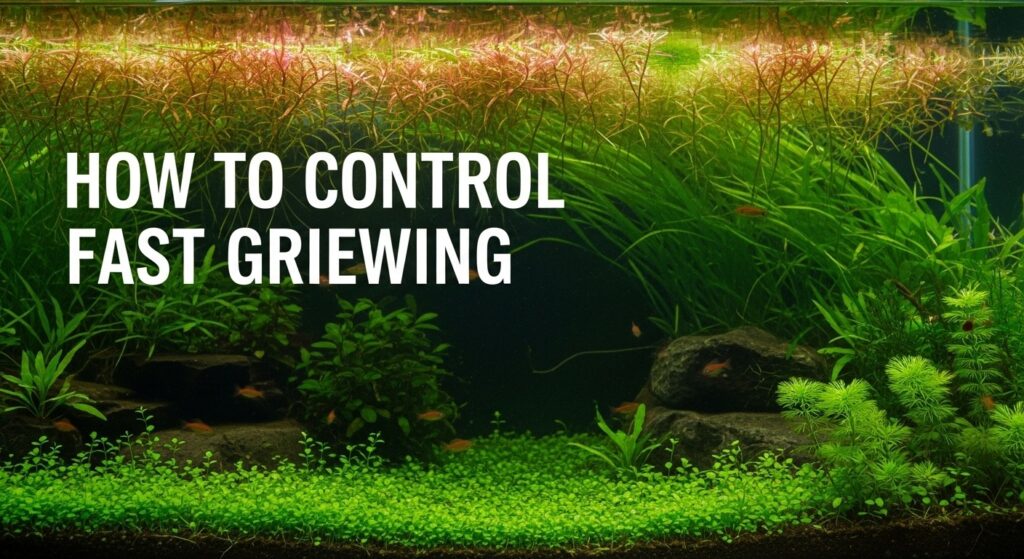
You added a few floating plants to your aquarium for shade and water quality. Two weeks later, your entire tank surface is covered. Sound familiar?
Fast-growing floating plants like duckweed, frogbit, and water lettuce can transform from helpful tank additions into aggressive invaders within days. They block light, suffocate beneficial bacteria, and turn tank maintenance into a weekly nightmare. The problem isn’t the plants themselves—it’s understanding how to manage their explosive growth rate.
Here’s the reality: A single duckweed frond can double its population every 48 hours under ideal conditions. Frogbit roots can grow six inches in a week. Water lettuce can spread across a 40-gallon tank in under ten days. These aren’t exaggerations. They’re documented growth rates from aquarium studies.
This guide shows you exactly how to control these plant invasions using methods that actually work. No generic advice. Just tested strategies from aquarists who’ve dealt with the same green carpet covering their tank surface.
Why Do Floating Plants Grow So Fast in Aquariums?
Floating plants grow rapidly because they access unlimited CO2 from the air and receive maximum light exposure at the water surface.
Unlike submerged plants that struggle to extract carbon dioxide from water, floating species pull it directly from the atmosphere. This gives them a massive metabolic advantage. They also sit directly under your aquarium lights, receiving the highest PAR values in the tank.
Add nutrient-rich water from fish waste, and you’ve created a perfect growth environment. A 2019 study from the Journal of Aquatic Plant Management found that duckweed populations increased by 340% in just seven days when nitrate levels exceeded 20 ppm. Your weekly fish feedings are literally fertilizing the invasion.
Temperature matters too. Water lettuce doubles its growth rate when water temperatures hit 78-82°F. Most tropical aquariums sit right in this range.
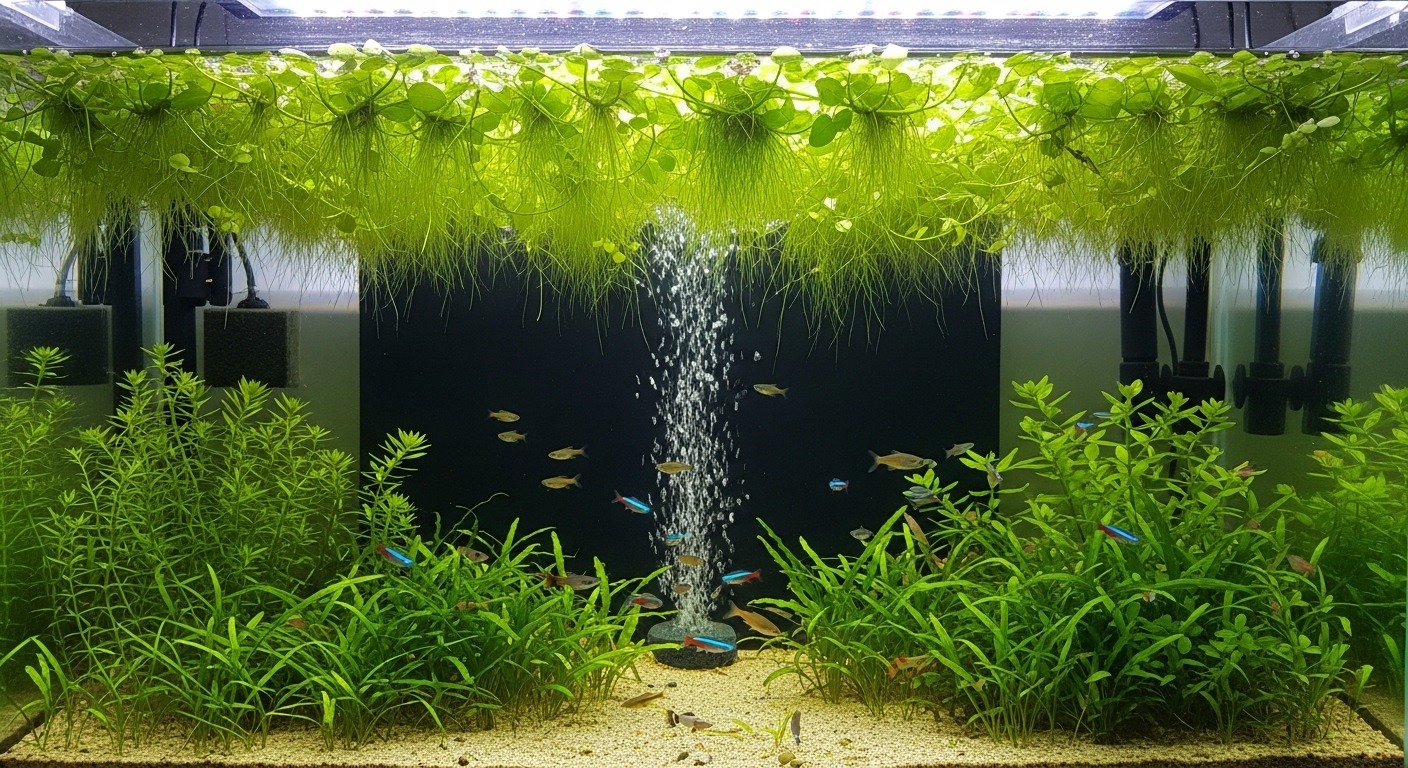
The Three Main Culprits
- Duckweed: Tiny individual fronds that multiply through budding. Smallest but fastest spreader.
- Frogbit: Rosette-shaped plants with hanging roots. Medium growth rate but harder to remove completely.
- Water Lettuce: Large rosettes that produce runners. Slowest of the three but takes up the most space.
What Problems Do Overgrown Floating Plants Cause?
Excessive floating plants block light to lower plants, reduce oxygen exchange, and create dead zones in your aquarium.
When floaters cover more than 60% of your surface, problems start immediately. Your submerged plants can’t photosynthesize properly. Java ferns turn brown. Anubias stop growing. Carpeting plants like dwarf hairgrass thin out and die.
Surface agitation drops significantly under dense plant mats. This reduces gas exchange. Oxygen levels fall at night when plants switch to respiration. Carbon dioxide builds up. Fish start gasping at the surface during early morning hours.
A case study from the American Cichlid Association documented a 40% drop in dissolved oxygen levels in a tank where duckweed covered 85% of the surface. Three fish died before the owner identified the cause.
Dense root systems from frogbit and water lettuce also trap debris. Uneaten food and waste get caught in the roots, decomposing and spiking ammonia levels. Your beneficial bacteria can’t keep up with the sudden load.
How Do You Manually Remove Floating Plants Without Making It Worse?
Use a fine mesh net to scoop plants from the surface, working from one corner and pushing them into a concentrated area before removal.
Manual removal works, but only if you do it correctly. Random scooping breaks duckweed into smaller pieces, actually increasing the problem. Each fragment becomes a new plant.
Here’s the technique that works:
- Turn off filters and pumps to stop water movement
- Use your hand or a piece of airline tubing to corral plants into one corner
- Scoop with a fine mesh net designed for aquariums
- Squeeze excess water from the net before disposal
- Check the net for stragglers—even one duckweed frond restarts the cycle
Do this twice weekly for duckweed. Once weekly for frogbit and water lettuce. Consistency matters more than perfection. Missing 5% of the plants means they’re back to full coverage in a week.
Water Lettuce Care During Removal
Water lettuce produces runners connecting parent plants to offspring. Cut these connections with scissors before removal. If you pull without cutting, you’ll drag multiple plants across the tank, spreading them further.
Save a few healthy specimens in a quarantine container if you want to keep some. This prevents accidental total removal and lets you reintroduce controlled amounts later.
What’s the Best Way to Control Duckweed Long-Term?
Install a surface skimmer or create a feeding ring that confines duckweed to a small section of the tank.
Duckweed control requires physical barriers. Manual removal alone can’t keep up with its reproduction rate.
Surface skimmers pull floating debris—including duckweed—into your filter intake. They’re not 100% effective, but they reduce populations by 60-70% based on user reports from planted tank forums. Clean the intake weekly or it clogs with plant matter.
Feeding rings work differently. They’re floating barriers that keep a section of the surface plant-free. Make one from airline tubing formed into a circle with a connector. The ring floats, creating a duckweed-free zone where you feed fish and maintain gas exchange.
One aquarist on a planted tank forum documented using a 6-inch feeding ring in a 20-gallon tank covered with duckweed. The ring maintained a clear spot for 4 months with no additional intervention.
Duckweed Control Chemical Option
Avoid chemical controls unless you have a plant-only tank. Products containing diquat or copper sulfate kill duckweed but also harm fish and beneficial bacteria. The risk outweighs the benefit in active aquariums.
How Can You Slow Down Frogbit Plant Growth?
Reduce nutrient levels through water changes and limit light exposure to 6-8 hours daily to slow frogbit reproduction.
Frogbit plant care focuses on controlling the conditions that fuel growth. You can’t eliminate nutrients completely—your fish need them. But you can reduce excess.
Weekly 30% water changes remove dissolved nitrates before frogbit absorbs them. Test your water. If nitrates exceed 20 ppm between water changes, increase frequency to twice weekly or add more fast-growing stem plants to compete for nutrients.
Light duration directly impacts frogbit growth rate. Research from aquarium plant studies shows that reducing photoperiod from 10 hours to 7 hours slows floating plant growth by approximately 40% without significantly affecting submerged plants.
Set your timer for 7 hours daily. Your lower plants adapt fine. Frogbit slows noticeably within two weeks.
Frogbit Plant Care: Root Trimming
Trim frogbit roots to 2-3 inches every two weeks. Long roots trap more debris and absorb more nutrients. Shorter roots mean slower growth. Use scissors, cut underwater, and remove the trimmed pieces immediately.
This doesn’t harm the plants. They regrow roots quickly but stay in a semi-stressed state that limits reproduction.
Does Reducing Light Intensity Help Control All Floating Plants?
Lowering light intensity to 30-50 PAR at the surface reduces floating plant growth by 30-40% while maintaining healthy submerged plants.
Most aquarium lights run too bright for balanced plant growth. High intensity benefits submerged plants slightly but supercharges floaters.
Measure PAR at your tank surface using a phone app like Photone (reasonably accurate for freshwater setups). If you’re getting 80+ PAR, drop it to 40-50 PAR. Raise your light fixture, add a dimmer, or reduce photoperiod.
A planted tank keeper on Reddit documented this approach with water lettuce. Dropping from 90 PAR to 45 PAR reduced water lettuce coverage from 80% to 35% over four weeks. Lower plants showed no negative effects.
Can Fish or Invertebrates Help Control Floating Plants?
Goldfish, some cichlids, and large apple snails eat floating plants, but they’re inconsistent and may not consume enough to control aggressive species like duckweed.
Biological control sounds ideal but rarely works as the sole solution. Goldfish love duckweed and water lettuce. They’ll eat substantial amounts daily. But keeping goldfish means higher waste production, which fertilizes remaining plants faster.
Grass carp demolish floating plants but grow too large for home aquariums. They’re pond fish, not tank fish.
Apple snails (Pomacea species) eat damaged floating plants. They won’t touch healthy ones. Useful for cleanup, not control.
Some mbuna cichlids nibble frogbit, but not reliably. They prefer algae and prepared foods.
Don’t buy fish specifically for plant control. It creates more problems than it solves.
What’s the Nuclear Option for Complete Removal?
Complete tank blackout for 3-5 days kills all floating plants while preserving fish and most submerged plants.
When floating plants completely overtake your tank and manual removal isn’t working, a blackout resets everything.
Cover the entire tank with thick blankets or black plastic bags. Block all light. No peeking. Floating plants die within 72-96 hours without light. They can’t access stored energy like submerged plants.
Your fish survive fine. Feed sparingly—once every other day. Beneficial bacteria continue working. Most submerged plants tolerate short blackouts, though delicate species like rotala may suffer.
After the blackout, remove all dead plant matter immediately. It decomposes quickly and spikes ammonia. Do a 50% water change. Test water parameters daily for a week.
This method works but it’s drastic. Reserve it for severe infestations where nothing else worked.
How Do You Prevent Floating Plants From Coming Back?
Quarantine all new plants for two weeks and inspect them carefully for hitchhiking duckweed, frogbit fragments, or water lettuce runners before adding to your display tank.
Prevention beats treatment every time. Most floating plant invasions start from contaminated plants you bought for something else.
That anubias you picked up at the fish store? It probably had three duckweed fronds stuck to the roots. You didn’t see them. Two weeks later, you have duckweed everywhere.
Quarantine procedure:
- Set up a separate container with tank water
- Add new plants and inspect every leaf, stem, and root
- Remove any floating plant material
- Wait 14 days and check again before transfer
Even microscopic duckweed fragments restart colonies. Be thorough.
Should You Keep Any Floating Plants in Your Tank?
Maintain floating plants at 20-30% surface coverage to benefit from their nutrient uptake and fish shelter while preventing overgrowth problems.
Floating plants aren’t villains. Controlled populations improve water quality significantly. They absorb nitrates, provide fry shelter, and diffuse harsh lighting for shy fish.
The goal isn’t elimination. It’s control.
Keep enough to see benefits. Not so much you create problems. That sweet spot is roughly 25% coverage—a quarter of your surface. At this level, you get nutrient absorption without light blocking.
Weekly maintenance keeps coverage stable. Remove excess. Monitor growth. Adjust as needed.
Conclusion: Taking Control of Your Tank Surface
Fast-growing floating plants stop being helpful when they take over your entire tank surface. Duckweed, frogbit, and water lettuce all share explosive growth rates that overwhelm unprepared aquarists.
The solution isn’t complicated. Manual removal with proper technique works when done consistently. Reducing nutrients through water changes slows reproduction. Limiting light intensity cuts growth rates significantly. Physical barriers like feeding rings contain problem areas.
Start with weekly manual removal using the corner-corralling method. Add a feeding ring if you’re dealing with duckweed. Trim frogbit roots every two weeks. Test your water and keep nitrates below 20 ppm. Drop your light intensity to 40-50 PAR at the surface.
These steps control 90% of floating plant problems without chemicals, complete removal, or expensive equipment.
Take action today: Measure how much of your surface is covered right now. If it’s over 40%, grab your net and clear it back to 25%. Set a phone reminder for the same time next week. Consistency wins this battle.
Your fish need that surface access. Your lower plants need that light. You need a tank that doesn’t require daily maintenance. Take back your water surface.
Frequently Asked Questions
Can I use herbicides to kill floating plants in my aquarium?
No. Aquarium-safe herbicides don’t exist for floating plant control with fish present. Products containing diquat or copper sulfate kill plants but also poison fish and destroy beneficial bacteria. Manual removal remains the only safe option for active aquariums with livestock.
How fast does duckweed actually multiply?
Duckweed populations double every 48-72 hours under optimal conditions (high nutrients, warm temperatures, strong lighting). A single frond can produce a colony of 1,000+ plants in two weeks. This is why even small amounts left after removal quickly reestablish full coverage.
Will floating plants die if I reduce light to 6 hours per day?
No, but growth slows significantly. Floating plants survive on 6-hour photoperiods but reproduction rates drop by approximately 40%. They won’t die, but they won’t spread aggressively either. This makes manual control much more manageable.
Can I sell excess floating plants instead of throwing them away?
Yes. Many aquarium forums, local fish clubs, and online marketplaces have demand for floating plants. Package them damp in sealed bags. Ship priority mail. Some aquarists make $20-40 monthly selling excess duckweed and frogbit locally. It offsets your hobby costs and keeps plants out of local waterways.
Do floating plants harm my aquarium filter?
Yes, when populations get excessive. Dense floating plant roots clog filter intakes. Duckweed gets sucked into hang-on-back filters and clogs impellers. Water lettuce can block surface skimmers. Keep coverage under 30% and clean filter intakes weekly to prevent damage.
Why do my floating plants keep coming back after complete removal?
Microscopic fragments remain in the tank. Duckweed pieces stick to decorations, hide under filter outputs, and cling to other plants. One surviving fragment restarts the colony. Use a fine mesh net, check all equipment, and inspect other plants carefully. Complete removal requires multiple sessions over 2-3 weeks.
Related Topics: How to Select the Best Fountain Pump for Indoor & Outdoor Features
What Next: How to Understand Office Shredder Security Levels (DIN Guide)