
Why a No-Choke Dog Harness Is Safer Than a Traditional Collar
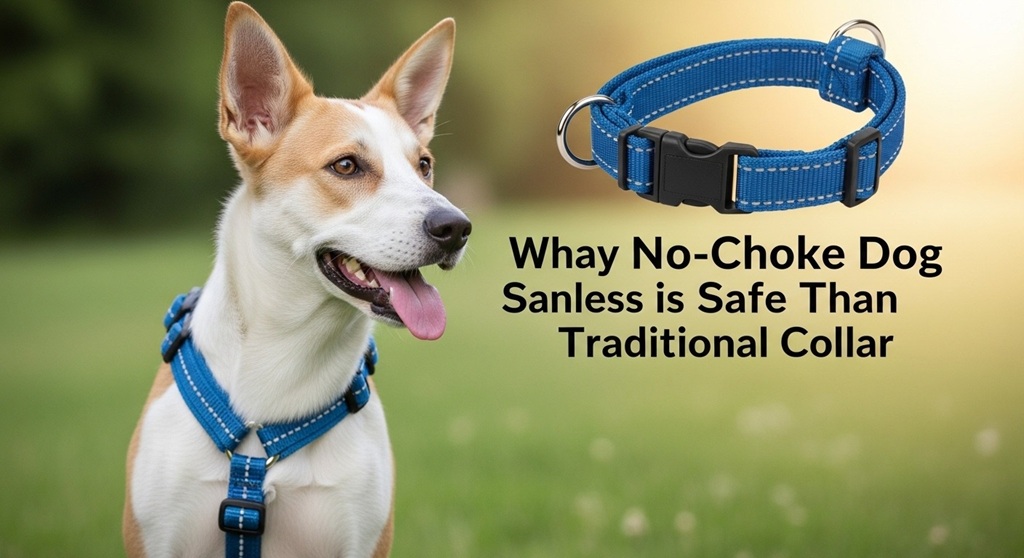
A no-choke dog harness, also known as an anti-choking harness, distributes pressure across a dog’s chest and shoulders instead of the neck, reducing the risk of airway injury, tracheal collapse, and long-term strain.
You clip the leash to a traditional collar. Your dog lunges. The force hits the throat. This moment happens daily in parks, streets, and sidewalks worldwide. Many owners assume it is normal. It is not.
A traditional collar concentrates pressure on a narrow band around the neck. In contrast, a soft padded vest or anti-choking harness spreads force across stronger muscle groups. This reduces the risk of choking and supports humane dog training.
According to veterinary behavior studies, leash pulling is one of the most common behavioral complaints among dog owners. When pulling meets neck pressure, the result can be coughing, gagging, eye pressure spikes, and even nerve damage in severe cases. The design of your walking gear matters more than most people realize.
Why Can a Traditional Collar Be Risky for Dogs?
Short answer: Traditional collars can compress the trachea, strain neck muscles, and increase intraocular pressure when a dog pulls.
Let’s break this down.
1. Tracheal Pressure and Airway Damage
Dogs have delicate tracheal rings. Repeated pressure can irritate or weaken them. Small breeds such as Pugs, Yorkies, and Chihuahuas are especially prone to tracheal collapse. But large dogs are not immune.
When a dog lunges forward, force equals body weight multiplied by acceleration. A 25 kg dog pulling suddenly can generate significant neck strain. All that pressure is concentrated on a thin strap.
2. Increased Eye Pressure
Research published in veterinary journals shows that collar pressure can increase intraocular pressure. This is critical for dogs with glaucoma or eye disease. Even brief pressure spikes may worsen pre-existing conditions.
3. Behavioral Fallout
Dogs associate discomfort with stimuli around them. If your dog feels throat pain every time another dog appears, it may associate that pain with the other dog. This can increase reactivity instead of solving pulling.
This is where humane dog training becomes important. Equipment should support training, not create new problems.
How Does an Anti-Choking Harness Work?
Short answer: An anti-choking harness shifts leash pressure from the neck to the chest and shoulders, reducing airway compression.
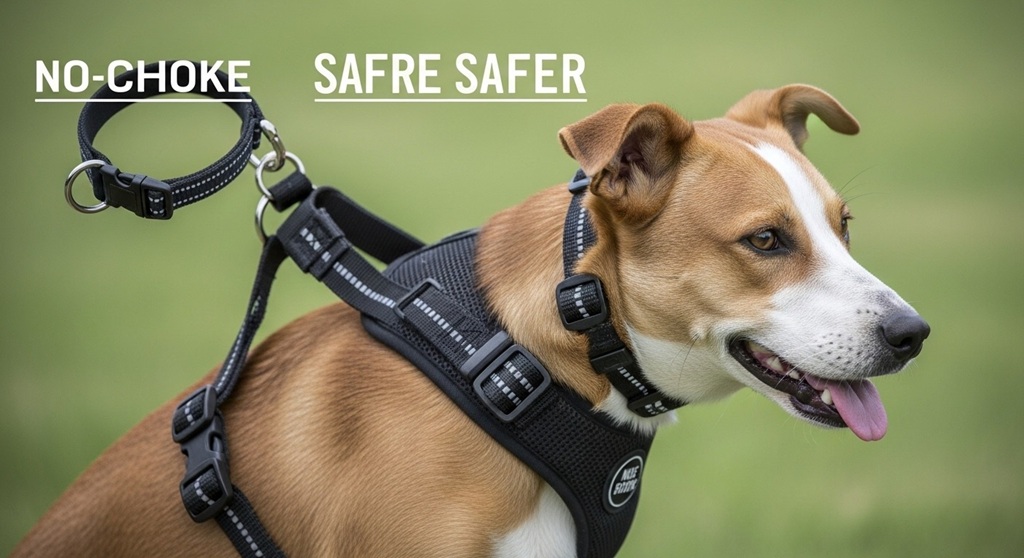
A no-choke harness typically has these features:
- Chest plate or Y-shaped front design
- Back and/or front leash attachment points
- Wide straps to distribute force
- Soft padded vest construction for comfort
When your dog pulls, the harness tightens slightly around the chest, not the throat. The sternum and shoulder muscles absorb the force. These areas are stronger and better suited to handle load.
Some models include a front-clip option. When the dog pulls, the leash gently redirects the body sideways. This interrupts forward momentum without choking. It supports leash manners and humane dog training techniques.
Is a No-Choke Harness Backed by Veterinary Advice?
Short answer: Many veterinarians recommend harnesses over collars for dogs prone to pulling or respiratory issues.
While collars remain useful for ID tags, many vets advise using harnesses for daily walks. Dogs with:
- Tracheal sensitivity
- Short snouts (brachycephalic breeds)
- Neck injuries
- Eye conditions
- Strong pulling habits
benefit significantly from chest-distributed restraint systems.
In clinical settings, neck restraint is avoided whenever possible. The same logic applies during walks.
What Makes a Soft Padded Vest Harness Safer?
Short answer: A soft padded vest reduces friction, prevents skin irritation, and distributes force evenly across a wider surface area.
Not all harnesses are equal. Narrow straps can dig into the skin. Poorly fitted models can restrict shoulder movement.
A soft padded vest design:
- Reduces rubbing and hot spots
- Improves comfort for long walks
- Minimizes pressure points
- Encourages natural gait
Comfort matters. A dog that feels secure walks more calmly. Calm behavior supports humane dog training goals.
Can a Harness Help With Humane Dog Training?
Short answer: Yes. A properly fitted anti-choking harness supports positive reinforcement training by removing pain from the equation.
Traditional correction-based methods rely on leash jerks. Modern behavior science supports reward-based training instead. Pain-based correction can increase anxiety and aggression.
A harness allows you to:
- Redirect gently
- Reward loose-leash walking
- Maintain control without choking
- Reduce fear-based reactions
When pressure is removed from the neck, the dog can focus. Focus leads to faster learning.
What Does Real-World Data Suggest About Harness Safety?
Short answer: Observational studies and veterinary case reports show reduced neck strain and coughing in dogs switched from collars to harnesses.
Case example:
| Factor | Traditional Collar | No-Choke Harness |
|---|---|---|
| Coughing episodes | Frequent in pullers | Reduced significantly |
| Neck strain risk | High | Low |
| Eye pressure spikes | Documented increase | Minimal impact |
| Training support | May reinforce fear | Supports redirection |
While more large-scale randomized trials would strengthen the evidence base, current veterinary consensus leans toward chest-based restraint systems for active walkers.
Are There Situations Where a Collar Is Still Appropriate?
Short answer: Yes. Collars are suitable for ID tags and well-trained dogs that do not pull.
A collar works if:
- Your dog walks calmly on a loose leash
- No respiratory issues exist
- You use it primarily for identification
However, for daily exercise and active environments, an anti-choking harness provides a margin of safety.
How Do You Choose the Right Anti-Choking Harness?
Short answer: Look for chest support, adjustable straps, breathable material, and secure buckles.
- Measure chest girth accurately
- Ensure two-finger space under straps
- Choose a soft padded vest for longer walks
- Consider front-clip options for training
If you want a curated comparison of top-rated options, review this guide on the best anti-choking harness models tested for durability and fit.
Does a Harness Completely Stop Pulling?
Short answer: No. A harness reduces choking risk but training is still required.
Equipment is a tool. Not a solution.
Combine a no-choke harness with:
- Positive reinforcement
- Short, structured walks
- Consistent cues
- Gradual distraction exposure
This balanced approach produces sustainable results.
Conclusion: Should You Switch to a No-Choke Dog Harness?
Direct answer: If your dog pulls, coughs, or has any neck sensitivity, switching to an anti-choking harness is a safer choice.
The problem is simple. Neck pressure carries risk. Many owners underestimate this because collars have been used for decades. But modern veterinary guidance, behavioral science, and real-world observation point toward chest-based restraint systems.
A soft padded vest harness protects the airway. It supports humane dog training. It reduces discomfort. And it improves control without pain.
If your goal is safer walks and better behavior, consider upgrading your equipment today. Review tested options and choose a properly fitted harness that matches your dog’s size and activity level.
Your dog’s neck was not designed to absorb repeated leash force. Adjust your tools. Protect their health. Start with the right harness.
Frequently Asked Questions (FAQ)
1. Is a no-choke harness better for small dogs?
Yes. Small breeds are more prone to tracheal collapse. An anti-choking harness reduces direct throat pressure and lowers respiratory strain risk.
2. Can a harness cause shoulder problems?
Only if poorly fitted. A properly designed soft padded vest allows natural shoulder movement without restricting gait.
3. Are harnesses recommended for puppies?
Yes. They prevent early neck strain and support humane dog training during critical learning stages.
4. Do vets recommend harnesses for brachycephalic breeds?
Often yes. Short-nosed breeds already face breathing challenges. Reducing neck compression is beneficial.
5. Can I leave a harness on all day?
No. Remove it indoors to prevent skin irritation and allow natural movement without restriction.
6. Is a front-clip or back-clip harness better?
Front-clip models offer more control for training. Back-clip versions work well for calm walkers.
7. How tight should a harness fit?
Snug but not restrictive. You should fit two fingers between the strap and your dog’s body.
Related Topic: How to Choose Diamond Alternatives for Engagement Rings
Read Next: How to Make Handmade Wedding Cords for a Unique Ceremony