
How to Select Surf Training Leggings with Phone Pockets
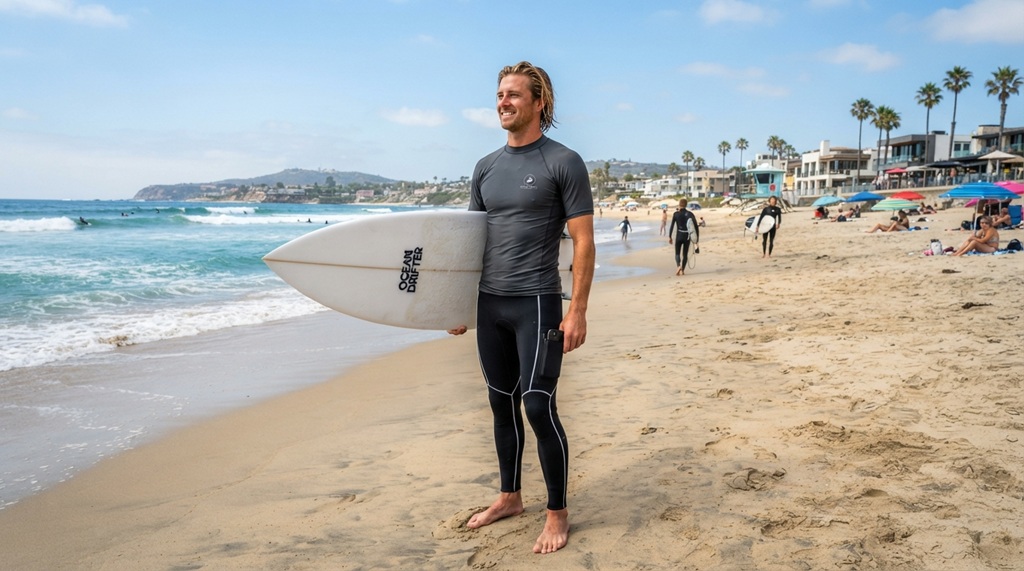
You’re paddling out at dawn, rental car key tucked nowhere safe, and that rising swell is calling. But your phone? Wedged under a towel on the sand feels like a ticking time bomb. You need freedom, not a soggy pocket disaster. This is the exact dilemma that plagues every surfer who refuses to give up their tech for a session. The answer isn’t to leave your phone behind; it’s to find the perfect pair of surf training leggings phone pocket heroes that keep your gear secure, dry, and ready for the after-shot. But with so many options claiming to be “board-ready,” how do you separate the champions from the water-logged wannabes? You need a strategy beyond just picking the prettiest print.
This guide is your comprehensive manual for navigating the murky waters of surf apparel. We’ll break down the critical features that actually matter from fabric science to pocket placement so you can buy with confidence and surf with zero anxiety. You’ll learn to assess zippers, materials, and fit like a pro, ensuring your next purchase is an investment in your performance and peace of mind.
What Exactly Defines a Surf-Ready Legging with a Phone Pocket?
A surf-ready legging isn’t just any athletic bottom; it’s a specialized piece of equipment. It must withstand chlorinated or salt water, resist UV damage, dry quickly, and remain chafe-free during repetitive paddling motions. The presence of a phone pocket adds another critical layer of complexity, as it must securely hold your device without bouncing, stretching out, or leaking. The true definition hinges on the fabric’s water behavior and the pocket’s structural integrity.
Unlike standard yoga pants, these leggings use advanced synthetic blends, typically nylon or polyester mixed with elastane (spandex). This construction provides four-way stretch, crucial for the dynamic leg movements required when kicking through waves or duck-diving. The “surf-ready” label implies the garment is treated or woven to resist degradation from sun and salt, ensuring the elasticity and color don’t break down after a few sessions.
Why Can’t I Just Use My Regular Gym Leggings?
Regular gym leggings are designed for sweat-wicking in a temperature-controlled environment, not for water immersion. When exposed to saltwater, the fibers can break down, causing them to stretch out permanently and lose their compression. Moreover, most standard pockets become waterlogged, acting like a balloon filled with water that pulls your pants down. Surf training leggings, conversely, utilize hydrophobic drying fabrics and gusseted crotches for unrestricted rotation, which are non-negotiable for swimming and surfing.
The Crucial Difference Between Water-Resistant and Water-Repellent
Water-repellent does not mean waterproof; it means the fabric resists water absorption, allowing moisture to bead up and roll off. In the context of a phone pocket, you need a zipper that acts as the primary barrier, while the fabric should be water-repellent to minimize absorption. Quick-dry properties are also essential here. A good pair will wick moisture away from the skin and evaporate rapidly once you’re back on land, preventing that uncomfortable, clammy feel.
Assessing the “Drop-In” vs. “Zip-Lock” Pocket Design
You’ll generally find two types of phone pockets in these leggings: cut-and-sew “drop-in” pockets (often with a laser-cut opening) and zippered pockets. For surfing, a zippered pocket is non-negotiable due to the dynamic nature of the sport. A simple drop-in pocket that works for weightlifting will fail you utterly on a wave. Water pressure and movement can force the phone out or allow sand to abrade the screen. Look for a pocket with a water-resistant (ideally YKK or similar quality) zipper that is recessed to avoid abrasion.
Why Is Phone Pocket Placement So Critical for Surfers?
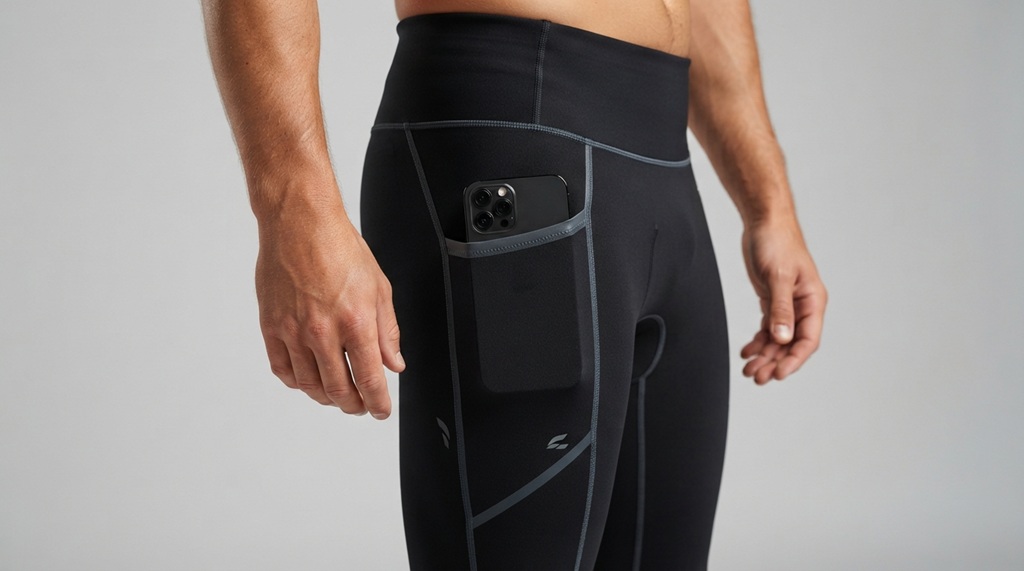
Placement dictates both performance and safety. A phone positioned at the top of the thigh or on the hip is the only functional spot for paddling. If the pocket is placed mid-thigh or behind the knee, it will rub against the board during paddling, causing severe chafing and an annoying, imbalanced weight distribution. The ideal position is snugly against your hip bone or upper glute, where the natural curve of your body protects it and keeps the weight centered.
Beyond comfort, placement affects your center of gravity. An asymmetrical weight distribution (phone only on one side) can subtly alter your balance while popping up to your feet. While minor, for a competitive surfer, this equilibrium shift can be the difference between a clean carve and a stumble. Therefore, consider leggings with two symmetrical pockets, allowing you to distribute weight evenly if you carry keys or a GoPro.
Can a Phone Pocket Affect My Paddling Stroke?
Yes, absolutely. If the phone pouch doesn’t sit flush against the quadriceps, it creates a lump that disrupts the smooth, flat surface of your body against the surfboard. This increases drag and makes paddling less efficient. High-quality surf leggings use a flat-lock seam and a laminated pocket interior that integrates seamlessly into the fabric, ensuring the phone feels like it’s part of the legging, not a brick taped to your leg.
How Do I Know If the Pocket Will Hold the Phone Securely?
The pocket should have a snug, stretchable sleeve inside the zipper housing. The sleeve needs to grip the phone’s edges tightly to prevent vertical or horizontal shifting. Test this in the store: place your phone inside and simulate a paddling motion. If the phone moves more than a centimeter, it’s a pass. Also, check the zipper tape; it should be water-resistant and ideally have a lock mechanism or a fabric flap covering the slider.
What Size Phone Fits in These Pockets?
Modern phones are large. Most dedicated surf leggings are designed to fit phones with screens up to 6.5 inches to 6.9 inches, like the Pro Max models. However, this isn’t universal. Always check the product specifications for the exact pocket dimensions. A common mistake is buying leggings with a pocket designed for older, smaller phones. Measure your phone’s case and compare it to the internal pocket width to guarantee a secure fit.
How Should Surf Training Leggings Fit for Optimal Performance?
The fit should be compressive but not restrictive think of it as a second skin. You want to feel supported, with no fabric bunching at the knees or sagging at the crotch. A high-waisted cut is almost always preferred for surfing because it prevents the leggings from rolling down during duck dives and provides core compression, which some surfers feel enhances body awareness. The compression also helps with muscle stabilization during a long session.
Pay close attention to the ankle hem. It must be snug enough to prevent water from flushing up the leg like a wetsuit bootie, which creates drag. However, it shouldn’t cut off circulation. Look for a laser-cut hem with silicone grippers inside the ankle opening. This combo locks the legwear in place, ensuring the phone pocket on your thigh doesn’t migrate south.
High-Waist vs. Mid-Rise: Choosing the Safest Fit for Surf Training
For dedicated surf training, high-waist leggings are significantly safer and more practical than mid-rise alternatives. High-waist designs provide extended waistband coverage that seamless aligns with your wetsuit top or guards bare skin against board friction while lying prone, effectively shielding your lower back from sun exposure and traction pad chafing. Conversely, mid-rise waists frequently slip and gap during the back-extending motion of paddling, leaving sensitive skin vulnerable to harsh elements and constant repositioning. To ensure total comfort throughout your entire workout, choosing high-coverage leggings keeps your focus on the waves and after your session, transitioning into comfortable, oversized activewear like dolman sleeves for plus size fashion offers a relaxed, stylish fit to help you unwind on the beach.
Compression Level: What Is the Sweet Spot?
You want a medium to high compression (usually 20-30 mmHg). This level supports muscle groups without hindering circulation. Too much compression (like medical-grade 40+ mmHg) can reduce blood flow during a long session, causing cramping. Too little (fashion leggings) won’t hold the phone securely, and the garment will become heavy and saggy when wet. Seek leggings marketed as “high-waist compression” with a high percentage of elastane (around 20-25%).
How Do I Measure and Select the Right Size?
Do not rely on your standard dress size. Brands vary wildly. Use a flexible tape measure and record your waist (at the navel) and hips (at the widest point). Compare these numbers to the brand’s specific size chart. Since the leggings need to survive water stretching, size down if you are between sizes, provided the fabric is stretchy. A looser fit will collect water and chafe. The test: the leggings should be hard to pull up without a fight, but easy to move in.
Which Fabrics and Materials Should You Look For?
Fabric tech is the heart of the matter. You need a high-performing synthetic blend that opposes water and sun damage. The gold standard for surf leggings is a high-tensile nylon that is knitted in a complex interlock pattern for strength and support. Polyester is also good for durability against chlorine, but nylon typically feels softer and has better stretch recovery. The elastane (spandex) content is the true driver of recovery.
Look for certifications or finishing technologies. Some brands use a hydrophobic finish that makes the surface highly water-resistant. Others integrate recycled yarns for sustainability without compromising performance. Crucially, the fabric should have UV protection (UPF 50+). The sun reflecting off the water is intense, and thin, stretched fabric on your thighs needs reinforced UV resistance to prevent fading and breakdown.
Why Is UPF 50+ Protection Non-Negotiable?
During a surf session, you’re lying prone with your back and legs exposed to direct sunlight and reflected glare. UPF 50+ blocks 98% of UV rays. This is vital not just to prevent sunburn but to protect the elastane. UV rays degrade spandex, causing the leggings to lose their stretch and become baggy. Investing in UPF-rated fabric extends the lifespan of your leggings significantly, retaining that “new” compression feel for longer.
The Role of Seam Construction in Chafe Prevention
Seams are where the magic happens and where the pain begins. In surfing, you paddle, you kick, and you sit. Excess fabric seams can rub against the board, causing redness and soreness. Look for “flatlock” or “buzz” stitching. Seams should be on the outside or completely flat on the inside. For the gusset (crotch area), a four-needle or “serged” flat construction is essential to prevent tearing and allow dynamic leg movement without friction.
Quick-Dry and Antimicrobial Properties That Help You Post-Session
After your session, you’ll likely throw a sweatshirt over your leggings and drive home. A quick-dry fabric (usually taking less than 20 minutes under a hot sun) prevents the growth of salt and mildew. Many premium leggings incorporate silver ion or antimicrobial treatments into the fibers. This isn’t just about smell; it’s about hygiene. Leaving those damp leggings in a gym bag for 3 hours can cause bacterial growth that leads to skin infections, especially in the delicate thigh region.
How Do I Care for My Surf Leggings to Make Them Last?
Proper care is the secret to a long lifespan for these technical garments. The biggest killers are fabric softeners, chlorine, and high heat. Never use fabric softener on any stretch fabric; it coats the elastane and destroys its elasticity. After a saltwater session, rinse your leggings in cold, fresh water as soon as you can. This removes the salt and sand that act as abrasives on the fibers during movement. Hand washing is best, but a gentle machine cycle in a mesh laundry bag is acceptable.
Can You Put Them in the Dryer?
No. Never. The heat of a dryer will melt the elastane fibers and cause the compression to break down permanently. Always air dry, out of direct sunlight if possible. Sun drying is okay for a short time, but excessive direct UV exposure will fade the colors. Lay them flat to dry to retain their shape and prevent the waistband from stretching under the weight of water.
How Often Should You Replace Them?
Listen to your body and look at the fabric. If you see the leggings becoming less opaque when stretched, or if the waistband has lost its snap, it’s time for a new pair. Depending on how often you surf (3+ times a week), you might replace them every 6-9 months. Regular rotation of two or three pairs can extend their life significantly, but a visible breakdown of the elastane is a clear sign of failure.
What Is the Best Way to Store Your Leggings Between Sessions?
Fold them, don’t crush them. Store them in a cool, dry drawer. Do not hang them on hangers by the waistband, as the weight and stretch of gravity can elongate the waist over time. Keep them away from plastic containers that trap moisture. A breathable cotton garment bag is perfect. This organization protects the fabric and ensures they’re ready when the swell hits.
What Are the Top Practical Considerations Before Buying?
Before you hit “Add to Cart,” you must consider the entire lifecycle of the product. Are they designed for the specific water temperature you’re training in? While leggings are not wetsuits, some are thicker for warmth in cooler climates, while others are ultra-light for tropical waters. Also, check the brand’s return policy. If the pocket doesn’t fit your specific phone, you need the flexibility to exchange them. Look at the price per session, not just the initial cost.
Comparing features across brands is essential. For a deeper analysis of specific top-rated capri models that excel in warm water conditions, you might consult a specialized review. A detailed resource on surf training leggings phone pocket features can help you narrow down the field with user-tested data and local Southern California preferences.
Checking the Zipper Durability and Water Resistance
Inspect the zipper teeth. YKK magnetic or water-resistant zippers are the industry standard for a reason. They are less likely to corrode in saltwater. The slider should be robust and easy to grip with wet hands. A weak zipper is a colossal failure point. If it breaks during a session, not only do you lose your phone, but you are also left with a flapping pocket full of water that weighs down your leg. Test the zipper mechanism before you buy.
The Importance of the Gusset Crotch for Mobility
A gusseted crotch is a diamond-shaped piece of fabric that allows for 4-way movement without stress on the seam. In normal leggings, a standard seam forces your legs into a limited range of motion. In surfing, you need to kick, squat, and move your legs across the board. A gusset prevents the fabric from tearing during these high-stress movements and eliminates the discomfort of a wedgie.
Color and Print: Does It Matter for Performance?
Aesthetically, yes, it matters for your personal confidence, but functionally, dark colors are more forgiving. Lighter colors will show sand, salt stains, and fade quicker. Furthermore, if you are surfing in a crowded lineup that doesn’t wear wetsuits, a bright print might actually help your friends spot you in the water. For sun protection, darker or vibrantly colored fabrics often block more UV rays than white or pale colors, though this is not a substitute for UPF certification.
When Should You Opt for Capri vs. Full-Length for Surf Training?
This is a critical decision influenced by temperature and personal preference. Full-length leggings are perfect for cooler water (60°F-75°F) and offer more coverage for sun protection. Capri (mid-calf length) leggings are better for tropical surf (above 75°F) when you want minimal coverage and maximum sun exposure on your calves and ankles. Capri styles also avoid bunching at the ankles, which some surfers find annoying in colder water with booties.
The decision also impacts the phone pocket. In a capri, the pocket is often situated higher up, ensuring it’s not hindered by movement. In full-length, the pocket placement is more varied. Consider that full-length leggings might trap more water in the ankle area due to the hem, which is why many surfers prefer capris in summer. For year-round training, you might need both lengths in your rotation.
Does a Capri Hold the Phone Better Than Full-Length?
Not necessarily better, but often more securely. Because a capri ends at the widest part of the calf, there is less fabric to stretch and shift. The hem acts as an anchor. Full-length leggings can slide up and down, potentially shifting the pocket position. If maximum phone security is your top priority, a capri with a tall waistband and a thigh pocket is often the most secure configuration for water sports.
Is There a “Best” Season for Full-Length vs. Capri?
Yes. Full-length is your go-to for winter/spring sessions where the air is cold after you exit the water. They act as a light thermal layer. Capris are your summer/fall best friends. During summer, full-length leggings can overheat you if the sun is strong, and the extra fabric can feel restrictive. In California, many surfers wear capris from May to October and full-lengths during the winter months.
How to Test the Phone Pocket Durability Before a Purchase?
You can’t take them in the water before buying, but you can perform two tests. First, the “Shake Test”: place your phone in the pocket, secure the zipper, and shake the leggings violently for 30 seconds. The phone should stay in place with no zipper movement. Second, the “Stretch Test”: with the phone inside, stretch the pocket area as wide as possible. The pocket shouldn’t distort or pop open. If it passes both, it’s likely water-ready.
Secondly, check how the legging fabric behaves when wet. If you have a spray bottle, mist the pocket area. If the water beads up and rolls off, that’s a good sign. If it soaks in immediately, the pocket won’t offer much water resistance. Since you might get splashed or paddled over, look for a DWR (Durable Water Repellent) finish on the exterior fabric around the pocket. This finishes fade over time, so you may need to re-apply a spray-on waterproofer to maintain the performance.
Can You Add a Phone Tether for Extra Security?
Many surfers do. Even with a great pocket, an extra layer of security is smart. Some leggings have a small internal loop or clip inside the pocket to attach a lanyard to your phone. If the leggings aren’t equipped, you can clip a short, waterproof tether to your pocket zipper pull and loop it around a belt loop or waistband. This ensures that even if the zipper fails, your phone is still attached to you.
Are There Specific Scenarios Where a Pocket Fails?
Yes, duck diving. When you dive under a wave, water rushes over your legs with tremendous force. If the zipper is not water-resistant or the pocket is too large, water pressure can force the zipper open slightly, allowing salt and sand to grit inside. This is why a tight internal sleeve (like a neoprene sleeve) is crucial. It hugs the phone so tightly that water cannot easily penetrate.
Frequently Asked Questions
Can I wear these leggings for other sports besides surfing?
Absolutely. They are excellent for triathlons, paddleboarding, kayaking, and intense gym workouts. The quick-dry and compression properties are beneficial for any high-sweat activity. The phone pocket is a godsend for runs where you don’t want an armband, and the high-waist stays put during squats and burpees.
Will the phone pocket make the leggings look bulky?
Modern designs use ultra-thin, stretchable fabrics that conform tightly around your phone. It won’t look like a bulky cargo pocket; it will look like a slight contour. When the phone is removed, the pocket lies almost flat, thanks to the high-quality elastic used in the seam. It’s a sleek, technical look, not a tactical one.
Are all phone pockets on the left or right side?
It depends on the brand. Some feature a universal pocket on the right, some on the left, and premium brands often have one on each side. If you have a dominant hand for lifting your leg (like a regular vs. goofy foot surfer), you may prefer the pocket on the opposite side of your standing leg. Always check the product images to confirm placement.
Can I use a phone with a thick Otterbox case?
Thick cases are a gamble. The internal sleeve is designed to stretch to a certain size. If your case makes the phone wider than 3 inches, it may not fit securely. You might need to remove the case during your session or purchase a legging with a slightly larger pocket dimension. Check the specifications meticulously.
How do I remove sand from the phone pocket?
After your session, rinse the leggings thoroughly and turn them inside out. Use a toothbrush to gently brush the zipper teeth and the interior sleeve fabric. Sand can also be flushed out by spraying water directly into the pocket opening while the zipper is closed. Air dry completely before storing to prevent mildew.
Conclusion
Selecting the right surf training leggings with a phone pocket is about making a smart, informed choice that blends technical performance with realistic day-to-day usability. You need to look beyond the color and focus on the materials nylon blends, high elastane content, UPF protection, and those all-important zipper and gusset constructions. The pocket isn’t just a convenience; it’s a security system for your most important device, and its placement can make or break your session.
Prioritize compression, water-repellency, and a secure zipper. Consider the length based on your local water temperature, and remember that a capri style often provides the most stable platform for carrying cargo. By applying the fit tests and material checks we’ve discussed, you’re not just buying apparel; you’re investing in gear that enhances your freedom in the water. Go ahead, find that perfect pair, and never leave your livelihood on the sand again. Your next epic surf session and that perfect post-session photo starts with the security of a great pocket.