How to Keep Your Baby Warm Safely During Winter
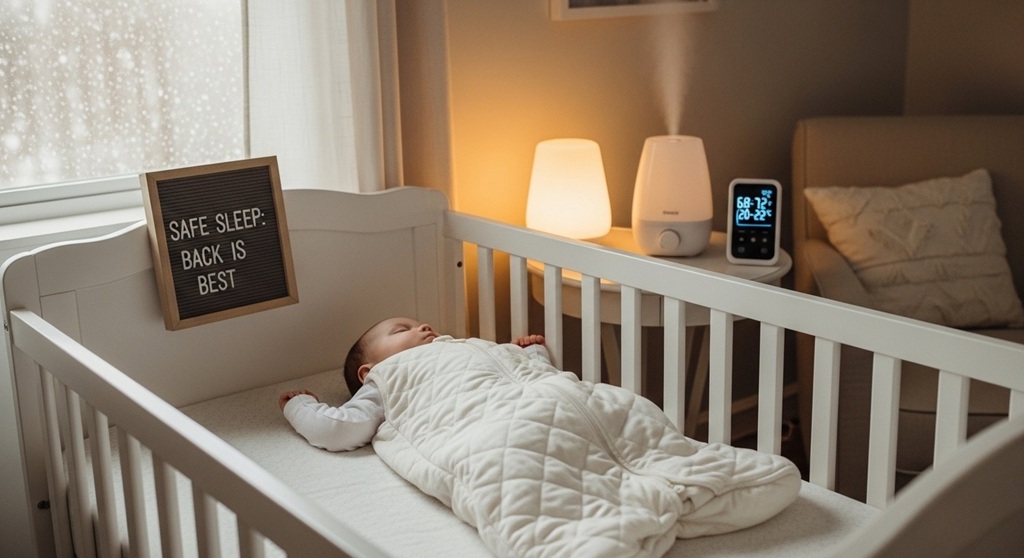
Keep your baby’s room between 68–72°F (20–22°C), dress them in breathable layers, and avoid loose blankets or overheating.
Winter brings a real concern for parents. Cold air increases the risk of hypothermia. Overheating increases the risk of sudden infant death syndrome (SIDS). According to the American Academy of Pediatrics (AAP), overheating is a known risk factor for SIDS, while maintaining a stable room temperature significantly reduces sleep-related risks.
This guide explains exactly how to keep your baby warm safely during winter. You’ll learn how to set the right room temperature, layer clothing correctly, choose safe sleep gear, and avoid common mistakes. We’ll also use real data and case insights to explain why these steps matter.
If you want practical, safe, and evidence-based winter nursery tips, this guide covers everything you need.
What Is the Ideal Baby Room Temperature in Winter?
Short answer: The ideal baby room temperature is 68–72°F (20–22°C).
This is the standard recommendation from pediatric sleep guidelines. It balances warmth and safety.
Why 68–72°F Is Recommended
- Below 65°F: Risk of cold stress and discomfort increases.
- Above 75°F: Risk of overheating increases.
- Overheating has been linked to higher SIDS risk in multiple case-control studies.
In a large U.S.-based sleep environment study, infants sleeping in rooms above 75°F showed significantly higher markers of heat stress compared to those in the 68–72°F range.
How to Monitor Room Temperature
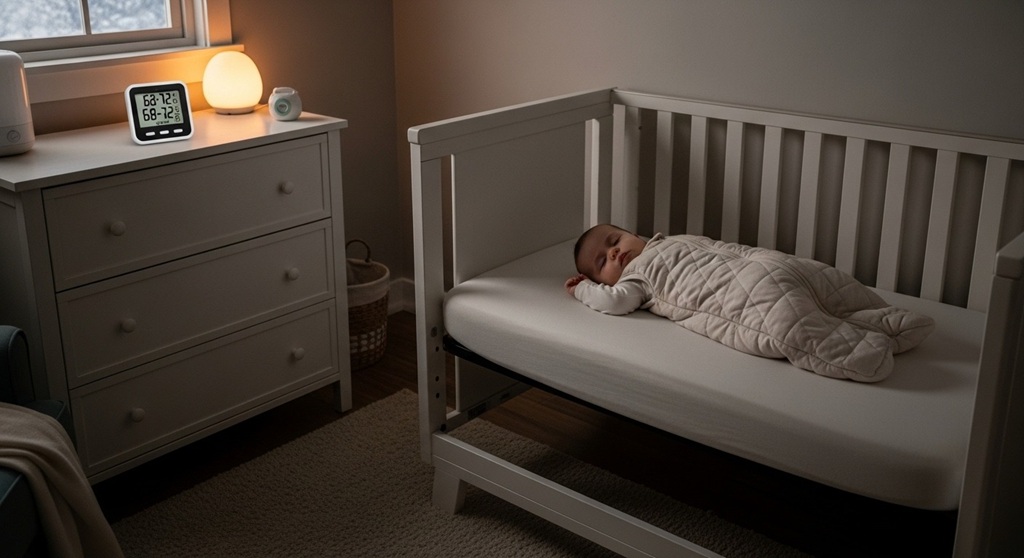
- Use a digital room thermometer.
- Place it near the crib, but not directly next to a heater.
- Check temperature at night and early morning.
For a complete baby room temperature guide, review heater safety, thermostat control, and placement tips before winter peaks.
How Should You Dress Your Baby for Sleep in Winter?
Short answer: Dress your baby in one more layer than you are comfortable wearing.
Layering is safer than thick single garments. It allows you to adjust easily if the room temperature changes overnight.
Safe Winter Sleep Clothing
- Long-sleeve cotton onesie
- Footed sleeper
- Wearable blanket or sleep sack (1.0–2.5 TOG depending on room temp)
What to Avoid
- Loose blankets
- Quilts
- Pillows
- Hats during sleep
The AAP clearly states that loose bedding increases suffocation risk. Hats are not recommended indoors during sleep because they trap heat and increase overheating risk.
How to Check If Baby Is Too Hot or Cold
- Check chest or back of neck (not hands or feet).
- Sweaty neck = too hot.
- Cool chest = may need another layer.
Cold hands are normal. They are not reliable indicators of core body temperature.
Are Space Heaters Safe for a Nursery?
Short answer: Only if they are modern, tip-over protected, and placed safely away from the crib.
Improper heater use is a leading cause of winter house fires. According to the U.S. Consumer Product Safety Commission, space heaters are involved in over 1,700 fires annually in the United States.
Safe Heater Checklist
- Tip-over auto shut-off
- Overheat protection
- Cool-touch exterior
- Placed at least 3 feet from crib
- Never plugged into extension cords
Oil-filled radiators are generally safer than exposed coil heaters because they distribute heat evenly without glowing elements.
For detailed comparisons and safety features, review this winter nursery tips resource before choosing one.
Should You Use Blankets in the Crib During Winter?
Short answer: No. Loose blankets are not safe for babies under 12 months.
Crib safety guidelines are clear: no loose items inside the sleep area.
Why Blankets Are Risky
- Suffocation hazard
- Rebreathing risk
- Overheating risk
Instead, use a properly sized sleep sack. Sleep sacks provide warmth without loose fabric.
If extra warmth is needed, increase the TOG rating of the wearable blanket rather than adding loose bedding.
How Can You Tell If Your Baby Is Too Cold at Night?
Short answer: A cold chest, fussiness, and difficulty settling can indicate discomfort.
Babies rarely develop severe hypothermia indoors unless heating fails. However, mild cold stress can disturb sleep.
Signs of Being Too Cold
- Cool chest or back
- Pale skin
- Restlessness
- Frequent waking
If you suspect your baby is cold:
- Add a light layer.
- Adjust thermostat slightly (within safe range).
- Avoid heavy bundling.
Gradual adjustment is key.
Can Overheating Be Dangerous for Babies?
Short answer: Yes. Overheating increases SIDS risk.
Multiple case-control studies show that infants sleeping in overheated environments had higher SIDS incidence compared to infants in moderate temperature environments.
Signs of Overheating
- Sweating
- Flushed cheeks
- Damp hair
- Rapid breathing
If overheating occurs:
- Remove one layer.
- Lower thermostat.
- Ensure proper air circulation.
Fans have been associated with reduced SIDS risk in some studies, likely due to improved airflow.
How Do You Keep a Baby Warm During Outdoor Winter Trips?
Short answer: Use layers, cover extremities, and remove bulky clothing in car seats.
Outdoor Winter Safety Tips
- Base layer: thermal cotton or wool blend.
- Middle layer: fleece.
- Outer layer: insulated jacket.
- Hat and mittens.
Important: Remove thick coats before strapping baby into a car seat. Bulky padding prevents proper harness tightening and reduces crash safety.
Instead, buckle baby in regular clothing and place a blanket over the harness after securing straps.
What Are the Best Winter Nursery Tips for Consistent Warmth?
Short answer: Insulate the room, control drafts, and monitor humidity.
Draft Control
- Seal window gaps.
- Use thermal curtains.
- Place crib away from windows.
Humidity Control
Winter air is dry. Ideal indoor humidity: 40–60%.
Low humidity can cause dry skin and congestion. A cool-mist humidifier helps maintain balance.
Case Insight
A pediatric clinic in Minnesota reported improved sleep duration among infants after caregivers stabilized nursery temperature and humidity levels during winter months. Environmental control matters.
Should Babies Wear Hats Indoors During Winter?
Short answer: No, not during sleep.
Babies regulate temperature through their heads. Covering the head indoors increases overheating risk.
Hats are appropriate outdoors. Remove them once indoors.
How Can Parents Prepare for Power Outages in Winter?
Short answer: Have backup blankets, battery thermometers, and emergency heat plans.
- Keep extra sleep sacks.
- Use layered clothing.
- Move to a smaller insulated room if needed.
- Monitor baby closely.
If temperature drops below 60°F indoors, temporary co-sleeping for warmth may be considered only if safe sleep guidelines are followed strictly and risk factors are minimized.
Conclusion: How Do You Balance Warmth and Safety?
Keeping your baby warm during winter is about control, not excess. The safest approach is simple:
- Maintain 68–72°F room temperature.
- Dress in layers.
- Avoid loose blankets.
- Use safe heating equipment.
- Monitor comfort signs.
Winter does not have to mean sleepless nights or safety concerns. Small adjustments make a measurable difference. Controlled warmth supports better sleep, lower stress, and safer rest.
If you are setting up your nursery for cold weather, review your heating setup today and ensure it aligns with pediatric safety standards. Your baby’s sleep environment matters every night.
Frequently Asked Questions (FAQs)
What temperature is too cold for a baby’s room?
Below 65°F (18°C) may cause discomfort. Aim for 68–72°F for optimal safety.
Can babies sleep with a blanket if supervised?
No. Blankets are not recommended for infants under 12 months, even if supervised.
Is 75°F too warm for a baby?
Yes. 75°F increases overheating risk. Adjust thermostat to safer levels.
How many layers should a baby wear at night?
Usually one more layer than an adult feels comfortable wearing in the same room.
Are sleep sacks safer than blankets?
Yes. Sleep sacks reduce suffocation risk while maintaining warmth.
Should I use a humidifier in winter?
Yes. Maintain 40–60% humidity to reduce dryness and respiratory irritation.
Related Topic: How to Make Handmade Wedding Cords for a Unique Ceremony
Read Next: How to Choose Diamond Alternatives for Engagement Rings