How to Choose Floating Plants for Nano Aquariums
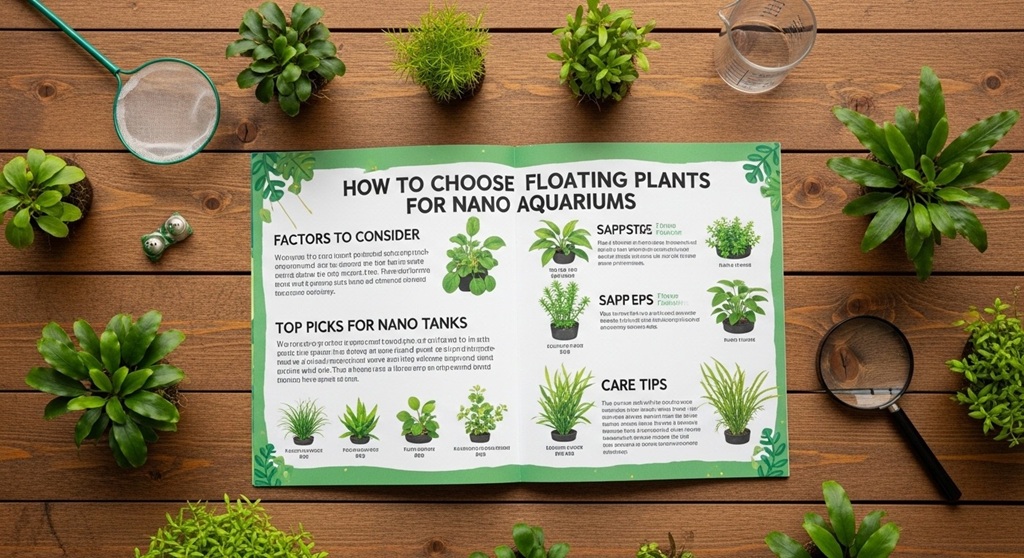
Floating plants for nano aquariums are small, surface-dwelling aquatic plants that provide shade, nutrient absorption, and natural filtration in tanks under 20 gallons. They help stabilize water quality, reduce algae growth, and create a natural habitat for fish and shrimp.
Nano tanks look simple. But they are less forgiving than large aquariums. A small spike in ammonia or nitrate can stress livestock quickly. That’s the problem many hobbyists face. Water turns cloudy. Algae spreads. Fish hide or gasp near the surface.
The solution often starts at the surface.
Floating plants act like a living filter. They absorb excess nutrients before algae can use them. Their roots provide shelter for fry and shrimp. They reduce light intensity, which helps prevent green water outbreaks. In short, they work fast and visibly.
Research published in aquaculture case studies shows that fast-growing floaters like duckweed and salvinia can reduce nitrate levels by over 40% within two weeks in small, low-tech systems. That matters in a 5-gallon or 10-gallon tank.
If you’re looking for the best small aquarium plants or reliable compact floaters for nano setups, this guide will help you choose correctly—based on tank size, lighting, maintenance level, and livestock needs.
How Do Floating Plants Improve Water Quality in Small Tanks?
Floating plants improve water quality by absorbing ammonia, nitrite, and nitrate while limiting algae growth through light reduction.
In nano aquariums, biological stability is fragile. Beneficial bacteria colonies are smaller. Surface agitation is often limited. Overfeeding becomes visible within days.
Here’s how floaters help:
- Nutrient absorption: They use nitrogen compounds as fertilizer.
- Shade control: Reduced light limits algae photosynthesis.
- Oxygen exchange: Many floaters promote better surface interaction.
- Microhabitat: Root systems support shrimp biofilm grazing.
A 10-gallon shrimp tank case study conducted by hobbyists in 2023 showed that adding Salvinia minima reduced visible hair algae by 60% in three weeks under moderate LED lighting.
In short, floating plants act as a buffer system. And nano tanks need buffers.
Which Floating Plants Are Best for Nano Aquariums?
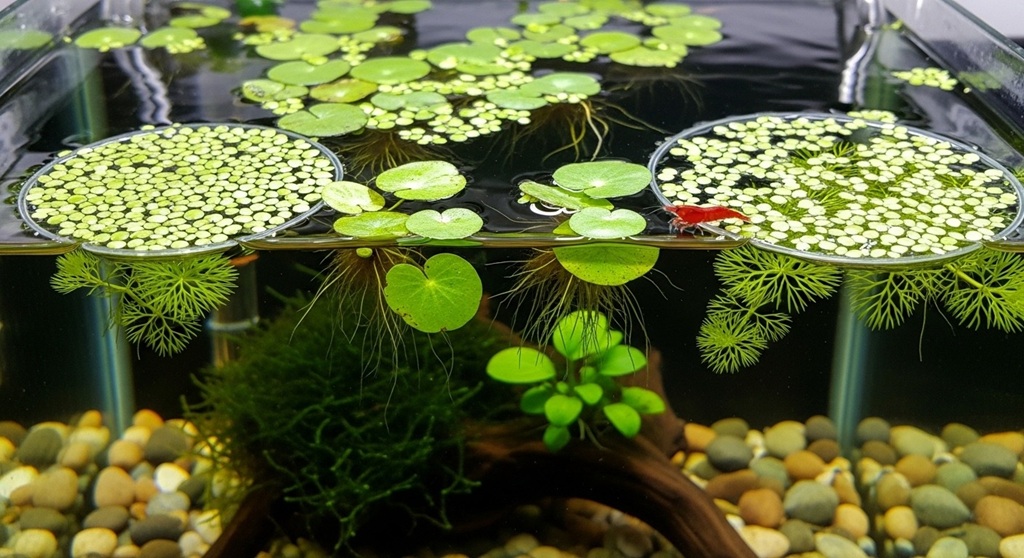
The best floating plants for nano aquariums are species that remain compact, grow moderately, and are easy to manage.
1. Amazon Frogbit (Limnobium laevigatum)
Best for 10–20 gallon tanks.
- Long decorative roots
- Moderate growth rate
- Prefers stable surface flow
Note: Can overgrow in very small tanks.
2. Salvinia Minima
One of the most reliable compact floaters.
- Small leaves
- Fast nutrient absorption
- Easy trimming
Ideal for shrimp tanks.
3. Red Root Floater (Phyllanthus fluitans)
Best under high light.
- Red coloration under strong LEDs
- Compact leaf clusters
- Moderate spread
Requires stable nutrients for color development.
4. Duckweed (Lemna minor)
Extremely fast-growing.
- Powerful nutrient absorber
- Very small leaves
- Hard to remove once established
Best used if you are comfortable with frequent maintenance.
5. Water Spangles (Salvinia natans)
Soft texture and compact growth.
- Low light tolerant
- Good surface coverage control
When choosing among these, consider maintenance commitment first. Fast growers solve nitrate issues quickly—but require regular thinning.
What Factors Should You Consider Before Choosing Floating Plants?
Choose floating plants based on tank size, lighting strength, water flow, livestock type, and maintenance time.
1. Tank Size
In tanks under 5 gallons, aggressive spreaders can cover the surface within days. Choose slow to moderate growers like Red Root Floaters.
2. Lighting
High light promotes red coloration but also increases growth speed. Low light favors hardy green species like Salvinia.
3. Water Flow
Strong filters push floaters aside or cause rot. Nano tanks benefit from gentle sponge filters.
4. Livestock Needs
- Betta fish prefer shaded areas.
- Shrimp benefit from root systems.
- Surface feeders need open gaps.
5. Maintenance Level
If you prefer minimal trimming, avoid duckweed.
How Much Surface Coverage Is Ideal in a Nano Aquarium?
Maintain 30% to 60% surface coverage for optimal light balance and oxygen exchange.
Too little coverage reduces benefits. Too much coverage blocks gas exchange and can lower oxygen levels at night.
| Coverage | Effect |
|---|---|
| 0–20% | Minimal nutrient control |
| 30–60% | Balanced shading and oxygen |
| 70%+ | Risk of oxygen limitation |
Trim weekly. Always leave open feeding zones.
Do Floating Plants Require Fertilizers in Nano Tanks?
Yes, but lightly. Floating plants absorb nutrients directly from the water column.
If nitrates drop below 5 ppm consistently, growth may stall. In such cases:
- Use liquid fertilizers in small doses.
- Avoid copper-heavy products in shrimp tanks.
- Monitor nitrate weekly.
Case study: In a 7-gallon planted nano tank, adding 1 ml of all-in-one liquid fertilizer weekly restored Red Root Floater color within 14 days.
How Do You Prevent Floating Plants from Taking Over?
Control growth by manual removal, feeding moderation, and balanced lighting.
Overgrowth signals excess nutrients. Reduce feeding. Increase water changes if needed.
- Use feeding rings to contain spread.
- Remove 25% weekly if fast-growing species.
- Maintain consistent light schedule (6–8 hours).
Floating plants respond quickly to environmental shifts. Use that responsiveness as feedback.
Are Floating Plants Safe for All Nano Aquarium Fish?
Yes, most floating plants are safe for common nano fish like bettas, guppies, rasboras, and shrimp.
However:
- Avoid full coverage in tanks with high oxygen-demand species.
- Ensure surface feeders have open access.
- Monitor for root entanglement in very dense growth.
For betta keepers, floating plants often reduce stress and encourage bubble nesting behavior.
Conclusion: How Do You Choose the Right Floating Plants for Your Nano Aquarium?
Nano aquariums require precision. Small mistakes amplify quickly. Floating plants offer a practical solution to nutrient control and algae prevention.
Choose compact floaters suited to your tank size. Keep coverage balanced. Monitor nutrients weekly. Trim consistently.
The right choice will improve water clarity, reduce algae, and create a natural habitat your fish will thrive in.
If you want a detailed comparison of the best floating species available, explore this curated guide to compact floaters and small aquarium plants to make an informed decision.
Start small. Observe changes. Adjust weekly. Your nano ecosystem will reward consistency.
FAQ: Floating Plants for Nano Aquariums
1. Can floating plants survive without CO2 in nano tanks?
Yes. Most floating plants do not require injected CO2. They grow well in low-tech setups.
2. How often should I trim floating plants?
Trim weekly if fast-growing species like duckweed or salvinia are used.
3. Do floating plants reduce ammonia?
They absorb ammonia indirectly as part of nitrogen uptake, helping stabilize water chemistry.
4. Why are my floating plants turning yellow?
Common causes include nutrient deficiency, excessive water flow, or insufficient lighting.
5. Are floating plants good for shrimp tanks?
Yes. Their roots grow biofilm, which shrimp graze on regularly.
6. Can floating plants block oxygen?
If surface coverage exceeds 70%, oxygen exchange may reduce, especially at night.
Learn how to choose floating plants for nano aquariums. Discover compact floaters, care tips, coverage rules, and expert selection advice.
Related Topic: How to Keep Your Baby Warm Safely During Winter
Read Next: Seven Ways GIS Can Benefit Your Small Business