
How to Understand Office Shredder Security Levels (DIN Guide)

Protecting sensitive information has become a critical concern for businesses and individuals alike. When confidential documents end up in the wrong hands, the consequences can be devastating. This is where office shredders play a vital role in safeguarding your privacy. However, not all shredders offer the same level of protection. Understanding DIN security levels helps you choose the right shredder for your specific needs.
The DIN standard provides a comprehensive framework for evaluating shredder safety. This internationally recognized system ensures that your documents receive appropriate protection based on their sensitivity. Whether you’re destroying personal bank statements or classified government documents, knowing which security level to use makes all the difference.
What Are DIN Security Standards?
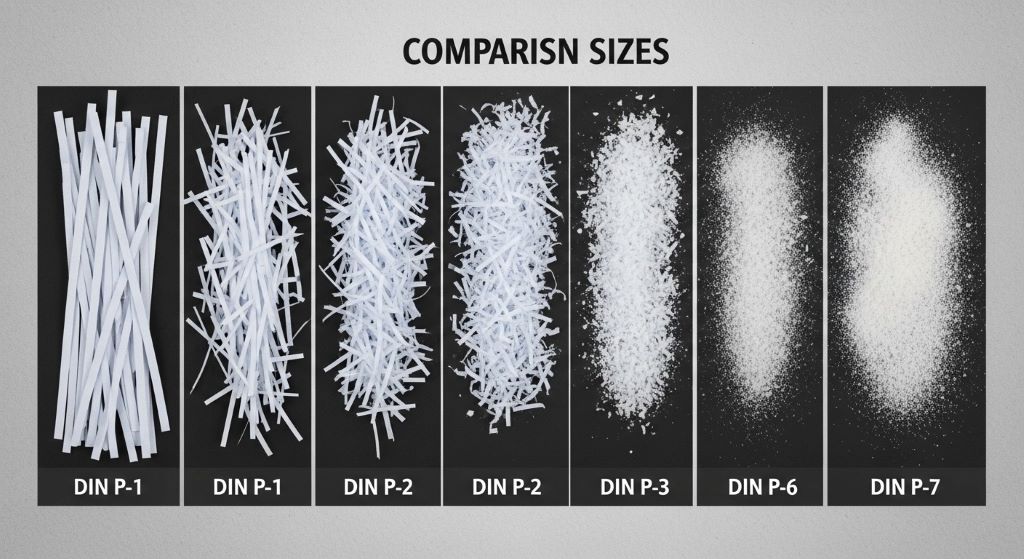
The DIN standard, developed in Germany, has become the global benchmark for document destruction. This classification system rates shredders based on the size of particles they produce. Smaller particles mean higher security because reassembling the original document becomes virtually impossible.
Originally known as DIN 32757, this standard evolved into the more comprehensive DIN 66399. The newer version covers not just paper but also optical media, hard drives, and electronic devices. This expansion reflects our digital age where information exists in multiple formats.
The system categorizes shredders into different protection classes. Each class corresponds to specific security requirements and data sensitivity levels. Consequently, organizations can match their shredding equipment to their actual needs rather than guessing or over-investing.
The Seven Security Levels Explained
Understanding each security level helps you make informed decisions about document destruction. The levels range from basic privacy protection to maximum security for highly classified materials.
Level P-1: Basic Document Destruction
This entry-level category suits general internal documents with minimal sensitivity. Shredders at this level create strips approximately 12 millimeters wide. Think of old memos, outdated marketing materials, or expired coupons. The protection here prevents casual reading but won’t stop determined individuals.
Small businesses often use P-1 shredders for routine paperwork that contains no personal or financial information. The cost remains low, and the machines work quickly. However, this level provides insufficient protection for anything containing names, addresses, or account numbers.
Level P-2: Standard Office Use
Most home offices and small businesses find P-2 adequate for everyday needs. These shredders produce strips about 6 millimeters wide or cross-cut pieces measuring 4×60 millimeters. The smaller particles increase security significantly compared to P-1.
Personal correspondence, internal reports, and non-confidential business documents work well at this level. The shredding process takes slightly longer than P-1, but the enhanced protection justifies the minimal time investment. Many affordable consumer models operate at this classification.
Level P-3: Confidential Business Documents
Financial statements, personnel files, and client information require P-3 protection. Cross-cut shredders at this level create particles no larger than 4×30 millimeters. Additionally, strip-cut versions must produce strips under 2 millimeters wide.
Corporations typically choose P-3 as their baseline for sensitive materials. The smaller pieces make reconstruction extremely difficult without specialized equipment and significant effort. Furthermore, this level satisfies most data protection regulations for standard business operations.
Level P-4: Highly Sensitive Information
Government agencies, legal firms, and healthcare providers often require P-4 shredding. Particles measure 2×15 millimeters or smaller at this classification. Documents containing trade secrets, medical records, or legal case files need this enhanced protection.
The shredding process becomes noticeably slower at P-4 because machines must make more cuts. However, the security improvement is substantial. Reconstructing documents becomes practically impossible without extraordinary resources and expertise.
Level P-5: Classified and Secret Documents
Military installations, intelligence agencies, and organizations handling state secrets utilize P-5 shredders. These devices create tiny particles measuring just 0.8×12 millimeters. The microscopic pieces scatter information so thoroughly that reassembly is essentially impossible.
Few civilian organizations need this level of security. The equipment costs significantly more, operates slowly, and requires regular maintenance. Nevertheless, when protecting national security or preventing industrial espionage, this investment becomes necessary.
Level P-6: Top Secret Materials
This classification represents the highest standard for paper document destruction. Particles must not exceed 0.8×5 millimeters. Only the most sensitive government documents and intelligence materials warrant P-6 shredding.
The machines operating at this level are expensive, specialized pieces of equipment. They process documents slowly and produce large volumes of confetti-like waste. Moreover, these shredders often include additional security features like automatic oiling and jam prevention.
Level P-7: Maximum Security
Introduced with DIN 66399, P-7 sets the absolute pinnacle of document security. Particles measure a mere 0.8×5 millimeters with stricter particle area requirements than P-6. This level exists primarily for theoretical completeness rather than practical everyday use.
Very few organizations actually need P-7 capability. The distinction between P-6 and P-7 matters only in the most extreme security scenarios. Therefore, most security experts consider P-6 sufficient even for top-secret materials.
Choosing the Right Security Level for Your Needs
Selecting appropriate shredder safety involves balancing protection requirements against practical considerations. Over-shredding wastes time and money, while under-shredding exposes you to unnecessary risks.
Start by categorizing your documents. Personal bank statements, tax returns, and medical records deserve at least P-3 protection. Business contracts, employee records, and customer data also fit this category. Meanwhile, junk mail and outdated catalogs can go through P-1 or P-2 shredders.
Consider your industry’s regulatory requirements as well. Healthcare organizations must comply with HIPAA, which generally requires P-3 or higher. Financial institutions face similar mandates under various privacy laws. Legal and accounting firms typically adopt P-4 as their standard to protect client confidentiality.
Think about volume too. Higher security levels process documents more slowly. If you shred hundreds of pages daily, a P-3 shredder offers good security without creating bottlenecks. Conversely, if you only shred occasionally, investing in P-4 or P-5 provides extra peace of mind.
Beyond Paper: Other Media Types
Modern shredders must handle more than just paper documents. The expanded DIN 66399 standard addresses this reality with separate classifications for different media types.
Optical media like CDs, DVDs, and Blu-ray discs receive O-ratings from O-1 through O-7. These ratings mirror the paper classifications but account for different destruction requirements. Breaking a disc into large pieces might suffice for home movies, whereas sensitive backup data needs pulverization.
Hard drives and solid-state storage require H-classifications. These devices demand special destruction methods since data persists even after formatting. Crushing, shredding, or degaussing ensures that information cannot be recovered.
Magnetic tapes and floppy disks fall under T-classifications. Although these media types are becoming obsolete, many organizations still maintain archives on tape. Proper destruction prevents old backups from becoming security vulnerabilities.
Electronic devices like smartphones and tablets need E-ratings. These complex items contain multiple types of storage and require thorough destruction. Simply deleting files leaves data recoverable through forensic techniques.
Maintenance and Best Practices
Owning a shredder represents just the first step. Proper maintenance ensures consistent performance and longevity. Regular oiling prevents jams and keeps cutting blades sharp. Most manufacturers recommend oiling after every few hours of operation.
Empty waste bins before they overflow. Overfilled bins cause jams and reduce shredding efficiency. Moreover, bins stuffed with shredded material create fire hazards in some environments. Establish a regular emptying schedule based on your usage patterns.
Never exceed your shredder’s sheet capacity. Forcing too many pages through at once damages the motor and dulls blades prematurely. If you regularly need to shred large volumes, invest in a higher-capacity model rather than pushing your current machine beyond its limits.
Keep shredders in secure locations. A powerful shredder does no good if unauthorized individuals can access it. Place machines in supervised areas or locked rooms. Additionally, implement policies requiring immediate shredding of sensitive documents rather than accumulating them.
Train employees on proper shredding protocols. Everyone should understand which documents need shredding and at what security level. Mistakes happen when people don’t know the difference between confidential and public information. Regular refresher training reinforces good habits.
Cost Considerations
Shredder prices vary dramatically based on security level and capacity. Basic P-1 models start under fifty dollars, while industrial P-6 machines cost thousands. However, price alone shouldn’t drive your decision.
Calculate the cost of a data breach versus the investment in adequate shredding equipment. A single incident involving stolen customer data can result in massive fines, legal fees, and reputation damage. Comparatively, even expensive shredders become bargain insurance policies.
Factor in operational costs beyond initial purchase price. Higher security levels consume more power and require more frequent maintenance. Replacement parts and oiling supplies add up over the machine’s lifetime. Nevertheless, these ongoing expenses pale beside potential breach costs.
Consider leasing options for expensive high-security shredders. Many companies offer lease programs that include maintenance and upgrades. This approach spreads costs over time and ensures access to current technology without large capital outlays.
Balance individual shredders against centralized shredding services. For some organizations, outsourcing makes sense. Professional shredding companies provide certified destruction and handle disposal. However, this approach requires trusting third parties with sensitive materials.
Environmental Impact
Shredding creates substantial waste that needs responsible handling. Fortunately, shredded paper is highly recyclable. Most recycling programs accept cross-cut and strip-cut paper without issues. Micro-cut particles from higher security levels sometimes face restrictions due to their small size.
Check with local recycling facilities about their requirements. Some jurisdictions require separation of shredded material from regular paper recycling. Others have specific bag or container requirements for shredded waste. Following these guidelines ensures your waste stream remains environmentally responsible.
Consider shredders with built-in waste compaction. These models reduce the volume of shredded material, decreasing the number of disposal trips needed. Additionally, compaction makes recycling more efficient by maximizing the amount of material per collection.
Digital alternatives reduce shredding needs altogether. Scanning documents for electronic storage eliminates some physical paper. However, this approach introduces new security challenges. Electronic files need encryption, secure backups, and eventual digital destruction when no longer needed.
Balanced document retention policies minimize unnecessary shredding. Keep only what regulations or business needs require. Destroy everything else promptly. This approach reduces waste while maintaining security and compliance.
Compliance and Legal Requirements
Various laws mandate specific document destruction standards. Understanding these requirements keeps your organization legally compliant. Ignorance provides no defense when regulators investigate data breaches or privacy violations.
The General Data Protection Regulation (GDPR) in Europe requires appropriate technical measures for data destruction. While GDPR doesn’t specify exact DIN levels, P-3 or higher typically satisfies requirements for personal data. Organizations handling special categories of data should consider P-4 or above.
The Health Insurance Portability and Accountability Act (HIPAA) in the United States mandates secure disposal of protected health information. The Security Rule requires rendering information unusable and unreadable. Most compliance experts recommend P-3 as the minimum for HIPAA compliance.
Financial regulations like the Gramm-Leach-Bliley Act require proper disposal of consumer information. The Federal Trade Commission’s Disposal Rule specifically addresses this requirement. Cross-cut shredding at P-3 or higher generally satisfies these obligations.
State laws add another layer of complexity. Many states have enacted their own data protection and breach notification laws. These regulations sometimes specify destruction methods or security levels. Consult with legal counsel to ensure compliance with applicable state requirements.
Industry standards complement legal requirements. Payment card industry standards, for instance, require secure destruction of cardholder data. Professional associations often publish best practice guidelines that exceed legal minimums. Following these standards demonstrates due diligence and reduces liability.
Conclusion
Choosing the appropriate office shredder requires understanding the relationship between security needs and available protection levels. The DIN classification system provides clear guidance for matching equipment to requirements. From basic P-1 shredders for low-sensitivity materials to ultra-secure P-7 devices for top-secret documents, options exist for every situation.
Most organizations find their needs satisfied by P-3 or P-4 shredders. These levels offer robust protection for typical business documents while maintaining reasonable processing speeds. Higher levels serve specialized applications where security concerns outweigh efficiency considerations.
Remember that shredding represents just one component of comprehensive data security. Combine appropriate destruction methods with sound document handling policies, employee training, and regular security audits. This holistic approach protects sensitive information throughout its lifecycle.
Investing in proper shredding equipment and procedures pays dividends through reduced risk and regulatory compliance. The cost of adequate security pales beside the potential consequences of data breaches. Therefore, choose wisely, maintain your equipment properly, and make document destruction a routine part of your security culture.
Frequently Asked Questions
What DIN level should I use for personal documents at home?
For home use, a P-3 cross-cut shredder provides excellent protection for personal financial documents, medical records, and correspondence containing sensitive information. This level prevents identity theft while remaining affordable and efficient for household volumes.
Can shredded documents be reconstructed?
Documents shredded at P-1 or P-2 levels can potentially be reconstructed with enough time and effort. However, materials destroyed at P-3 or higher become exponentially more difficult to reassemble. P-4 and above make reconstruction practically impossible without extraordinary resources.
How often should I oil my office shredder?
Most manufacturers recommend oiling after every two to three hours of continuous operation. For light office use, monthly oiling typically suffices. Check your specific model’s manual for precise recommendations, as requirements vary by design and capacity.
Do I need different shredders for paper and credit cards?
Many modern shredders handle both paper and credit cards at the same security level. However, verify your shredder’s specifications before attempting to destroy cards, as not all models include this capability. Dedicated card slots prevent damage to paper-cutting mechanisms.
Are professional shredding services more secure than office shredders?
Professional services often use industrial equipment operating at P-4 or higher and provide certificates of destruction. However, you must transport documents securely and trust third parties with sensitive materials. For maximum control, high-security in-house shredding may be preferable despite higher equipment costs.
Related Topics:
WellSaid Labs Audio Revision Speed Benefits: A Complete Guide for Enterprises
Best Apps That Teach Emotional Intelligence to Kids: A Parent’s Journey