
What Should You Look for in a Workshop Vacuum Cleaner?
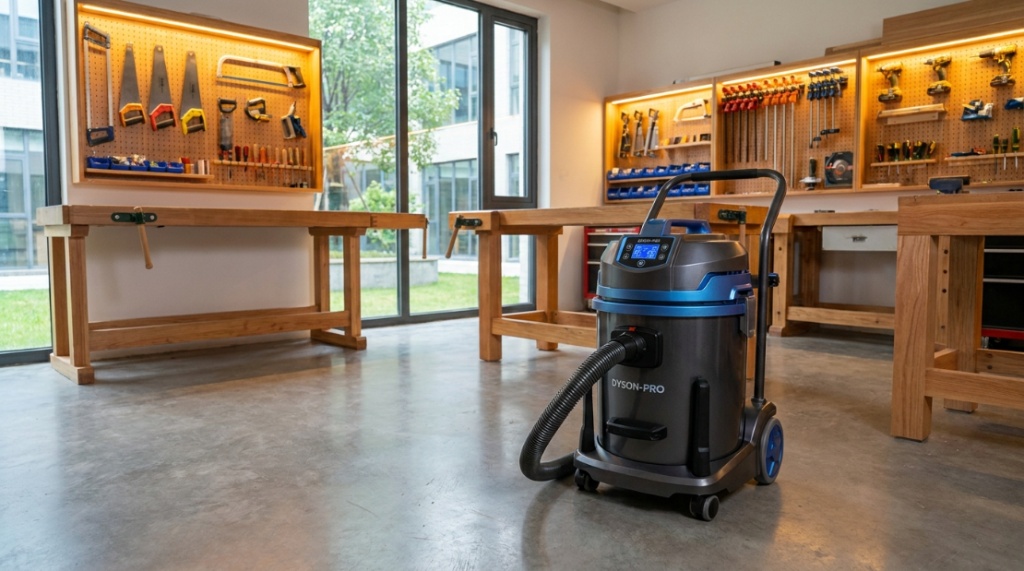
Walking into a hardware store or scrolling through online listings for a shop vac can feel overwhelming. You are faced with a wall of machines boasting different horsepower ratings, tank sizes, and filter types. It is easy to get lost in the specifications and end up with a machine that either lacks the suction you need or is far too bulky for your small garage. The goal is not to buy the most expensive model but to find a machine that matches the specific debris you handle, the space you have, and the level of convenience you expect. Whether you are cleaning up fine sawdust from a table saw or sucking up soaking wet leaves from the driveway, the right workshop vacuum cleaner saves you time and frustration.
Key Takeaways
- Match power to debris: Suction and airflow (CFM) matter more than raw motor horsepower for actual cleaning performance.
- Filter type dictates usage: Cartridge filters are better for fine dust, while reusable cloth bags or cyclonic action help maintain suction over time.
- Consider wet and dry needs: Not all vacuums can handle liquids safely; look for a dedicated wet/dry model if you need that versatility.
- Prioritize noise level: Do not overlook decibel ratings, as prolonged exposure to a loud vacuum can cause hearing fatigue or damage.
- Assess portability and storage: Check the wheel quality and whether the tool fits under your workbench or in your truck bed before buying.
Understanding Power: It Is Not Just About Horsepower
Most shoppers instinctively compare horsepower (HP) ratings, assuming that a 6.5 HP motor is automatically twice as good as a 3 HP model. However, the actual cleaning ability relies on two separate metrics: static water lift (pressure) and cubic feet per minute (CFM or airflow). Horsepower often refers to the motor’s peak output, not the sustained cleaning force. A motor with high static pressure is excellent for pulling debris out of a clogged pipe, but it might be useless if the airflow is low, leaving you unable to pick up large volumes of wood shavings quickly.
For general workshop use, you should look for a balance. If you are doing heavy sanding or using a planer, you need high CFM to capture dust at the source. If you are cleaning out drain lines or crevices, you need high water lift. When reading specifications, ignore the marketing stickers on the tank and look at the fine print on the box. Many reputable manufacturers list peak horsepower, but the real-world performance is dictated by the impeller design and how efficiently air moves through the hose and filter.
How Many Gallons Do You Really Need?
Tank capacity is a matter of convenience and physical logistics rather than power. A 5-gallon unit is compact, easy to carry, and perfect for quick cleanups around a drill press or on a rooftop. A 16-gallon or larger unit stays in one corner of the shop and requires less frequent emptying, which is beneficial when dealing with bulky debris like drywall dust or insulation.
Consider your workflow. If you use a vacuum attached to a sander, the tank fills quickly, but you will likely stop based on filter clogging rather than tank volume. If you are cleaning up after large renovations, a larger tank minimizes downtime. The main trade-off is weight and storage space; an empty 16-gallon stainless steel unit is heavy to lug up stairs, whereas a 5-gallon plastic model is highly portable. Assess whether you are a “one-stop-shop” user or a “move-to-project” user before committing to a size.
The Filter Dilemma: Cartridge, Bag, or Cyclonic?
The filter is the component that most influences how often you need to stop and clean the machine. The most common configuration is a pleated cartridge filter that sits above a collection tank. These filters are excellent for dry pickup but must be removed or cleaned frequently to maintain suction. They catch particles effectively, but when they clog, airflow drops. For those who work with drywall or fine dust, the cartridge filter will require tapping or brushing after every session.
Why You Should Consider a Bag
Adding a disposable filter bag inside the tank is a simple step that extends the life of the main cartridge filter. The bag captures the majority of the coarse debris, meaning the pleated filter only catches the ultra-fine particles. This significantly reduces clogging and keeps the motor running at peak efficiency longer. The downside is the ongoing cost of bags. However, if you value clean air and consistent suction, the price is worth the convenience. Users who skip bags often complain about dust blowing back into the air when emptying the tank; a bag eliminates that “dust explosion” entirely.
Cyclonic Action Explained
Many premium workshop vacuums now feature cyclonic action, where the air spins rapidly inside a conical chamber before reaching the filter. This causes heavier debris to fall into the drum while the filter only sees clean(ish) air. Cyclonic separation does not eliminate the need for a filter, but it dramatically reduces the frequency of cleaning it. This is a worthwhile upgrade if you are a professional who uses the vacuum for hours daily, as it maintains a high level of suction without manual intervention.
Wet and Dry: Knowing the Limits
If you plan to use the vacuum in a garage where you may wash a car or in a basement prone to flooding, you need a machine explicitly rated for wet pickup. Standard vacuums without this rating pose an electrical shock risk. A true wet/dry vacuum uses a float mechanism inside the tank that rises to block the airflow when the water level reaches a certain point, automatically shutting off suction to prevent overflow.
When switching from dry to wet, you must remember to remove the filter bag. Filter bags will turn to a soggy paste if they get wet. The pleated filter may stay on if it is a wet/dry model, but it needs to be dry before you switch back to dry debris. Furthermore, if you are cleaning up a large spill of water, remove the filter entirely if the design allows, as water tends to saturate the paper cartridge quickly, restricting airflow dramatically.
Filtration and Safety: The HEPA Question
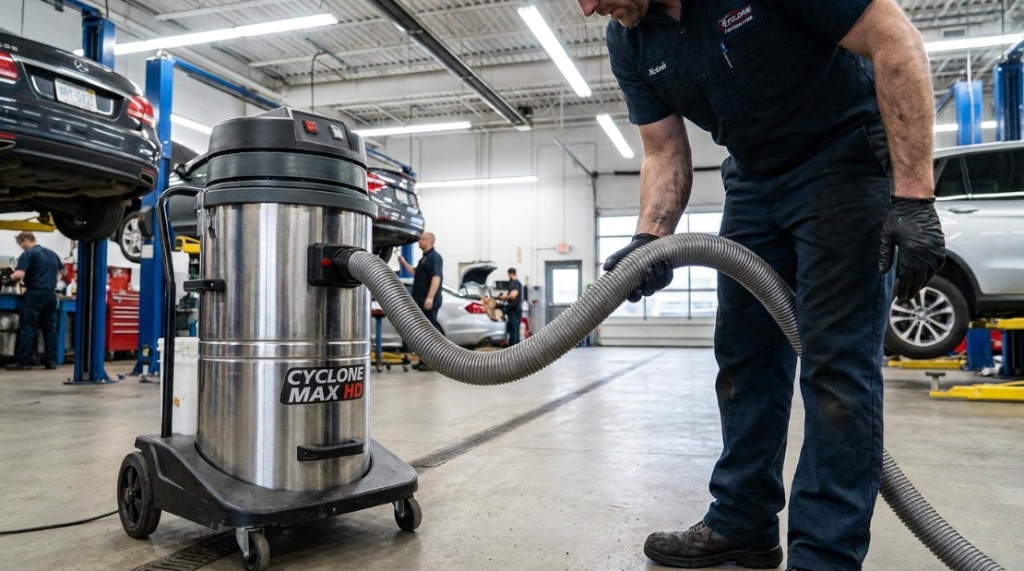
The term “HEPA” is thrown around often, but it has a strict technical definition. A true HEPA filter captures 99.97% of particles at 0.3 microns. This level is critical if you are sanding lead paint, working with fiberglass, or handling mold spores. A standard vacuum will blow these toxic fine particles back into your breathing zone, which is highly dangerous in an enclosed workshop.
If you require HEPA protection, look for a vacuum with a sealed system. This means the filter housing and gaskets are tight enough to prevent air from bypassing the filter. Many vacuums claim HEPA filtration on the exhaust, but if the air leaks through seams before reaching the filter, the system is not actually safe. For general woodworking, a HEPA filter is a luxury; for renovation and hazardous material, it is a mandatory safety feature. Do not confuse “fine dust filter” with true HEPA certification; look for explicit labeling from the manufacturer.
Noise Levels and Your Hearing
Workshop vacuums are notoriously loud, often ranging from 75 to 90 decibels. Prolonged exposure to sounds above 85 decibels can cause gradual hearing loss, which is a serious concern for hobbyists who spend hours in their shop. Many manufacturers are now designing “quieter” models that operate at around 60 to 70 decibels by using sound-dampening enclosures and advanced motor mounts.
When looking at specifications, do not assume that a lower-horsepower motor is quieter. Sometimes, the motor speed and impeller design are the culprits. If you value your hearing, look for models that advertise a specific decibel rating. If you stick to a standard model, invest in high-quality ear protection and wear it every time you use the vacuum, even for a quick five-minute cleanup. This is a non-negotiable aspect of workshop safety that is often overlooked in product reviews.
Durability and Build Materials
The material of the tank dictates the lifespan and maintenance of the vacuum. Stainless steel tanks resist rust and dents, making them ideal for wet pickup and harsh job sites. Plastic tanks are lighter, cheaper, and they do not dent, but they can crack in freezing temperatures or when knocked off a ladder. Polypropylene tanks are becoming popular because they offer a good blend of impact resistance and lower weight.
Inspect the hose quality. A thin, corrugated hose will crack and develop holes over time, killing suction. Look for a hose made of reinforced rubber or polyurethane that remains flexible in cold weather. Also, check the hose diameter. A 2.5-inch hose moves significantly more air than a 1.5-inch hose, which is crucial for picking up heavy shavings. However, a larger hose is more unwieldy and difficult to maneuver for fine detail work. Consider buying a reducer or a secondary small hose for edge trimming if you opt for a large-diameter main hose.
Portability Features: Wheels, Handles, and Cord
A vacuum is only useful if you can get it where the mess is. Look at the wheel design. Small, hard plastic wheels that are flush with the tank are difficult to roll over cords or thresholds. Larger, rubberized wheels provide better traction and stability when pulling the unit up a step. Also, consider the handle. A top-mounted handle is fine for lifting, but a pull handle on the side with rolling wheels is much easier on your back.
The power cord length is also essential. Most standard models come with a 6- to 10-foot cord. If you have a large garage, you will need to get extension cords or move the vacuum frequently. Check whether the vacuum has tool storage on top for accessories. Many models have a “tool box” or a place to click in the nozzles, which prevents you from losing the crucial crevice tool in the pile of sawdust on the floor. If you have a tendency to lose attachments, prioritize a model that keeps everything clipped into place.
Frequently Asked Questions
Can a regular home vacuum be used in a workshop?
You can, but it is not recommended. Standard household vacuums often have cloth or HEPA filters that clog instantly with fine drywall dust. Additionally, they are not designed to handle heavy debris like screws or nails, which can damage the impeller. Household vacuums also lack the airflow (CFM) needed to move heavy wood shavings efficiently.
What is the best way to clean a filter on a workshop vacuum?
Tap the cartridge filter gently against a trash can to dislodge loose dust. For a deeper clean, use compressed air to blow dust off the outside of the pleats, working from the inside out. Never wash a paper cartridge filter with water unless it is explicitly labeled as washable, as this can ruin the media.
Why does my shop vacuum smell bad?
The smell typically comes from wet debris left in the tank. After wet pickup, clean the tank thoroughly with a hose and a mild detergent, and let it dry completely with the lid open. If you use a vacuum for liquid spills, you should also check the filter, as organic matter trapped in the pleats can harbor mold and bacteria.
Can I use a standard shop vacuum to collect hazardous materials like asbestos?
No. Asbestos and similar toxic substances require a specialized Class H vacuum with rigorous leak-proof seals and specific HEPA filtration standards. Using a standard workshop vacuum will aerosolize the fibers and spread contamination throughout your shop and your lungs. Consult professional abatement services for such materials.
Conclusion
Choosing the right workshop vacuum cleaner comes down to analyzing the specific messes you create. You should prioritize airflow and suction design over marketing hype regarding peak horsepower. Assess whether you need a wet/dry model and whether you are willing to invest in bags or cyclonic technology to reduce filter maintenance. Consider the noise level on the specification sheet and the portability details that make the tool easy to navigate. By focusing on the filter type, tank capacity, and safety features, you can move past the intimidating wall of options and select a machine that will be a reliable workhorse in your garage, basement, or construction site for years to come.