How to Choose a Saltwater Spinning Reel for Surf Fishing
Surf fishing offers an exciting way to connect with the ocean and catch impressive fish from the shoreline. However, the harsh saltwater environment demands equipment that can withstand constant exposure to salt, sand, and powerful waves. Choosing the right spinning reel makes the difference between successful fishing trips and frustrating equipment failures.
Unlike freshwater fishing, surf fishing exposes your gear to extreme conditions. Salt accelerates corrosion, sand acts as an abrasive, and powerful fish combined with strong currents test your equipment’s durability. Therefore, selecting a reel designed specifically for these challenges ensures your investment lasts and performs when you need it most.
This comprehensive guide will walk you through everything you need to know about choosing a spinning reel for surf fishing. From understanding essential features to matching your reel with your fishing style, you’ll gain the knowledge to make an informed decision that enhances your time on the beach.
Understanding the Saltwater Environment
Before diving into specific features, it’s crucial to understand what makes saltwater so demanding on fishing equipment. Salt water is highly corrosive and attacks metal components relentlessly. Even a single fishing session leaves salt crystals on your reel that continue damaging it long after you leave the beach.
Sand presents another significant challenge. Wind carries sand particles that work their way into every crevice of your reel. These particles act like sandpaper, grinding away at gears and bearings. Additionally, sand mixed with salt creates an abrasive paste that accelerates wear dramatically.
The surf zone itself creates unique stresses. Waves generate powerful currents that put tremendous pressure on your line and drag system. You’re often casting heavy weights long distances, which requires smooth, reliable performance from every component. Furthermore, the combination of sun, wind, and moisture creates an environment where standard freshwater reels quickly deteriorate.
Size and Capacity Considerations
Choosing the correct reel size forms the foundation of your surf fishing setup. Spinning reels are categorized by size numbers, typically ranging from 3000 to 8000 for surf fishing applications. The right size depends on your target species and fishing conditions.
For general surf fishing targeting medium-sized species like striped bass, redfish, or smaller sharks, a 4000 to 5000 size reel offers an excellent balance. These reels hold sufficient line for long casts while remaining comfortable to fish for extended periods. They pair well with 9 to 11-foot rods, which are standard for surf fishing.
Larger species or situations requiring heavier tackle call for bigger reels. A 6000 to 8000 size reel provides the line capacity and drag power needed for big fish. However, keep in mind that larger reels weigh more and can cause fatigue during long fishing sessions. Match your reel size to the species you realistically expect to encounter most often.
Line capacity matters significantly in surf fishing. You need enough line to make long casts and handle powerful runs from fish. Most surf fishing situations require at least 200 yards of line. Check the manufacturer’s specifications to ensure the reel holds adequate line for your preferred line type and test strength.
The Importance of Protection Against Corrosion
Saltwater destroys fishing reels faster than most anglers realize. Standard reels designed for freshwater quickly develop rust, seized components, and degraded performance when used in the surf. Therefore, investing in a corrosion resistant reel is non-negotiable for serious surf anglers.
Manufacturers use various methods to protect reels from saltwater damage. High-quality reels feature components made from materials that naturally resist corrosion. Stainless steel, aluminum alloys, and specialized coatings provide protection against salt’s destructive effects. Look for reels that specifically mention marine-grade materials in their construction.
The housing and rotor should be constructed from materials that won’t corrode. Aluminum bodies treated with anodizing resist salt better than painted surfaces. Some manufacturers use carbon composite materials that completely eliminate corrosion concerns while reducing weight.
Internal components need protection too. Bearings made from stainless steel or ceramic materials resist rust formation. However, even stainless steel can corrode in saltwater environments. The best reels use shielded or sealed bearings that prevent salt water from reaching the bearing surfaces. This protection extends the life of these critical components significantly.
Pay attention to how screws, bolts, and other fasteners are treated. Cheap reels use standard steel hardware that rusts quickly. Quality surf reels use stainless steel or titanium fasteners throughout, ensuring every component resists corrosion equally well.
Drag System Performance and Protection
The drag system represents one of the most critical components of any fishing reel. It controls how much pressure you can apply to a hooked fish and prevents line breakage during powerful runs. For surf fishing, you need a drag that performs smoothly under pressure while staying protected from the elements.
Drag power varies by reel size, but most surf fishing reels should offer at least 15 to 25 pounds of maximum drag. This capacity handles most species you’ll encounter from the beach. However, drag power alone doesn’t tell the whole story. The drag must engage smoothly without sticking or jerking, which can break your line or pull the hook free.
A sealed drag system offers superior protection in saltwater environments. This design uses gaskets or O-rings to prevent water, sand, and salt from reaching the drag washers. Without this protection, sand particles contaminate the drag washers, causing rough performance and reduced stopping power. Salt water causes drag washers to swell and stick, creating unpredictable performance when fighting fish.
The type of drag material also affects performance. Carbon fiber drag washers provide smooth, consistent pressure even when wet. They resist heat buildup during long fights better than felt washers. Additionally, carbon fiber maintains its performance characteristics across a wide range of pressures, giving you better control throughout the fight.
Some manufacturers use multi-disc drag systems that spread pressure across several washers. This design reduces heat buildup and provides smoother operation under heavy loads. For targeting large species, a multi-disc drag with sealed protection offers the ultimate combination of performance and durability.
Gear Ratio and Retrieve Speed
Gear ratio determines how much line the reel retrieves with each handle turn. This specification significantly impacts your fishing technique and lure presentation. Surf fishing reels typically offer gear ratios between 4.5:1 and 6.2:1, each suited for different applications.
Lower gear ratios around 4.5:1 to 5.2:1 provide more cranking power. These ratios excel when retrieving heavy weights or fighting large fish that require steady pressure. The trade-off is slower line retrieval, which means more handle turns to bring in your line. However, this slower speed often proves advantageous when working lures that require a deliberate presentation.
Higher gear ratios between 5.5:1 and 6.2:1 retrieve line faster with each turn. These reels help you quickly pick up slack line after a cast or rapidly retrieve lures that work best at faster speeds. Fast retrieval also helps when you need to get your bait back quickly to make another cast. Nevertheless, high-speed reels sacrifice some cranking power compared to their slower counterparts.
Consider your typical fishing style when choosing a gear ratio. If you frequently fish with heavy sinkers and large baits, a lower gear ratio reduces fatigue and provides better control. For artificial lure fishing or situations requiring fast line pickup, a higher gear ratio serves you better. Many experienced surf anglers own reels with different gear ratios for various situations.
Build Quality and Smooth Operation
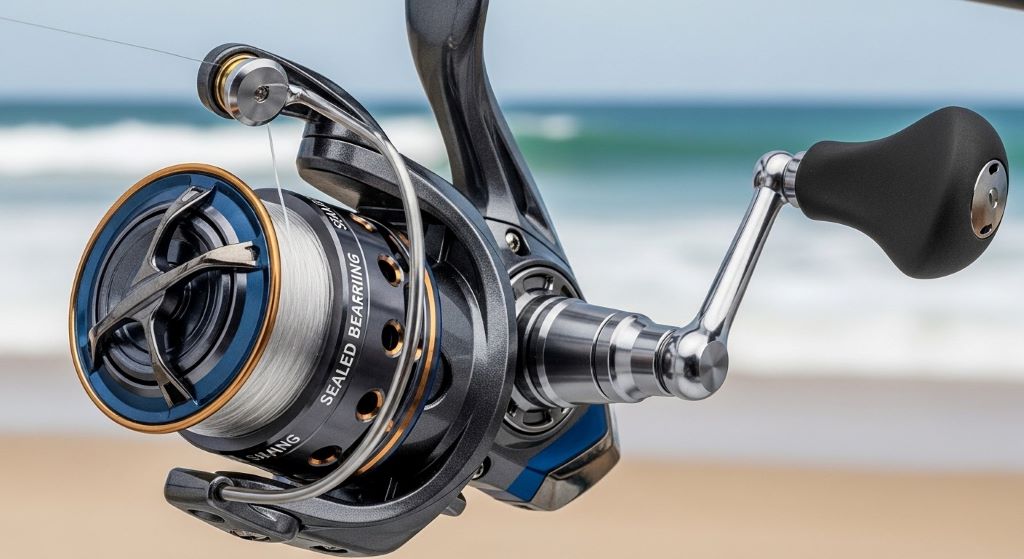
The overall build quality of your reel affects both performance and longevity. Well-built reels feel solid in your hand and operate smoothly without wobble or rough spots. This quality comes from precision manufacturing and quality materials throughout the construction.
The bail mechanism deserves careful attention. This component flips open and closed countless times during a fishing trip. Cheap reels use weak bail springs that fail quickly or bails that don’t close reliably. Quality reels feature robust bail arms made from heavy wire that snap closed positively every time. Some reels include manual bail closure, which many experienced anglers prefer for its reliability.
Check how the handle attaches to the reel. Handles should mount securely without play or wobble. Some reels allow you to switch the handle between sides, which provides flexibility for left or right-handed operation. The handle grip should be comfortable and provide good purchase even when wet.
The anti-reverse bearing prevents the handle from spinning backward when a fish pulls line. This feature should engage instantly without any play. A one-way clutch bearing provides instant hooksets and better control during the fight. Cheaper reels sometimes use inferior anti-reverse mechanisms that fail under stress or allow slight backward movement.
Bearing count gets mentioned frequently in reel marketing, but quality matters more than quantity. A reel with four high-quality sealed bearings outperforms one with ten cheap unsealed bearings. Bearings should be placed strategically at key friction points to ensure smooth operation. The most important locations include the main shaft, rotor, and handle.
Line Management Features
Proper line management prevents frustrating tangles and wind knots that ruin fishing trips. Several features contribute to how well a reel handles line during casting and retrieval. These elements work together to ensure smooth line flow off the spool.
The spool design affects casting distance and line behavior. Modern reels use various spool lip designs to reduce friction as line leaves during a cast. Some feature a slight taper or specific lip profile that helps line flow smoothly. Additionally, shallow spools suited for braided line have become popular because they allow casting lighter lures farther.
An effective line roller is crucial for preventing line twist. This small component guides line back onto the spool during retrieval. Quality reels use large-diameter rollers that turn freely on sealed bearings. Cheap rollers don’t turn properly, causing the line to rub and wear as you retrieve. Over time, this friction damages your line and introduces twist that causes tangles.
The oscillation system determines how evenly line lays on the spool. This mechanism moves the spool up and down as you retrieve, distributing line evenly across its width. Smooth, precise oscillation prevents line from bunching up in one area, which can cause casting problems. Look for reels with proven oscillation systems that maintain consistent line lay even after thousands of casts.
Many modern reels include a slow oscillation feature specifically designed for braided line. This system lays line more tightly and evenly, maximizing spool capacity and improving casting performance with thin-diameter braided lines.
Maintenance and Long-Term Care
Even the best corrosion resistant reel requires proper maintenance to perform optimally over many seasons. Establishing a maintenance routine protects your investment and ensures reliable performance. Fortunately, basic maintenance doesn’t require special tools or extensive mechanical knowledge.
After every fishing trip, rinse your reel thoroughly with fresh water. Use a gentle stream rather than high pressure, which can force water past seals into internal components. Pay special attention to the bail area, line roller, and drag knob where salt accumulates. Let the reel air dry completely before storing it.
Periodically, apply a light coating of reel oil to external moving parts like the bail arm and line roller. Use products specifically designed for fishing reels rather than general-purpose oils. These specialized lubricants resist washing away in water and don’t attract dirt as readily as heavier oils.
Once or twice per season, depending on usage, perform a more thorough maintenance routine. Remove the spool and clean around the drag washers if your reel allows access. Wipe away any salt, sand, or old grease you find. Add fresh grease to gears and oil to bearings according to the manufacturer’s recommendations.
Some anglers prefer having their reels professionally serviced annually. Tackle shops and reel manufacturers offer cleaning and maintenance services that ensure every component receives proper attention. Professional service includes parts replacement when needed and can extend your reel’s life considerably.
Matching Reel to Rod and Line
Your spinning reel doesn’t operate in isolation. It must work harmoniously with your rod and line to create an effective fishing system. Proper matching ensures balanced performance and maximizes your success on the beach.
Rod and reel balance affects casting accuracy and reduces fatigue. When properly balanced, your outfit feels comfortable and natural in your hands. Hold the assembled rod and reel at the reel seat. The outfit should balance without feeling excessively tip-heavy or butt-heavy. Most 9 to 11-foot surf rods pair well with 4000 to 6000 size reels for balanced performance.
Line choice interacts significantly with reel performance. Braided line has become popular for surf fishing because its thin diameter allows longer casts and better sensitivity. However, braid requires careful attention to spool capacity specifications. You can fit much more braid than monofilament on the same spool. Additionally, use monofilament or fluorocarbon backing to prevent braid from slipping on the spool.
Match your line strength to the reel’s drag capacity. As a general rule, set your drag to about one-quarter to one-third of your line’s breaking strength. This setting provides enough power to fight fish while preventing break-offs. A reel with 20 pounds of drag pairs well with 30 to 50-pound braided line for most surf applications.
Budget Considerations and Value
Spinning reels for surf fishing range from under $50 to over $500. Understanding what you get at different price points helps you make a smart investment for your needs and budget. While you don’t need the most expensive reel to catch fish, extremely cheap reels rarely survive saltwater use.
Budget reels under $75 typically use lower-grade materials and simpler construction. They might work acceptably for occasional anglers who fish a few times per year. However, expect shorter lifespans and less smooth operation. These reels often lack adequate sealing against salt and sand intrusion. If you fish regularly, spending more saves money long-term by avoiding frequent replacements.
Mid-range reels between $75 and $200 offer excellent value for most surf anglers. This price range includes reels with proper corrosion protection, sealed bearings, and quality drag systems. Many reels in this category will provide years of reliable service with proper maintenance. They balance performance and durability at an accessible price point.
Premium reels above $200 feature the finest materials, extensive sealing, and buttery-smooth operation. These reels often include advanced features like waterproof drag systems, carbon fiber construction, and precision-machined gears. Serious anglers who fish frequently or target large species benefit most from premium reels. The enhanced durability and performance justify the higher cost when you spend significant time fishing.
Consider purchasing the best reel you can reasonably afford. A quality reel lasts many years and performs consistently, while a cheap reel might fail during the fight of a lifetime. Think of your reel as an investment in your fishing success rather than an expense to minimize.
Brand Reputation and Warranty Support
Established brands with proven track records in saltwater fishing equipment offer confidence and support that generic manufacturers can’t match. These companies have refined their designs through decades of experience and feedback from anglers worldwide.
Research manufacturer reputations before making your purchase. Read reviews from other surf anglers about specific reel models you’re considering. Online fishing forums and social media groups provide valuable real-world feedback about long-term performance and reliability. Pay attention to common issues that multiple users report, as these indicate potential problems.
Warranty coverage provides important protection for your investment. Most quality reels include at least a one-year warranty against defects. Some manufacturers offer extended warranties or lifetime guarantees on certain components. Understand what the warranty covers and what it excludes. Additionally, consider how easy it is to obtain warranty service if problems arise.
Parts availability matters for long-term ownership. Established manufacturers maintain inventory of replacement parts for their reels, even for discontinued models. This availability lets you repair rather than replace your reel when components eventually wear out. Check whether the manufacturer offers exploded diagrams and parts lists for do-it-yourself repairs.
Customer service quality varies significantly between manufacturers. Companies known for responsive, helpful customer service make ownership easier and more pleasant. They can answer questions about maintenance, recommend appropriate models for your needs, and resolve any issues quickly.
Testing Before You Buy
Whenever possible, handle potential reels before purchasing. While online shopping offers convenience and often better prices, physically examining a reel reveals details that specifications can’t convey. Many tackle shops allow you to test reels, though they might not appreciate extensive handling of multiple models.
Turn the handle and feel how smoothly it rotates. Quality reels spin effortlessly without rough spots, grinding, or wobble. The rotation should feel consistent throughout each revolution. Listen for any unusual sounds that might indicate poor manufacturing or loose components.
Engage the anti-reverse and try to turn the handle backward. There should be zero play before it locks solid. Test the bail operation several times. It should flip open easily and snap closed positively without hesitation. A bail that feels weak or doesn’t close reliably will frustrate you constantly while fishing.
Adjust all the adjustable features. The drag knob should turn smoothly and click into position. Try different settings to get a sense of the adjustment range. Likewise, test any handle position adjustments or other movable parts. Everything should operate smoothly without binding or looseness.
Check the overall fit and finish. Look closely at paint or coating quality. Examine seams and joints for gaps that might allow water intrusion. Feel the weight and balance in your hands. While you can’t fully judge how a reel fishes without using it, these tests reveal basic quality indicators.
Conclusion
Choosing the right saltwater spinning reel for surf fishing requires careful consideration of multiple factors. The harsh beach environment demands equipment built specifically to withstand salt, sand, and powerful fish. A corrosion resistant reel with proper sealing protects your investment and ensures reliable performance season after season.
Size your reel appropriately for your target species and fishing style. Understand that a sealed drag system provides crucial protection while delivering the smooth performance needed to land fish successfully. Additionally, consider build quality, line management features, and how the reel matches with your rod and line.
Remember that maintenance plays a vital role in reel longevity regardless of quality. Establish a routine of rinsing after each trip and performing periodic deeper cleaning. This care extends the life of even premium reels significantly.
Finally, balance your budget with your fishing frequency and goals. While you don’t need the most expensive reel available, investing in quality equipment appropriate for saltwater use pays dividends in performance and durability. A well-chosen spinning reel becomes a trusted companion for countless successful surf fishing adventures.
Frequently Asked Questions
What size spinning reel is best for surf fishing beginners?
A 4000 to 5000 size reel offers the best starting point for most beginners. This size handles a wide variety of species commonly caught from the surf while remaining manageable for learning proper technique. It provides adequate line capacity for long casts and enough drag power for most situations. Pair it with a 9 to 10-foot medium-heavy rod for a versatile setup.
How often should I clean my saltwater spinning reel?
Rinse your reel with fresh water after every single fishing trip, even if you didn’t catch anything. This simple step removes salt that causes corrosion. Perform a more thorough cleaning with disassembly every 5 to 10 fishing trips or at least twice per season. Professional servicing once annually benefits reels that see heavy use.
Can I use a freshwater reel for occasional surf fishing?
While a freshwater reel might survive a few surf fishing trips with diligent maintenance, it’s not recommended. Freshwater reels lack the corrosion protection and sealing necessary for saltwater environments. Salt damage occurs quickly and often isn’t visible until components fail. The money saved by using a freshwater reel disappears rapidly when it needs replacement after minimal use.
What’s more important: bearing count or bearing quality?
Bearing quality far outweighs quantity for saltwater applications. Four high-quality sealed or shielded bearings in strategic locations outperform ten cheap unsealed bearings. Unsealed bearings in saltwater reels corrode rapidly regardless of how many are present. Focus on reels that use quality stainless steel or ceramic bearings with proper sealing rather than impressive bearing counts in marketing materials.
Should I choose braided line or monofilament for surf fishing?
Both line types work well for surf fishing, though braided line has become more popular. Braid’s thin diameter for its strength allows longer casts and holds less water, reducing spray on windy days. However, monofilament offers better abrasion resistance when fishing around rocks or structure. Many anglers use braid as their main line with a monofilament or fluorocarbon leader for the best of both worlds.
Related Topics:
How to Select the Best Baitcasting Rod for Bass Fishing in 2026
How to Read Tidal Charts for Surf Fishing