How to Start a Saltwater Aquarium Using a Starter Kit
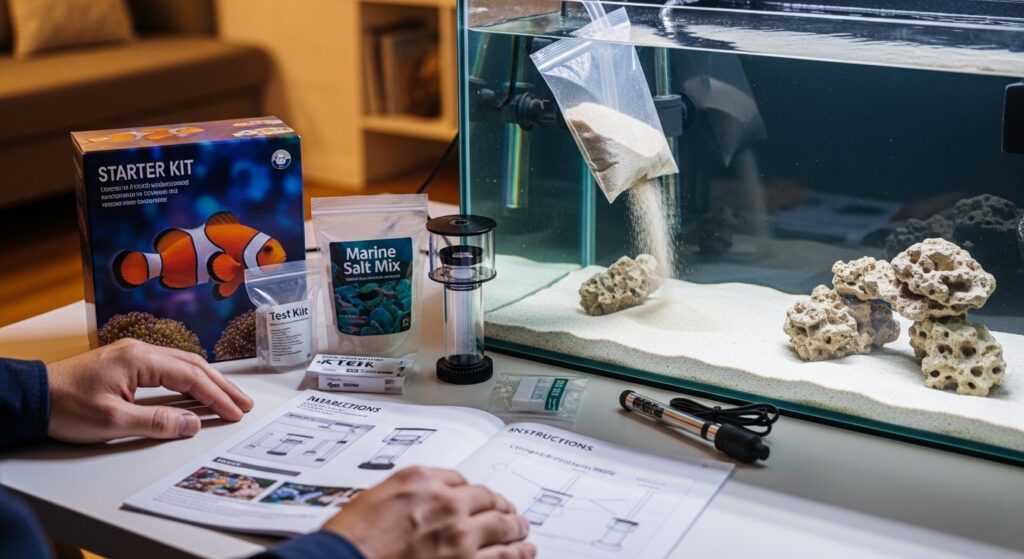
Starting a saltwater aquarium may look complicated at first. Many beginners worry about equipment, water chemistry, and the cost of building a reef aquarium system from scratch. The good news is that a modern marine tank kit simplifies the entire process. Starter kits bundle essential equipment like filtration, lighting, and pumps into one package, making it easier to set up a stable saltwater environment.
A saltwater aquarium starter kit is designed for beginners who want to keep marine fish, corals, or invertebrates without assembling equipment piece by piece. These kits usually include a glass tank, LED lighting, filtration system, circulation pump, and sometimes a protein skimmer. With the right setup and proper cycling, even a beginner can create a thriving reef aquarium system.
According to data from the American Pet Products Association, more than 2.2 million households in the U.S. keep saltwater aquariums. Many of those hobbyists start with bundled aquarium kits because they reduce technical complexity and setup mistakes.
This guide explains exactly how to start a saltwater aquarium using a marine tank kit. You will learn how to set up equipment, prepare saltwater, cycle the tank, and add fish safely. By following these steps, you can avoid common beginner mistakes and build a stable marine ecosystem from day one.
What Is a Saltwater Aquarium Starter Kit?
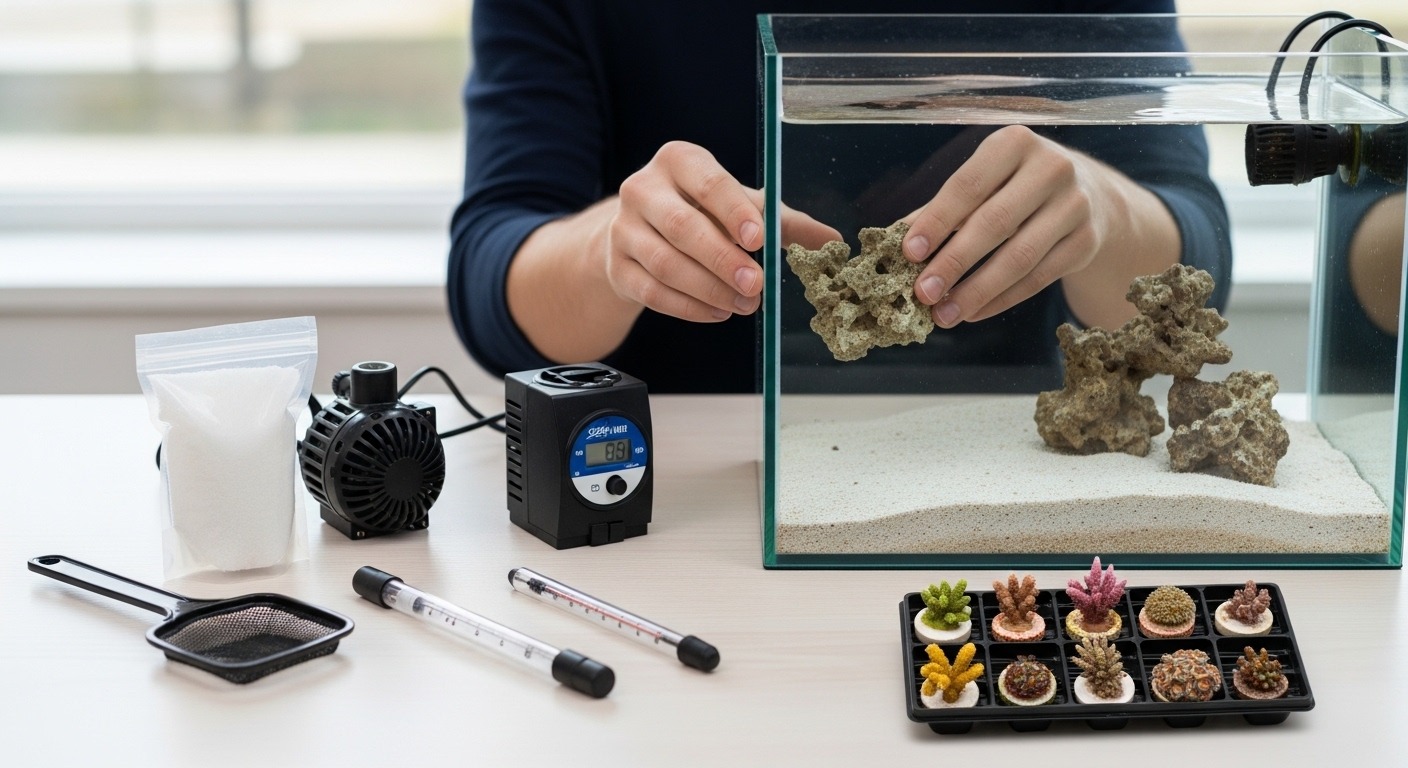
A saltwater aquarium starter kit is a bundled setup that includes essential equipment needed to run a reef aquarium system.
Instead of purchasing individual components, a marine tank kit combines the most important items required to maintain marine life. This approach simplifies installation and reduces compatibility issues.
Typical Components of a Marine Tank Kit
- Glass or acrylic aquarium tank
- LED lighting system for marine life
- Filtration unit (internal or external)
- Water circulation pump or powerhead
- Heater with thermostat
- Basic filtration media
Some advanced reef aquarium systems may also include:
- Protein skimmer
- Integrated sump system
- Automatic top-off reservoir
- Digital temperature control
For beginners, a marine tank kit reduces the risk of buying incompatible equipment and ensures the system works together properly.
Why Should Beginners Use a Marine Tank Kit?
A marine tank kit simplifies the setup process and lowers the learning curve for beginners entering the saltwater aquarium hobby.
Saltwater aquariums require stable water parameters, proper filtration, and consistent circulation. Buying separate equipment without experience often leads to mistakes.
Main Benefits of Starter Kits
- Simplified installation
- Compatible equipment included
- Lower total cost compared to individual purchases
- Reduced setup errors
- Beginner-friendly design
According to industry reports from aquarium retailers, beginner hobbyists who start with complete reef aquarium systems experience fewer equipment failures during the first year.
This makes marine tank kits a practical entry point for new reef keepers.
What Equipment Do You Need to Start a Reef Aquarium System?
To start a reef aquarium system, you need a tank, filtration system, lighting, circulation pump, heater, salt mix, live rock, and testing tools.
While many of these components come with a marine tank kit, some additional supplies must be purchased separately.
| Equipment | Purpose |
|---|---|
| Saltwater aquarium tank | Primary environment for marine life |
| Filtration system | Removes waste and toxins |
| LED reef lighting | Supports coral and marine organisms |
| Powerhead circulation pump | Maintains water flow and oxygen levels |
| Heater | Keeps temperature stable |
| Marine salt mix | Creates ocean-like water chemistry |
| Live rock | Hosts beneficial bacteria |
| Water testing kit | Measures ammonia, nitrate, pH |
These components work together to maintain a stable marine ecosystem.
How Do You Set Up a Saltwater Aquarium Starter Kit?
Setting up a marine tank kit involves placing the aquarium, installing equipment, preparing saltwater, and starting the biological cycle.
Step 1: Choose the Right Location
Place the aquarium on a stable stand away from direct sunlight and temperature fluctuations.
Sunlight can cause algae blooms and unstable water temperature.
Step 2: Install Equipment
Mount the filtration system, heater, lighting unit, and circulation pump according to the kit instructions.
Ensure all electrical connections remain dry and secure.
Step 3: Add Substrate and Live Rock
Most reef aquariums use aragonite sand as substrate. It helps buffer pH levels and supports beneficial bacteria.
Live rock acts as a natural biological filter inside the reef aquarium system.
Step 4: Prepare Saltwater
Mix marine salt with purified water using the manufacturer’s ratio.
Most salt mixes require approximately:
- 1/2 cup marine salt per gallon of water
Use a hydrometer or refractometer to measure salinity.
Ideal salinity range:
- 1.023 – 1.025 specific gravity
Step 5: Start Equipment
Turn on the filtration system, heater, and circulation pump.
Allow the system to run continuously while the tank cycles.
What Is the Nitrogen Cycle in a Marine Tank?
The nitrogen cycle is the biological process that converts toxic ammonia into safer compounds like nitrite and nitrate.
This process is critical for any reef aquarium system.
Stages of the Nitrogen Cycle
- Ammonia produced by waste and uneaten food
- Beneficial bacteria convert ammonia to nitrite
- Another bacteria group converts nitrite to nitrate
Ammonia and nitrite are toxic to marine fish.
Nitrate is less harmful but still needs control through water changes.
The cycling process usually takes:
- 3–6 weeks
During this time, avoid adding fish until ammonia and nitrite reach zero.
When Should You Add Fish to a Marine Aquarium?
You should add fish only after the nitrogen cycle completes and water parameters stabilize.
Adding fish too early can cause toxic ammonia spikes.
Safe Water Parameters Before Adding Fish
- Ammonia: 0 ppm
- Nitrite: 0 ppm
- Nitrate: below 20 ppm
- Temperature: 24–26°C
- Salinity: 1.023–1.025
Begin with hardy fish species such as:
- Clownfish
- Firefish
- Royal gramma
Add fish gradually to prevent biological overload.
What Maintenance Does a Reef Aquarium System Require?
Regular maintenance keeps water chemistry stable and prevents disease outbreaks.
Weekly Maintenance Tasks
- Test water parameters
- Remove algae buildup
- Replace evaporated water
- Perform 10–15% water change
Monthly Maintenance
- Clean filtration media
- Inspect pumps and heaters
- Replace activated carbon
Consistent maintenance is the key factor behind successful marine aquarium systems.
What Are Common Beginner Mistakes in Saltwater Aquariums?
The most common mistakes include rushing the nitrogen cycle, overstocking fish, and ignoring water testing.
Typical Beginner Errors
- Adding fish too early
- Overfeeding marine fish
- Skipping water tests
- Buying incompatible species
- Ignoring salinity changes
Studies in aquarium hobbyist forums show that early livestock loss usually occurs due to ammonia spikes during the first month.
Patience during the initial setup stage prevents most problems.
What Does a Real Beginner Case Study Show?
A practical case study from a beginner reef keeper highlights how starter kits simplify the process.
A hobbyist documented a 20-gallon marine tank kit setup over eight weeks.
Results included:
- Week 1–2: Ammonia spike observed
- Week 3–4: Nitrite peak occurred
- Week 5–6: Nitrate stabilized
- Week 7–8: First clownfish successfully introduced
The system remained stable because the aquarist followed cycling procedures and avoided rushing the process.
This example demonstrates how proper setup of a reef aquarium system leads to long-term stability.
Conclusion: Is a Marine Tank Kit the Best Way to Start?
Starting a saltwater aquarium does not need to be complicated. A well-designed marine tank kit removes much of the guesswork involved in building a reef aquarium system from scratch.
By combining essential equipment in one package, starter kits help beginners focus on learning the fundamentals of marine aquarium care. When you follow the correct setup steps—choosing a stable location, preparing saltwater properly, cycling the tank, and adding fish slowly—you create the conditions needed for a healthy marine ecosystem.
Patience is the most important factor in reef keeping. Rushing the cycling process or overstocking the aquarium often leads to water quality issues. However, when you maintain stable water parameters and perform regular maintenance, a saltwater aquarium becomes one of the most rewarding hobbies.
If you are planning to start your first reef aquarium system, a marine tank kit offers the simplest and most reliable starting point. Explore different starter kits, choose the appropriate tank size, and begin building your own thriving saltwater environment today.
The ocean ecosystem can now exist inside your living room—one careful step at a time.
Frequently Asked Questions
How big should a beginner saltwater aquarium be?
A beginner saltwater aquarium should ideally be between 20 and 40 gallons. Larger tanks maintain more stable water parameters and are easier to manage than small nano aquariums.
How long does a marine aquarium take to cycle?
A typical reef aquarium system takes about 3 to 6 weeks to complete the nitrogen cycle. During this period, beneficial bacteria establish colonies that convert ammonia into nitrate.
Can beginners keep coral in a marine tank kit?
Yes, many marine tank kits include LED lighting capable of supporting beginner corals such as zoanthids, mushrooms, and soft corals. However, water stability is essential before adding coral.
Do saltwater aquariums require special lighting?
Yes. Reef aquarium systems require LED lighting designed for marine environments. These lights support photosynthetic organisms like coral and help maintain natural color balance.
How often should you change water in a marine aquarium?
Most marine aquariums require a 10–15% water change every week or every two weeks. Regular water changes help control nitrate levels and replenish trace minerals.
Is maintaining a saltwater aquarium expensive?
The initial setup cost of a marine tank kit can range from $200 to $1,000 depending on size and equipment. Ongoing maintenance costs mainly include salt mix, electricity, and occasional equipment replacement.
Read More Also: How to Compare the Best Luggage Brands in 2026
Find out: Distance from Miami Wynwood Area to Key Largo Beaches