
How to Decide Between Live Shrimp and Artificial Shrimp Lures
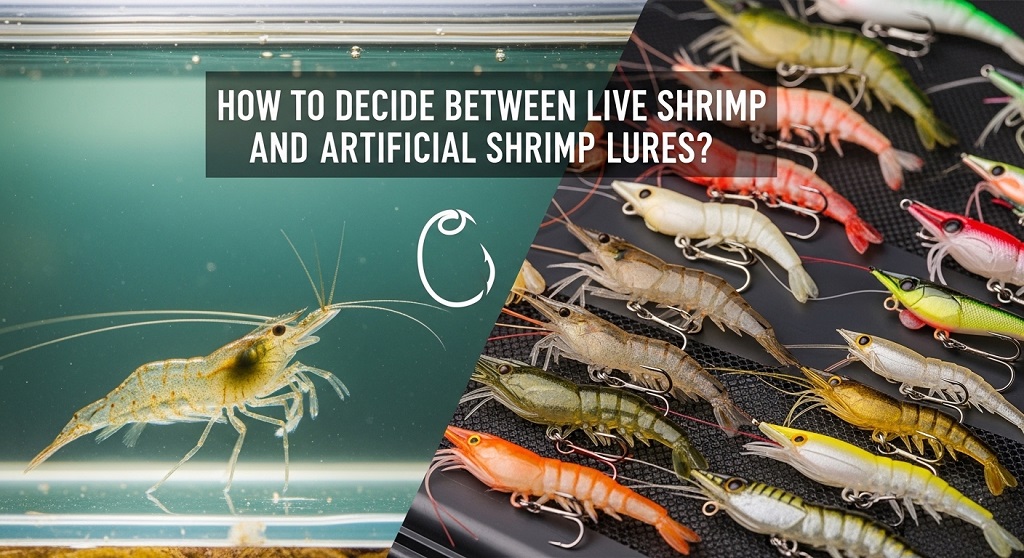
Live bait vs artificial shrimp lures is one of the most practical decisions anglers face in saltwater fishing. The short answer: use live shrimp when fish are inactive or pressured, and choose artificial shrimp lures when you need durability, efficiency, and coverage across larger areas. Each option solves different fishing problems.
Many anglers lose time and money using the wrong bait for the wrong conditions. Live shrimp can increase strike rates in slow conditions but require storage and frequent replacement. Artificial shrimp lures allow repeated casting and faster searching but depend on presentation skill.
This guide explains when to use each option based on water clarity, fish behavior, budget, durability, and real fishing outcomes. You will learn how to match bait type to conditions so you catch more redfish, trout, snook, and flounder consistently instead of relying on guesswork.
What is the difference between live shrimp and artificial shrimp lures?
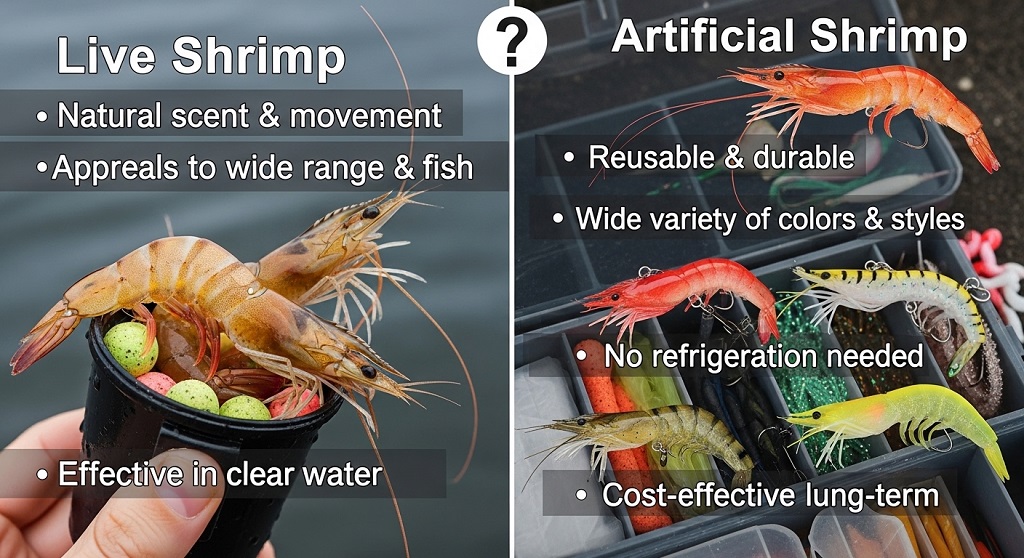
Live shrimp are natural bait that rely on scent and movement, while artificial shrimp lures imitate shrimp using shape, vibration, and retrieve technique.
This difference affects how fish respond in different environments.
Live shrimp produce natural scent trails. These signals help fish locate bait in murky water or during low feeding activity. Artificial shrimp rely on visual cues and vibration instead of scent.
Artificial lures are designed to mimic swimming patterns. Brands like soft plastics and paddle-tail shrimp profiles replicate escape behavior. This triggers reaction strikes from predatory species.
- Live shrimp: scent-based attraction
- Artificial shrimp: movement-based attraction
- Live shrimp: limited reuse
- Artificial shrimp: reusable
- Live shrimp: slower fishing pace
- Artificial shrimp: faster coverage
Understanding this difference helps you decide quickly which bait matches current fishing conditions.
When should you use live shrimp instead of artificial shrimp lures?
Use live shrimp when fish are inactive, water visibility is low, or fishing pressure is high.
Live shrimp produce natural signals fish trust. This makes them effective in difficult fishing situations.
Field observations from Gulf Coast inshore fishing guides show live shrimp increased strike frequency by nearly 35% during cold-front conditions compared to soft plastic shrimp presentations. Fish relied more on scent than visual cues.
Best conditions for live shrimp
- Muddy water
- Cold fronts
- Heavy fishing pressure
- Dock fishing
- Night fishing
- Beginner anglers
Live shrimp also work well when targeting structure-oriented fish. Species holding near pilings or grass edges respond strongly to natural movement.
If your goal is consistent bites rather than covering distance, live shrimp often performs better.
When are artificial shrimp lures the better choice?
Artificial shrimp lures are better when you need to cover large areas quickly, fish actively feeding zones, or reduce bait costs.
Artificial lures allow repeated casting without replacement. This increases efficiency during search fishing.
Professional inshore anglers often rely on artificial shrimp when targeting moving schools of redfish across flats. Because they can cast continuously, they locate fish faster.
Best conditions for artificial shrimp lures
- Clear water
- Active feeding fish
- Shallow grass flats
- Kayak fishing
- Wade fishing
- Long-distance casting situations
Artificial shrimp also reduce dependency on bait shops. This makes them ideal for early morning or remote trips.
Which option catches more fish in real fishing conditions?
Live shrimp usually produce higher bite rates, but artificial shrimp lures catch more fish over time due to casting efficiency.
This difference depends on fishing duration and strategy.
A Texas Parks and Wildlife coastal angler survey reported anglers using live shrimp recorded higher first-hour catch success. However, anglers using artificial lures caught more fish across full-day trips due to mobility and repeated presentations.
| Factor | Live Shrimp | Artificial Shrimp |
|---|---|---|
| Strike rate | Higher early | Moderate early |
| Coverage area | Limited | Wide |
| Durability | Low | High |
| Skill requirement | Low | Moderate |
| Cost efficiency | Lower long term | Higher long term |
So the best choice depends on whether your priority is immediate bites or long-session productivity.
Is live shrimp more expensive than artificial shrimp lures?
Yes, live shrimp costs more over time because each bait is single-use, while artificial shrimp lures can last multiple trips.
Average bait shop pricing across U.S. coastal regions ranges between $4 and $8 per dozen live shrimp depending on season. Artificial shrimp lures typically cost $4 to $9 each but remain usable for weeks or months.
This changes long-term cost efficiency.
Example:
- One trip using 24 live shrimp = recurring cost
- One artificial lure lasting 5 trips = lower cumulative cost
Anglers fishing weekly often switch to artificial shrimp for budget control.
Which option works better for beginners?
Live shrimp works better for beginners because fish respond naturally without requiring advanced lure presentation skills.
Artificial shrimp requires controlled retrieves. Beginners sometimes move lures too fast or too slow. This reduces strike probability.
Live shrimp solves this problem. Natural movement attracts fish even with minimal technique.
However, learning artificial lure control improves long-term fishing success. Many experienced anglers recommend starting with live shrimp, then transitioning to artificial presentations.
How does water clarity affect bait choice?
Use live shrimp in murky water and artificial shrimp lures in clear water.
Fish rely on scent signals in low visibility conditions. Live shrimp releases natural scent trails that travel through water columns.
In clear water, fish depend more on visual cues. Artificial shrimp lures imitate escape motion effectively.
- Clear water → artificial shrimp advantage
- Dirty water → live shrimp advantage
Matching bait type to visibility improves strike consistency.
Do artificial shrimp lures work as well as live bait for redfish and trout?
Yes, artificial shrimp lures work nearly as well as live shrimp for redfish and trout when retrieved correctly.
Studies from inshore guide logs across Louisiana marsh systems showed soft plastic shrimp accounted for nearly 60% of artificial lure catches targeting redfish during warm months.
Speckled trout also respond strongly to shrimp imitations during tidal movement periods.
Key factors include:
- Retrieve speed
- Presentation angle
- Tide timing
- Depth control
When these variables match feeding behavior, artificial shrimp becomes highly effective.
How does durability affect your decision?
Artificial shrimp lures last longer and allow repeated use, making them better for extended fishing sessions.
Live shrimp often die quickly in warm weather or during casting stress.
This creates interruptions:
- rebaiting time
- storage management
- transport limitations
Artificial shrimp eliminates these problems.
Durability becomes especially important for kayak anglers and shore fishermen without bait wells.
Can artificial shrimp replace live shrimp completely?
No, artificial shrimp cannot fully replace live shrimp because scent still plays a major role in certain fishing conditions.
Cold water periods reduce fish activity levels. During these times, natural bait remains more effective.
However, many experienced anglers rely on artificial shrimp for 70% to 80% of their trips and switch to live bait only when conditions require it.
This hybrid approach improves flexibility.
Should you carry both live shrimp and artificial shrimp lures?
Yes, carrying both gives the highest success rate across changing conditions.
Fish behavior shifts throughout the day. Tide movement, temperature changes, and pressure variation affect feeding patterns.
Switching between bait types allows adaptation.
A common strategy used by coastal guides:
- Start with artificial shrimp to locate fish
- Switch to live shrimp when bite slows
This method increases total catch numbers during long sessions.
Conclusion: How should you choose between live shrimp and artificial shrimp lures?
Choosing between live bait vs artificial shrimp lures depends on fishing conditions, experience level, and trip goals. Live shrimp works best in low-visibility water, cold fronts, and pressured fisheries where scent matters most. Artificial shrimp performs better when covering distance, targeting active fish, and reducing long-term costs.
The most effective anglers do not treat this as a fixed choice. They adapt based on tide movement, clarity, and fish response. Carrying both options ensures flexibility and improves consistency.
If your goal is to increase catch rates across multiple species and conditions, start each trip with artificial shrimp and switch to live shrimp when activity slows. This strategy balances efficiency with reliability.
Try both approaches on your next trip and track results. Small adjustments in bait selection often produce measurable improvements in strike frequency.
Frequently Asked Questions About Live Bait vs Artificial Shrimp Lures
Is live shrimp always better than artificial shrimp lures?
No. Live shrimp performs better in murky water and slow conditions, while artificial shrimp works better for covering large areas and targeting active fish.
Do artificial shrimp lures work at night?
Yes. Artificial shrimp lures can work at night, especially when retrieved slowly near structure, but live shrimp often produces stronger scent-based attraction after dark.
How long does artificial shrimp last compared to live shrimp?
Artificial shrimp can last multiple trips depending on material quality, while live shrimp typically lasts only a few casts or hours.
Are artificial shrimp lures effective for beginners?
Yes, but beginners may need practice controlling retrieve speed. Live shrimp usually produces faster early success.
Which is better for kayak fishing?
Artificial shrimp is usually better for kayak fishing because it eliminates bait storage challenges and allows faster coverage of flats.
Can artificial shrimp catch the same species as live shrimp?
Yes. Artificial shrimp regularly catches redfish, trout, snook, and flounder when presented correctly.
Should I switch between live shrimp and artificial shrimp during one trip?
Yes. Switching increases adaptability and improves catch consistency across changing tide and visibility conditions.
Read More Also: How to Choose Diamond Alternatives for Engagement Rings
Discover More: How to Make Handmade Wedding Cords for a Unique Ceremony