Homemade Pasta Made Easy: VeoHome Manual Pasta Maker Tested
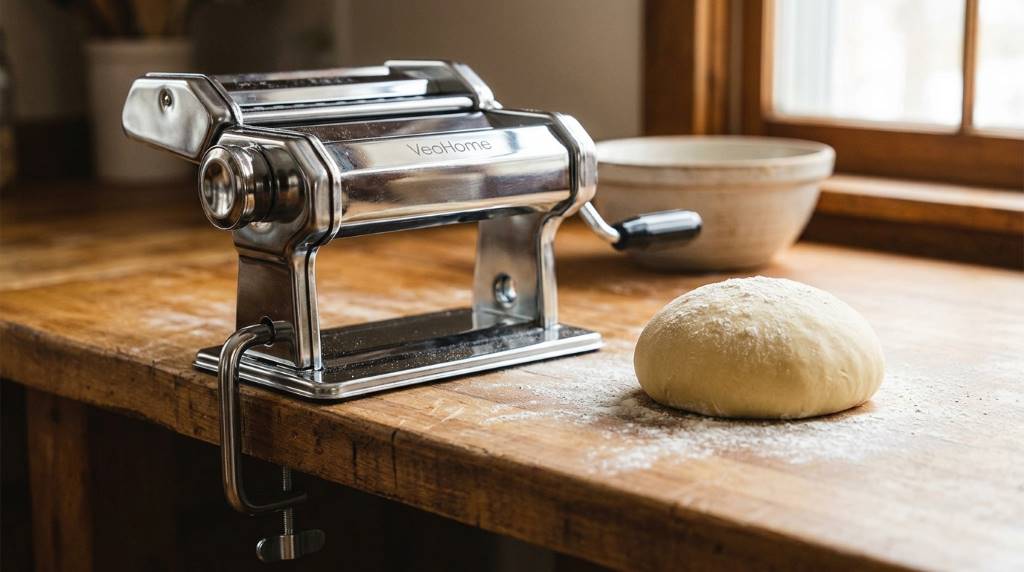
Yes, the VeoHome Manual Pasta Maker makes fresh pasta surprisingly simple for home cooks. It offers seven thickness settings, two cutters, and a 4.69-star rating from 64 customer reviews. With a little practice, this DIY noodle maker can turn basic flour and eggs into consistent homemade pasta without electricity.
Key Takeaways
- Seven thickness settings: You can adjust sheets for lasagna, ravioli, spaghetti, and fettuccine.
- Manual operation: The hand crank gives you direct control over rolling speed and dough handling.
- Useful accessories: The kit includes a drying rack, ravioli maker, clamp, crank, and cleaning brush.
- Stainless steel build: The metal construction suits regular home pasta preparation.
- Beginner friendly: The basic rolling process becomes easier after a few practice batches.
- Cleaning needs attention: The machine requires dry manual cleaning rather than dishwasher cleaning.
What Makes the VeoHome Pasta Maker Different?
The VeoHome focuses on control rather than automation. Instead of pressing buttons, you guide the dough through rollers using a hand crank. That simple approach gives beginners a clear connection between dough texture and final pasta quality.
The machine also arrives as a broader pasta-making kit. You receive a drying rack, ravioli maker, table clamp, hand crank, and cleaning brush. For shoppers comparing basic rule kitchen practices, this setup also encourages organized preparation.
Its stainless steel construction adds a reassuring sense of durability during repeated rolling. The machine weighs about 2.9 kilograms and measures 21 by 21 by 16 centimeters. Those dimensions keep the unit manageable while still providing enough weight for stable countertop work.
VeoHome lists seven adjustable thickness settings for different pasta styles. The manufacturer also states that the machine works without electricity. That combination makes it attractive for cooks who prefer traditional preparation and hands-on control.
What Comes in the Box?
The package includes the core machine and several accessories for different pasta tasks. Each accessory serves a practical purpose rather than simply adding visual appeal.
- Pasta machine: Rolls dough into progressively thinner sheets.
- Hand crank: Drives the rollers and cutters manually.
- Table clamp: Holds the machine securely during operation.
- Two cutters: Creates different pasta widths for common noodle styles.
- Drying rack: Keeps freshly cut pasta separated before cooking.
- Ravioli maker: Helps shape filled pasta at home.
- Cleaning brush: Removes flour and dried dough from working areas.
How to Make Pasta With the VeoHome
The machine itself cannot rescue poorly prepared dough. Therefore, spend time creating a smooth, firm dough before you begin rolling.
Start with flour and eggs, then combine them gradually until the mixture forms rough pieces. Next, knead those pieces until the dough becomes smooth, elastic, and cohesive.
Allowing the dough to rest also makes rolling considerably easier. Resting relaxes the gluten and reduces the resistance you feel while cranking.
Step 1: Secure the Machine
Place the machine on a clean, stable countertop before attaching the clamp. Tighten the clamp firmly, but avoid excessive force that could damage the mounting surface.
Insert the hand crank into the roller opening after securing the machine. Then check the crank movement before feeding any dough through the rollers.
Step 2: Start at the Widest Setting
Begin with the widest thickness setting rather than forcing thick dough through a narrow opening. Feed the dough slowly while turning the crank at a steady pace.
If the dough looks uneven, fold it and run it through the widest setting again. Repeat this process until the sheet develops a smoother, more uniform texture.
Lightly dust the dough with flour whenever excessive moisture causes sticking. However, avoid heavy flouring because excess flour can make the finished pasta dry.
Step 3: Reduce the Thickness Gradually
Move through the settings gradually instead of skipping several levels. This approach reduces strain on the dough and produces more consistent sheets.
For spaghetti, a moderately thin setting usually works well. Fettuccine and lasagna can use slightly thicker sheets, while ravioli generally benefits from thinner dough.
Keep the finished sheet moving because fresh dough can dry surprisingly quickly. A lightly floured surface or clean damp towel can help during short pauses.
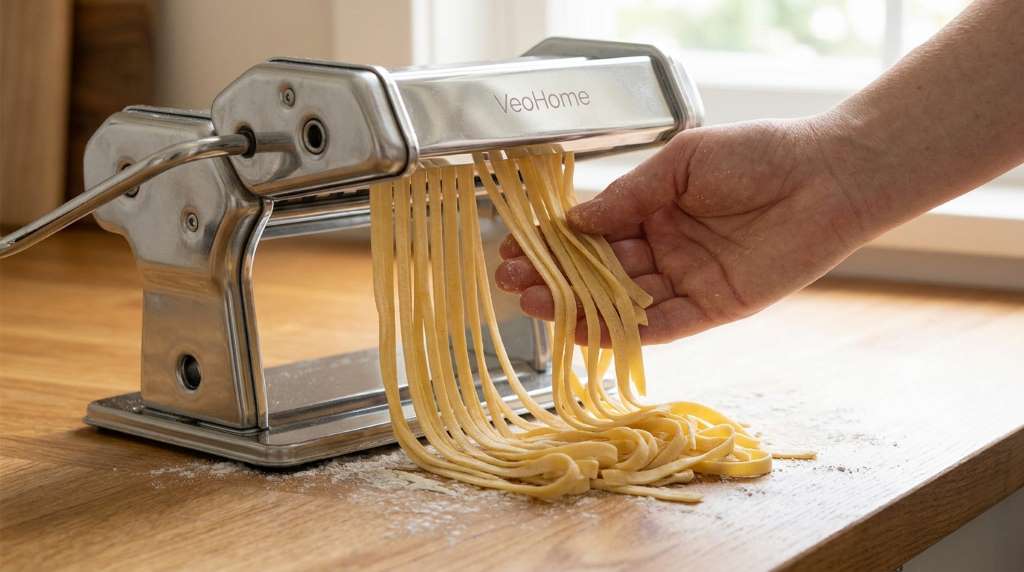
Step 4: Cut and Dry the Pasta
Once the sheet reaches your preferred thickness, attach the appropriate cutter. Transfer the crank from the rollers to the cutter before feeding the sheet through.
Guide the pasta through the cutter with one smooth motion. Then move the strands immediately onto the included drying rack or another suitable surface.
The drying rack provides an important advantage because freshly cut strands can stick together easily. Separating them early improves handling and helps preserve individual noodle shapes.
Testing the Pasta-Making Experience
A useful pasta machine test should examine more than its advertised features. The real questions involve setup, dough handling, thickness control, cutting consistency, cleanup, and storage.
For that reason, the VeoHome deserves evaluation as a complete workflow rather than merely a countertop appliance. Its strongest advantage comes from combining rolling, cutting, drying, and ravioli preparation within one package.
The initial setup remains straightforward because the machine uses a simple clamp and hand crank. However, beginners still need to learn how firmly they should hold and guide each dough sheet.
The manual crank also changes the cooking experience. You can slow down when dough feels resistant, then increase your pace when the sheet moves smoothly.
Rolling Performance
The seven thickness settings give you useful control over different pasta recipes. That range matters because one thickness rarely suits every pasta style.
Wide settings work best during the initial shaping stage. Gradually moving toward thinner settings creates more delicate sheets without forcing the dough through an unsuitable opening.
Consistency depends heavily on your technique. Keep the dough centered, maintain steady pressure, and avoid pulling the sheet aggressively from the rollers.
Cutting Performance
The two cutting options cover several familiar homemade pasta styles. They can produce narrow strands and wider noodles for different sauces and recipes.
Cutting works best when the sheet remains lightly floured but not excessively dry. A sheet that becomes too dry can crack or produce uneven strands.
Freshly cut noodles should also reach the drying rack quickly. This simple step reduces clumping and makes portioning easier before cooking.
Ravioli Preparation
The included ravioli maker expands the machine beyond ordinary noodles. It gives beginners an accessible way to experiment with filled pasta.
Ravioli requires thinner sheets and careful filling control. Too much filling can prevent clean sealing and create weak edges during cooking.
Use small portions of filling and keep the dough edges clean. Then press the pieces firmly enough to create a reliable seal.
Where the VeoHome Works Best in a Real Kitchen
The VeoHome makes the most sense for cooks who value homemade food and repeatable preparation. It suits weekend cooking, family meals, dinner projects, and occasional batch preparation.
Its manual design also eliminates the need for a nearby electrical outlet. That flexibility can simplify countertop placement when you are already working around other appliances.
For a broader perspective on practical kitchen planning, this noise free kitchen makeover approach highlights the value of organized work zones.
The included drying rack becomes particularly useful when preparing several portions. Instead of spreading noodles across multiple plates, you can separate strands vertically.
Best Uses for the Machine
- Fresh spaghetti: Roll the dough thin enough for light sauces and quick cooking.
- Fettuccine: Choose a wider cutter and maintain a slightly thicker sheet.
- Lasagna: Stop at a suitable thickness before cutting sheets into manageable pieces.
- Ravioli: Roll thin sheets and use modest filling portions for clean seals.
- Tagliatelle: Use the wider cutter for substantial strands that hold rich sauces.
What Could Be Better?
No manual pasta maker removes every learning curve. The VeoHome still requires patience, countertop space, and some dough-handling practice.
The machine also requires manual cleaning because the manufacturer does not recommend dishwasher use. You should therefore treat cleaning as part of the pasta-making routine.
The included drying rack adds useful functionality, but it also requires additional storage space. Small kitchens may need a dedicated cupboard area for the complete kit.
Manual operation can also become tiring during very large batches. If you regularly make pasta for many people, an electric machine may eventually offer greater convenience.
Still, these limitations reflect the machine’s manual design rather than major functional weaknesses. The VeoHome prioritizes control, simplicity, and versatility over speed or automation.
Who Should Buy It?
The VeoHome suits beginners who want an affordable entry into fresh pasta preparation. It also works well for experienced cooks who prefer manual control.
It becomes especially appealing when you want several pasta formats without buying multiple specialized tools. The included accessories make the initial setup more complete than many basic pasta machines.
However, cooks who dislike hand cranking should consider electric alternatives instead. Likewise, extremely high-volume users may prefer motorized equipment for faster production.
VeoHome Versus a Typical Entry-Level Pasta Maker
A basic pasta machine usually focuses on rolling and cutting alone. The VeoHome adds a drying rack and ravioli maker, which expands its practical usefulness.
The seven thickness settings also provide more control than a machine with fewer adjustment positions. That flexibility helps users adapt the dough to different recipes.
Another advantage involves the complete workflow. Instead of improvising a drying solution, you receive a dedicated rack within the package.
When comparing kitchen tools, consider the entire setup rather than the headline feature. A lower-priced machine may become more expensive after purchasing missing accessories separately.
For another appliance-focused comparison perspective, this Elite Gourmet EDF2100 discussion shows why practical features matter beyond basic specifications.
How to Get Better Results From Your First Batch
Your first batch should focus on technique rather than culinary perfection. Choose a straightforward egg pasta dough and avoid complicated fillings initially.
Keep your dough firm enough to pass through the rollers without excessive sticking. If the dough feels wet, add small amounts of flour instead of heavily coating it.
Work with smaller portions because they are easier to control. Smaller pieces also make it easier to maintain consistent thickness from one pass to another.
Keep a small bowl of flour nearby for quick adjustments. However, use flour sparingly because too much can interfere with sauce adhesion.
A Simple First-Batch Workflow
- Prepare: Mix flour and eggs, then knead until smooth.
- Rest: Cover the dough and let it relax before rolling.
- Divide: Cut the dough into manageable portions.
- Flatten: Press each portion into a rough sheet.
- Roll: Start wide and reduce thickness gradually.
- Cut: Choose the cutter that matches your desired pasta.
- Dry: Transfer strands immediately to the drying rack.
- Cook: Boil fresh pasta until it reaches your preferred texture.
Cleaning, Storage, and Long-Term Care
Cleaning should begin after the machine has completely finished its pasta-making job. Remove loose flour and dough with the included brush before storing the unit.
Do not rinse the machine casually under running water. VeoHome specifically recommends dry cleaning for the machine and its accessories.
If dough becomes lodged around the rollers, allow it to dry before brushing it away. A small piece of spare dough can also collect residue from accessible roller surfaces.
Store the drying rack and ravioli accessory together with the machine whenever possible. Keeping everything in one location makes future pasta sessions faster to organize.
Final Verdict: Is the VeoHome Manual Pasta Maker Worth It?
Yes, the VeoHome Manual Pasta Maker offers strong value for home cooks who enjoy hands-on preparation. Its seven thickness settings, dual cutters, drying rack, and ravioli maker create a versatile starter system.
The biggest strength comes from its balanced approach to simplicity and flexibility. You get meaningful control without adding motors, complicated controls, or unnecessary technology.
Its limitations remain easy to understand, especially manual effort and dry-cleaning requirements. Those trade-offs become reasonable when you value traditional pasta making and want a complete kit.
Ultimately, the VeoHome works best when you treat pasta making as a cooking skill rather than instant automation. Start with simple dough, practice your rolling technique, and expand into ravioli afterward.
If you want fresh pasta without electricity, this machine deserves a place on your shortlist. Compare your kitchen space, cooking frequency, and preferred pasta styles before making the purchase.
Frequently Asked Questions
Is the VeoHome Manual Pasta Maker good for beginners?
Yes, its manual design and seven thickness settings make it approachable for beginners who practice basic dough handling.
How many thickness settings does the VeoHome have?
The VeoHome has seven adjustable thickness settings for different pasta preparations.
Can the VeoHome make ravioli?
Yes, the package includes a ravioli maker for preparing homemade filled pasta.
Does the VeoHome Pasta Maker need electricity?
No, the machine uses a manual hand crank and requires no electrical power.
Can you put the VeoHome Pasta Maker in a dishwasher?
No, the manufacturer recommends manual dry cleaning instead of dishwasher cleaning.
Ready to Make Fresh Pasta?
The VeoHome Manual Pasta Maker offers a practical route from homemade dough to fresh noodles. Its strongest appeal comes from control, useful accessories, and a straightforward learning curve.
If those qualities match your cooking style, start with one simple pasta recipe and build your technique gradually. Once you master rolling and cutting, the included ravioli maker opens the door to even more homemade dishes.