
How to Find the Perfect Pantry Cabinet for Your Home
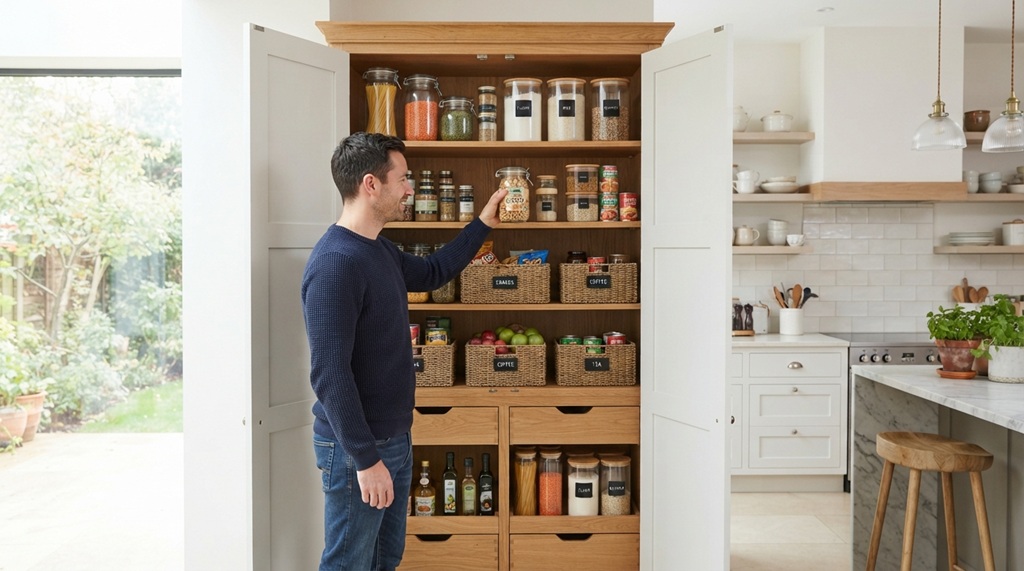
There’s something deeply satisfying about an organized pantry. But if your current setup involves cramming cereal boxes onto wire shelves or playing Tetris with canned goods every time you shop, you know the struggle. The problem is rarely a lack of storage—it’s a lack of the right storage. Finding the perfect pantry cabinet for home use isn’t just about buying the biggest piece of furniture you can find; it’s about tailoring the solution to your space, your cooking habits, and your daily flow. This guide breaks down the critical factors you need to consider, the common mistakes to avoid, and the specific steps to take so you can finally build a pantry that actually works for you.
Key Takeaways
- Before buying, measure your available space and account for swing clearance and walkways to avoid blocking doorways and appliances.
- Choose between freestanding and ready-to-assemble cabinets based on your layout, load-bearing needs, and whether you plan to move within the next few years.
- Prioritize internal organization (pull-out drawers, adjustable shelves, and door racks) over external appearance to maximize usable storage.
- Set a realistic budget that includes hardware, installation, and potential customization—not just the cabinet price tag itself.
Assess Your Space and Layout Limitations
The single biggest mistake people make when shopping for a large storage unit is forgetting that it has to co-exist with the rest of the home. A pantry cabinet that fits perfectly in a warehouse showroom can feel (and literally be) completely wrong in your kitchen or mudroom. You absolutely must start with a detailed analysis of your physical area before you fall in love with a specific design.
Measure the Install Space (Not Just the Wall)
Take exact height, width, and depth measurements of the alcove, wall, or empty corner where the cabinet will live. It is critical to measure the floor-to-ceiling height at the actual installation point, not just along the baseboard, because older homes often have uneven floors or out-of-level ceilings. If the ceiling is sloped or has crown molding, a standard tall cabinet will not fit flush. Similarly, check the baseboard thickness; you may need to remove it or account for it in the depth calculation.
Optimizing Door and Foot Traffic Clearance
Integrating a pantry cabinet into your kitchen layout demands careful spatial planning to preserve both elegance and functionality. Before installation, verify that the cabinet doors can fully extend without colliding with surrounding features—such as refrigerator handles or adjacent cabinetry—or interrupting main pathways. While a standard pantry depth measures around 18 inches, outward-swinging doors require 24 to 30 inches of clear space to allow comfortable access and movement. Marking the door swing arc on your floor with painter’s tape provides a precise visual of the traffic flow. Balancing these dimensions ensures your space remains effortless to navigate; for additional inspiration on creating a quiet, cohesive layout, explore our DIY kitchen makeover guide for noise-free style in open concept homes.
Understanding Cabinet Types: Freestanding vs. Built-In
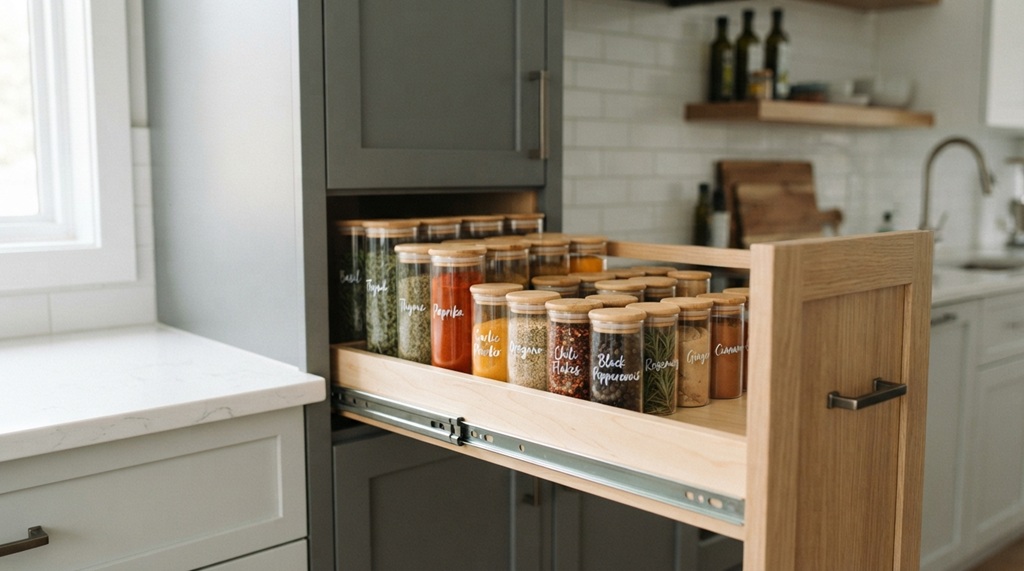
Once you know your spatial constraints, the next major decision is structural. Are you looking for a movable piece of furniture, or are you open to a semi-permanent installation? This choice determines the scope of your project and the weight capacity of your storage.
Freestanding pantry cabinets are the most common choice for renters or homeowners who want flexibility. They are essentially large furniture pieces that sit on the floor and can be moved. Built-in cabinets, on the other hand, are anchored to the wall and often extend to the ceiling, maximizing vertical space but requiring a more permanent commitment.
Freestanding Units: Flexibility and Load Limits
Freestanding units offer exceptional versatility. You can move them to a new house, rearrange your kitchen layout, or sell them if your needs change. However, they come with a trade-off: load-bearing capacity. Because they are not anchored to wall studs throughout their height, they rely on their base and back panel for stability. You generally cannot store 30-pound bags of flour on the top shelf of a freestanding cabinet without risking structural failure or tipping. These units are best for dry goods, small appliances, and everyday dinnerware.
When searching for the perfect pantry cabinet for home use, pay close attention to the back panel. A unit with a thin, stapled-on cardboard back is designed for light use. A unit with a solid plywood back that is screwed into the frame will offer significantly better weight distribution and structural rigidity.
Built-In Options: Maximizing Vertical Space
If you have a dedicated pantry closet or a recessed wall niche, a built-in or “cabinet-depth” unit is the superior choice. These are designed to be framed into the wall or sit flush against it without the large toe-kick gaps often seen on furniture-style pieces. Built-ins allow you to utilize every inch of vertical space from floor to ceiling, which is crucial for storing tall brooms, ladders, or stockpiles of paper goods. The downside is that installation typically requires a professional, and once they are in, they are not coming out without a fight.
Material and Construction Quality: What Actually Matters
You don’t need a degree in carpentry to spot a good cabinet, but you do need to know what to look for. The construction quality dictates how long the cabinet will last and how much weight it can handle. Avoid getting distracted by finish color alone; focus on the guts of the unit.
In the budget-to-mid-range tier, you will find cabinets made with engineered wood products. The most common are MDF (Medium-Density Fiberboard) and particleboard. The key distinction is the quality of the board and the veneer. A high-quality cabinet will be made from plywood or MDF with a durable melamine or thermofoil coating that resists moisture. Cheap particleboard that is exposed on the edges will absorb humidity from the air and swell over time, causing the joints to fail and the doors to sag.
- Dovetail Drawers: If the cabinet has drawers, look for dovetail joints on the sides. This is a hallmark of quality construction that withstands heavy daily use. Drawers assembled with staples or butt joints will loosen within a year.
- Soft-Close Hardware: This is not just a luxury; it prevents slamming and extends the life of the hinges. Check whether the soft-close mechanism is built into the hinge or if it is an aftermarket dampener, as the latter is often less reliable.
- Adjustable Shelves: This is non-negotiable. Fixed shelves severely limit your ability to store large appliances. Look for shelves that rest on pins or clips so you can reconfigure the interior layout instantly.
Interior Organization: The Secret to Real Usability
The exterior of the cabinet is just the shell. The true test of a great pantry is how efficiently you can retrieve items. Standard fixed shelves are often the least efficient use of space because they bury items in the back. When evaluating your options, prioritize internal systems that bring items to you.
Sliding shelves (often called pull-outs) are the gold standard for pantry ergonomics. A full-extension slide allows you to pull the entire shelf out, giving you a clear view of everything stored on it. This prevents the “lost in the back” phenomenon where you buy a second jar of pasta sauce because you forgot the first one was there.
If you are looking at a cabinet with a tall, narrow door, look into models that offer door-mounted racks or wire baskets. This turns dead space into valuable storage for spices, oils, or small cans. For deep cabinets, consider whether you can install a “magic corner” system (a rotating shelf) or simply use clear, stackable bins to create internal organization.
What to Store Where: A Practical Guide
Not all items are created equal when it comes to storage weight. A well-organized cabinet distributes weight appropriately to prevent sagging and ensure safety.
| Storage Zone (Shelf Level) | Best Suited For | Weight Consideration |
|---|---|---|
| Top Shelf | Lightweight, infrequent items (serving platters, seasonal decor, bulk paper napkins) | Keep under 10 lbs to prevent top-heavy instability. |
| Middle Shelves (Eye Level) | Everyday items (cereal, snacks, plates, Tupperware) | Moderate weight; ensure shelves are adjustable to fit coffee mugs and bowls. |
| Lower Shelves / Base | Heavy items (small appliances, canned goods, glass bottles, bulk flour) | Place heaviest items on the lowest shelves to lower the center of gravity and prevent tipping. |
| Door Racks | Spices, oils, condiments, small jars | Lightweight only; heavy bottles can cause the door to sag over time. |
Financial Planning and Installation Costs
Budgeting for a pantry cabinet involves more than just the purchase price. Hidden costs can derail your project if you don’t plan for them. Use a total-cost-of-ownership approach to avoid sticker shock at the end of the project.
First, determine if you can install the unit yourself. Freestanding units require basic assembly tools and about two hours of your time. However, if the unit is over 72 inches tall, you will likely need a second person for safety. If you opt for a built-in unit, contractor labor is mandatory to ensure it is level, plumb, and securely anchored to the studs so it won’t fall over in an earthquake or when loaded with heavy items.
Do not forget ancillary costs:
- Shipping and Delivery: Large cabinets often require freight shipping and a “threshold delivery,” meaning they will be dropped at the curb, not brought inside.
- Custom Modifications: If your ceiling is slightly uneven, you may need to cut trim or shave down the cabinet top. This requires tools (saws, sanders) you may not own.
- Knobs and Pulls: Many units ship without handles, or with cheap plastic ones. Replacing them with quality metal hardware is a common necessity.
Common Mistakes to Avoid When Buying
Even with careful planning, it is easy to make a costly error. Here are the most frequent pitfalls that result in a wasted purchase.
First, do not assume that “pantry cabinet” means the same thing across different retailers. A “pantry cabinet” might be a 5-foot-tall microwave cart at one store, and an 84-inch-tall tall storage tower at another. Always check the specific dimensions (height, width, depth) in the product details, and compare them to your measurements, not to the product image.
Second, ignore the “tool-free assembly” claims if you are not handy. While assembly is simple, it requires precision. Driving a cam lock screw in backward or cracking a particleboard shelf during assembly can ruin the structural integrity. If you are prone to step-by-step assembly errors, look for white-glove delivery services or local stores that offer professional assembly for a fee.
Finally, do not buy without considering airflow. Pantry cabinets placed against an exterior wall can trap moisture between the back panel and the wall. If your home is prone to humidity, leave a small gap between the cabinet and the wall or use a moisture barrier to prevent mold growth on the backing.
Frequently Asked Questions
What is the ideal depth for a pantry cabinet?
The ideal depth is 16 to 18 inches for most kitchens. This depth accommodates standard dinner plates, cereal boxes, and cans without making it difficult to reach items in the back. Deeper cabinets (24 inches) require pull-out shelves to remain usable, while shallower cabinets (12 inches) are better for canned goods or spice storage only.
Can I use a regular wardrobe wardrobe as a pantry?
Technically yes, but it is not recommended. Wardrobe closets are designed to hold hanging clothing, which distributes weight vertically along a central rod. They often lack the adjustable shelving and reinforced base required to hold heavy canned goods or small appliances. You are better off purchasing a purpose-built kitchen pantry unit.
Should I choose a cabinet with drawers or shelves?
Choose drawers for heavy, frequently used items like pots, pans, or bags of potatoes. Drawers allow you to see the contents from above without bending down. Choose shelves for tall, bulky, or lightweight items like cereal boxes, paper towels, and small appliances. The best cabinets offer a combination of both.
How much weight can a typical pantry shelf hold?
Standard 3/4-inch particleboard shelves with metal support pins typically hold 30 to 50 pounds. Solid wood or plywood shelves with center support brackets can hold 75 to 100 pounds. Always check the product manual for the specific weight rating, and distribute heavy items evenly across the shelf surface.
Do I need to anchor my pantry cabinet to the wall?
Yes, always anchor any cabinet over 36 inches tall to the wall studs using anti-tip brackets. Even heavy cabinets can tip forward if a child opens all the drawers and climbs on them. The anti-tip hardware is included with most units and takes only ten minutes to install.
Conclusion
Finding the perfect pantry cabinet for home isn’t about following a trend; it is about solving a practical storage problem. By carefully measuring your space, understanding the difference between freestanding and built-in units, and insisting on quality construction features like adjustable shelves and dovetail drawers, you set yourself up for long-term satisfaction. Avoid the trap of focusing only on price or aesthetics. Instead, weigh the internal organization, load limits, and installation costs. Once your cabinet is in place, organize it thoughtfully by weight and frequency of use to create a system that saves you time and money every single day. Start with your measurements, set a realistic budget, and choose a unit that makes your kitchen work harder for you.