How to Make Thin Hair Look Fuller Without Over-Styling It
Thin hair can feel like a daily battle. You wash it, style it, and by noon it hangs flat against your scalp. Therefore, many people reach for more product, more heat, and more teasing. However, over-styling thin hair makes things worse. Heavy products weigh it down, and daily heat slowly breaks the few strands you have. The good news is that fullness is not about doing more. It is about doing the right things and skipping the rest. In this post, you will learn simple, low-effort ways to make thin hair look thicker. No backcombing marathons and no shelf full of products required. Read on, because your hair has more potential than you think.
Key Takeaways
- Thin hair breaks under heavy products, so use lightweight, volumizing formulas only.
- Washing daily is fine for thin hair, because oil flattens it faster than other types.
- Blow drying roots in the opposite direction adds instant, lasting lift.
- A shorter or layered cut creates shape that makes hair look twice as thick.
- Scalp massage and a healthy diet support growth over the long term.
- Avoid tight ponytails, because tension causes breakage along the hairline.
Why Thin Hair Falls Flat by Midday
Thin hair has less body by nature. Each strand is finer in width, so it lies closer to the scalp. Additionally, thin hair often has fewer strands per square inch of scalp. Therefore, gravity wins quickly, and the hair collapses under its own weight. Oil makes this worse. The scalp produces sebum that travels easily down a fine strand. As a result, thin hair looks greasy and flat within a day of washing.
Product buildup is another hidden culprit. Waxes, heavy conditioners, and silicone serums coat each strand. That coating adds weight, so the hair droops even when it is clean. According to a review in the International Journal of Trichology, fine hair is more vulnerable to breakage from mechanical stress, which includes brushing wet hair and tight styling. Furthermore, the same review notes that over-washing with harsh sulfates can irritate the scalp and weaken strands at the root.
However, flatness is not only about what you put on your hair. Your cut matters enormously. One-length, heavy styles drag thin hair down. Additionally, long hair shows thinness more, because the weight stretches it out. Consequently, the shape of your haircut can do more for volume than any product can.
The lesson is simple. Fullness comes from reducing weight, protecting roots, and choosing the right shape. Additionally, a healthy scalp grows stronger strands over time. The rest of this post breaks each step down, therefore you can start today with what you already own.
Start With the Right Wash Routine
Everything begins in the shower. The wrong shampoo builds a foundation of flatness. However, a few small swaps change the whole day. Follow these rules and your hair will have lift before you add anything else.
- Wash every day or every other day, because oil flattens fine hair fastest.
- Choose a volumizing shampoo that is free of sulfates and heavy silicones.
- Condition only the mid-lengths and ends, and never the roots.
- Rinse with cool water at the end, because it helps the cuticle lie flat.
- Use a clarifying shampoo once a month to remove leftover buildup.
Why does this work so well? Weight is the main enemy of thin hair. A heavy conditioner near the scalp coats the roots and drags them down within hours. Additionally, product buildup piles up over weeks. A study in the Journal of Cosmetic Science found that conditioning agents deposit along the hair shaft and reduce static, but heavy deposits can lower volume at the root. Therefore, less product at the roots equals more lift.
Drying matters as much as washing. Do not rub your hair with a thick towel. Instead, press out water gently with a microfiber towel. Wet hair stretches and breaks easily, so rough handling causes long-term thinning. Additionally, detangle with a wide-tooth comb and start from the ends, then work upward. Consequently, you pull out fewer strands overall.
If you blow dry, do it smartly. Flip your head over and dry the roots in the opposite direction of growth. This lifts the root area as it dries, and the lift holds for hours. However, keep the heat on medium and always keep the dryer moving. One simple change here gives more volume than any expensive spray.

Choose a Cut That Does the Work for You
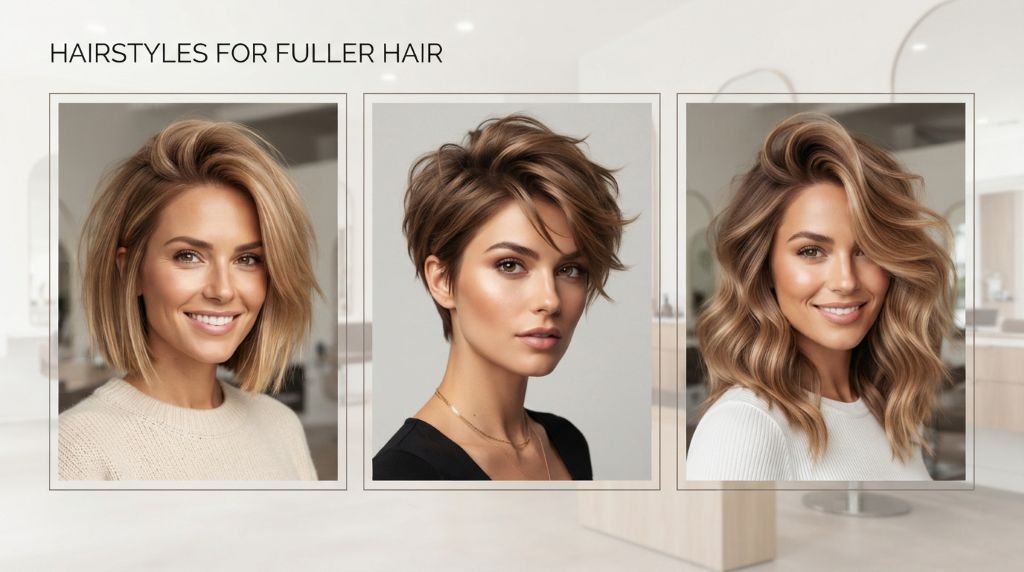
The right haircut builds fullness that lasts all day with zero effort. This is the biggest low-effort trick in this entire post. Therefore, choose your cut with care and let it do the heavy lifting. Below are the styles that work best for thin hair.
- A blunt bob at the shoulder or above, because blunt lines make ends look dense.
- A pixie cut, because short hair stands away from the scalp naturally.
- Long layers with face framing, because layers remove weight without thinning the look.
- A subtle fringe, because it creates the impression of density up front.
- A chin-length lob, because it keeps weight high enough to hold a shape.
Ask your stylist for a “blunt” or “heavy” perimeter with soft internal layers. That combination keeps the outline thick and removes the inner bulk that causes flatness. Additionally, avoid razor cuts on fine hair. A razor frays the ends and makes them look wispy, which is the opposite of what you want. According to stylists surveyed by Allure magazine, blunt ends reflect light in a way that instantly makes hair look thicker.
Length matters too. Hair past the chest stretches out and shows every thin spot. Therefore, keeping your hair at or above the shoulder changes how it falls. The ends look fuller, because they have more support underneath. Furthermore, regular trims every eight to ten weeks remove split ends. Split ends travel upward and thin the whole strand over time. Consequently, a quick trim appointment is a volume treatment in disguise.
One more trick: change your part. A deep side part or a zigzag part instantly lifts roots at the front. It costs nothing and takes ten seconds. Additionally, moving your part every few years prevents the roots from training themselves flat.
Build Volume With Simple Daily Habits
You do not need a ten-step styling routine for fullness. In fact, less is more with thin hair. However, a few easy habits keep your hair looking thick every single day. Here is what actually works.
- Use dry shampoo at night, not in the morning. It absorbs oil while you sleep, so you wake up with lift.
- Blow dry roots against the direction of growth for thirty seconds, then stop.
- Sleep on a silk pillowcase, because it cuts friction that flattens and breaks strands.
- Massage your scalp for three minutes daily, because it boosts blood flow to the roots.
- Wear loose styles instead of tight ponytails, because tension causes hairline breakage.
- Eat enough protein and iron, because hair is built from what you eat.
The scalp massage habit has real science behind it. A study in the journal Eplasty found that a standardized four-minute daily scalp massage increased hair thickness over twenty-four weeks. The researchers believe the massage stretches dermal papilla cells and encourages growth. Therefore, a few minutes of massage is one of the few habits with measurable results.
Additionally, treat your strands gently at night. Pull hair into a loose braid on a silk pillowcase. Consequently, you wake up with fewer tangles and less breakage. Also, avoid tight headbands and heavy clips that dent and stress the hair.
Finally, skip the heavy volumizing pastes and thick creams. A single light spray or powder at the roots is enough. Remember, thin hair punishes excess. Consequently, two light products will always beat five heavy ones. Keep the routine short and your hair stays full without stress.
Conclusion
Full hair is not about working harder. It is about removing weight, protecting your roots, and choosing a cut that carries itself. Start with your wash routine and keep products away from the roots. Additionally, book a consultation for a blunt, layered cut that suits fine hair. If you prefer more movement and texture, exploring spiral permed hair styles can also create the appearance of fuller, more defined hair. Then add simple daily habits, like overnight dry shampoo and scalp massage.
You do not need more products or more styling time. Therefore, pick two changes from this post and try them for three weeks. Notice how your hair responds, then add one more. So grab your calendar, book that trim, and give your thin hair the easy volume it deserves.
FAQs
How often should I wash thin hair?
Wash every day or every other day. Thin hair shows oil fast, and oil weighs it down. However, use a gentle, sulfate-free shampoo so daily washing does not dry out your scalp.
Does blow drying thin hair every day damage it?
Daily high heat can weaken fine strands over time. However, a quick medium-heat blast at the roots is safer than a long full drying session. Additionally, always keep the dryer moving and use a heat protectant.
Can a haircut really make thin hair look thicker?
Yes, and it is the fastest fix. A blunt bob or a pixie removes weight and makes ends look dense. Therefore, the shape of the cut does more for volume than most products can.
Do thickening shampoos actually work?
Volumizing shampoos remove buildup and avoid heavy coating, so hair lifts more. However, they cannot change your strand thickness permanently. Consequently, pair them with a good cut for the best result.
Will a silk pillowcase really help thin hair?
Yes. Silk creates less friction than cotton, so hair glides instead of snagging. As a result, you get fewer tangles, less breakage, and less overnight flattening.