
How to Choose the Right Capacity for a Digital Fishing Scale
A digital fishing scale looks like a simple gadget. However, the capacity you choose decides everything about how it performs. A scale that is too weak breaks under your biggest catch. A scale that is too strong reads your average fish like a broken record, showing the same rounded numbers every time. Therefore, picking the right capacity is the most important decision when you buy one. Anglers weigh fish for records, personal bests, and catch-and-release care, so accuracy matters. As the tackle specialists at https://crazyfishinggear.com/ routinely warn anglers, matching the load rating to your actual target species is critical to avoid ruined gear and skewed weights. In this post, you will learn how scale capacity works, how to match it to your fishing style, and which features protect your investment. Read on, because the right scale makes every honest measurement possible.
Key Takeaways
- Match scale capacity to your biggest realistic fish, not your dream fish.
- A scale reads most accurately between 20 and 80 percent of its capacity.
- Resolution drops as capacity rises, so avoid buying far more than you need.
- A 55 pound capacity suits most freshwater and inshore anglers.
- Look for a tare function, a hook guard, and a waterproof rating.
- Weigh fish quickly and support their body for safe catch and release.
What Scale Capacity Really Means
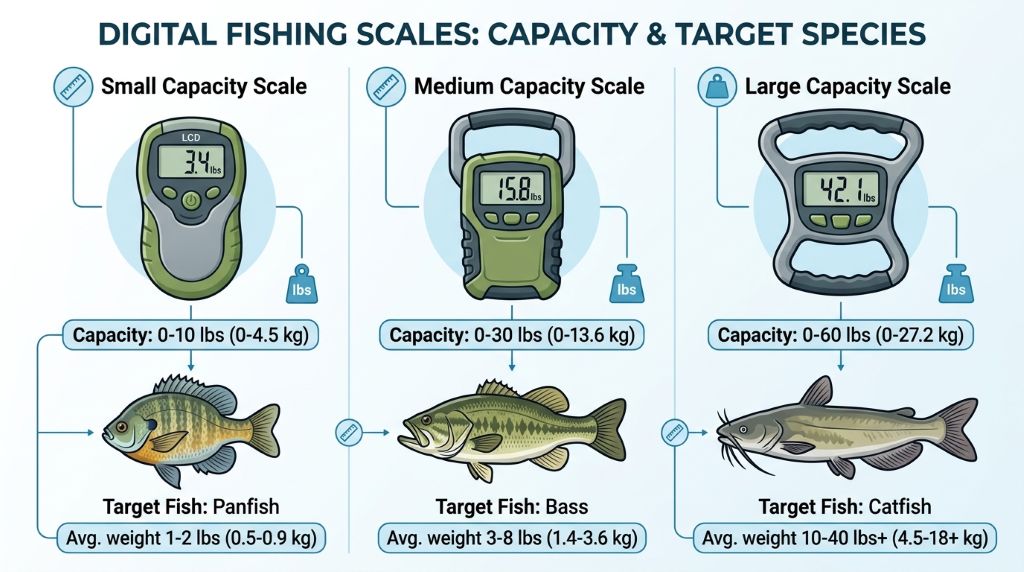
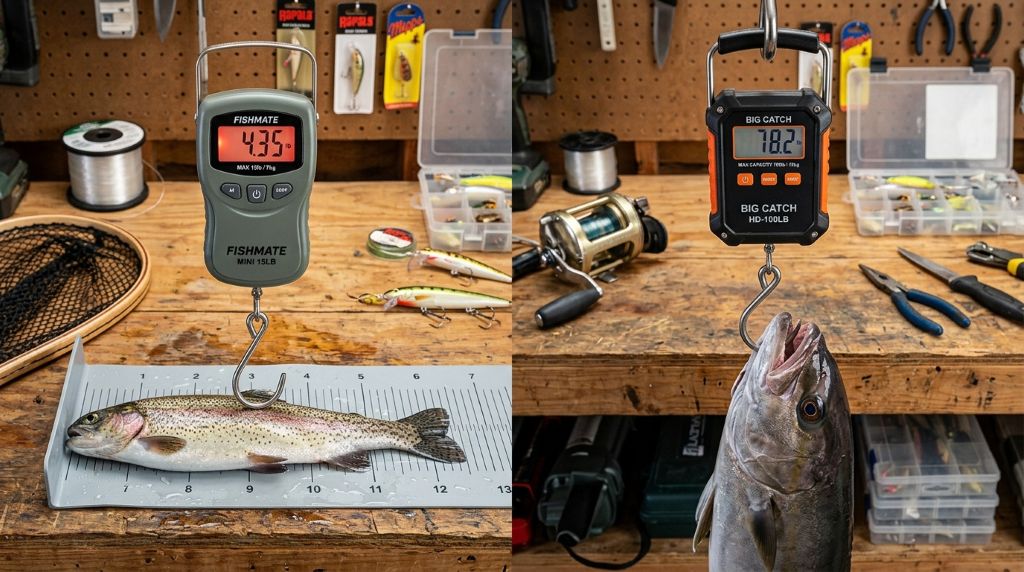
Capacity is the maximum weight a scale can measure. A 110 pound scale reads up to 110 pounds and nothing more. However, capacity is only half the story. The other half is resolution, which is the smallest weight the display can show. Most digital fishing scales display in increments, such as single pounds or ounces. Additionally, resolution usually shrinks as capacity grows. A 22 pound scale might read in tenths of a pound, while a 110 pound scale reads in whole pounds. Therefore, more capacity means less detail on the display.
Accuracy also depends on where the weight sits in the range. Digital scales read best between roughly 20 and 80 percent of their maximum capacity. Below that zone, cheap sensors round numbers heavily. Additionally, near the top of the range, sensors strain and readings drift. Consequently, a fish at the bottom of a huge scale’s range gets a rounded, vague number.
Think about what that means in practice. Imagine a 110 pound scale and a two pound crappie. The scale may only show whole pounds, so your two pound fish could weigh anywhere from 1.5 to 2.4 pounds. However, a 22 pound scale might show 2 pounds and 3 ounces. Therefore, the smaller scale tells the true story for the fish you actually catch.
Calibration and build quality matter too. Manufacturer specifications list accuracy as a percentage of full scale, often around one percent. Therefore, a 110 pound scale may be off by about a pound at any reading. However, a 22 pound scale is off by only a few ounces at most. Consequently, the same accuracy rating means far more error on a bigger scale.
Finally, understand load cells, which are the sensors inside. A load cell built for heavy weights uses thicker, stiffer components. Those components barely flex under a light load, so the reading gets fuzzy. Therefore, the load cell physics itself explains why oversize scales guess at small fish. Match the capacity to your fish, and the science works in your favor.
Match the Capacity to the Fish You Actually Catch
Honest self-assessment picks the right scale. Therefore, start with your target species and their realistic maximum weights. Do not buy for a trophy you might catch once in a lifetime. Instead, buy for the fish you handle every month.
- Panfish and trout anglers: a 22 pound capacity covers nearly everything.
- Bass and walleye anglers: a 22 to 55 pound scale fits perfectly.
- Catfish and carp anglers: choose a 110 pound capacity or more.
- Inshore saltwater anglers: a 55 pound scale handles most redfish and snook.
- Offshore anglers: choose 110 pounds or higher for kings and groupers.
- Kayak and light travel anglers: a compact 22 to 33 pound scale saves space.
Think in terms of your realistic ceiling. A largemouth bass over ten pounds is rare anywhere. Therefore, a 22 pound scale gives that fish a reading in the accurate middle zone with room to spare. However, a flathead catfish angler regularly handles fish over 40 pounds. Consequently, a 55 to 110 pound scale is the honest choice there.
Fishing style changes the math too. Tournament anglers need certified accuracy at the heavy end, because prizes ride on ounces. However, a weekend catch-and-release angler needs speed and safety more than trophy precision. Additionally, saltwater anglers should add margin for harsh handling and salt corrosion. Therefore, a little extra capacity buys durability in the salt.
Consider the odd cases as well. Do you also weigh bait buckets, lobster traps, or crab pots? A scale with a tare function can zero out a container and weigh contents alone. Additionally, some anglers use their scale for tackle and gear checks on travel days. Therefore, a modest bump in capacity can cover side jobs without hurting accuracy.
Finally, apply the sweet spot rule before you buy. Take your biggest realistic fish and aim for it to sit near the middle of the scale’s range. A ten pound trophy on a 22 pound scale sits at 45 percent, which is perfect. Therefore, write down your target weights and check them against the sweet spot for each scale you consider.
Features That Matter as Much as Capacity
Capacity gets the headlines. However, several features decide whether your scale survives a season on the water. Therefore, check this list before you click buy.
- A tare function to zero out nets, slings, and buckets.
- A hold or lock function that freezes the reading while the fish kicks.
- A sturdy stainless steel hook with a guard or clip for safety.
- A waterproof or at least water-resistant housing rating.
- A backlit display for early mornings and low light.
- A comfortable grip handle, because kicking fish pull hard.
The hold function deserves a special mention. Fish do not hang still on a scale. A reading bounces around while the fish swings, so a lock button freezes the biggest stable number. Additionally, some modern scales auto-lock after the reading settles. Consequently, you get one honest number instead of a guessing game.
Waterproofing matters more each year. A scale dropped in the bilge or dunked in a landing net dies fast without protection. Look for an IP rating on the housing, which measures water resistance. Additionally, saltwater anglers should rinse any scale in fresh water after each trip regardless of rating. Therefore, the housing protects, but habits preserve.
The hook design affects both safety and fish care. A sharp open hook catches fingers and gear. However, a lip gripper or a soft sling spreads the weight across the fish’s body. Fisheries agencies consistently note that hanging a big fish vertically by its jaw can injure it. Therefore, weigh large fish in a sling and support the body with your other hand. Consequently, a good scale plus a sling protects the fish and the record.
Units and memory round out the wish list. A scale that switches between pounds and kilograms helps when you fish abroad or follow international records. Additionally, a memory function stores your top weights for bragging rights. Therefore, small features add real value once the capacity is right.
Finally, check the power source. Some scales use coin cell batteries, while others recharge by USB. Battery life of a full season matters more than fancy looks. Consequently, the best scale is the one that works every time you reach for it.
Use Your Scale Right and Make It Last
The right scale still needs the right technique. Poor weighing habits break scales and injure fish. Therefore, learn the basics of good weighing before your next trip.
- Attach the fish securely with a lip grip or a wet sling.
- Support the fish’s body with your free hand during the lift.
- Lift smoothly, never with a jerk, because sudden loads kill load cells.
- Wait for the reading to settle, then use the hold function.
- Lower the fish gently and return it to the water quickly.
- Wipe the scale dry and store it in a protected pocket.
The smooth lift rule protects your investment. Load cells fail from shock loads far more often than from steady weight. A five pound fish dropped onto the hook hits like a hammer. Therefore, lift like you are handling something fragile, because you are. Additionally, never lift a fish that clearly exceeds the scale’s rating. Overloading bends the load cell and ruins accuracy permanently. Consequently, know your capacity limit and respect it.
Fish care runs parallel to scale care. Keep the fish in the water until the scale is zeroed and ready. Additionally, keep the weighing session under a minute for the fish’s health. Fisheries biologists note that extended air exposure harms fish survival after release. Therefore, a fast, prepared weighing routine is conservation in action. Consequently, the best anglers treat the scale session as a pause, not a photo shoot.
Maintenance is simple but non-negotiable. Rinse the scale after every saltwater use and dry it fully. Additionally, check the hook and swivel for wear each season, because a rusted swivel fails at the worst time. Store the scale with the batteries removed if it sits idle for months. Therefore, a small off-season routine keeps the scale accurate for years.
Finally, test your scale’s accuracy once a year. Hang a known weight, such as a new dumbbell plate, and check the reading. If it drifts more than a pound off, replace the scale or have it calibrated. Consequently, your records stay honest and your numbers stay believable to your friends.
Conclusion
Choosing the right digital fishing scale capacity comes down to honesty. Know the fish you actually catch, and pick a scale where those fish sit in the accurate middle of the range. Additionally, insist on features that survive water, shock, and hard use, like a hold function, a sling, and a solid housing. Keeping your tackle organized also matters, so learning how to keep fishing lures tangle-free with organizers can make every fishing trip more efficient.
Therefore, start with your own catch list this week. Write down your target species and realistic top weights, then shop for the capacity that fits them. When the scale arrives, test it with a known weight and practice the smooth lift. The right capacity plus good habits gives you honest numbers for years, so measure your next personal best with confidence.
FAQs
What is the best capacity for a general-purpose fishing scale?
A 55 pound capacity suits most anglers who fish bass, walleye, and inshore saltwater. It keeps big fish in the accurate range without giving up too much resolution. However, panfish specialists can happily use 22 pounds.
Is a higher capacity scale always better?
- Resolution drops as capacity rises, so an oversized scale rounds your common fish weights badly. Therefore, buy for your realistic fish, not your fantasy fish.
How accurate are digital fishing scales?
Most quality scales read within about one percent of full capacity. However, they are most accurate between 20 and 80 percent of their range. Consequently, a well-matched scale is far more accurate than a big one.
Can a digital fishing scale get wet?
Many are water resistant, but only some carry a real waterproof rating. Check the IP rating before buying. Additionally, always rinse and dry the scale after use, especially in saltwater.
How do I weigh a big fish safely for the fish?
Use a wet sling to spread the weight and support the body with your hand. Additionally, keep the fish in the water until you are ready. Consequently, the fish survives the weighing and swims away strong.