How to Clean Microfiber and Sweat Towels Without Ruining Them
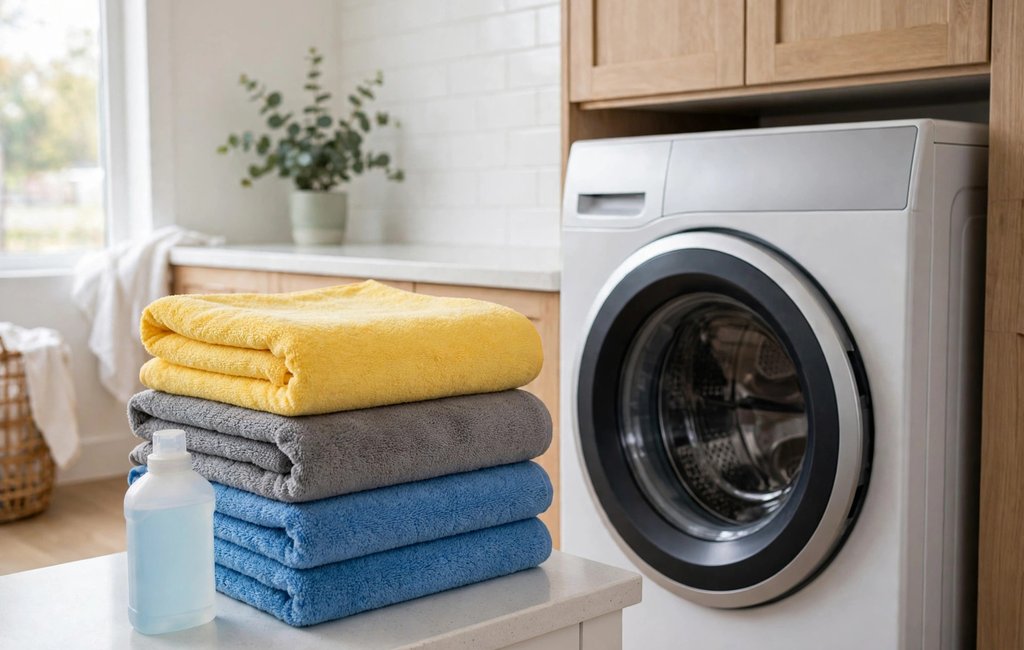
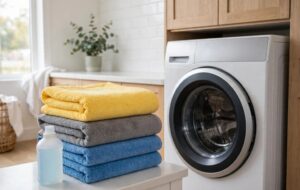
Anyone who has compared a taylormade driver vs titleist knows that premium equipment only performs when you maintain it properly — and the same principle applies to the towels you use during every round or workout. Microfiber towels and sweat towels trap oils, sunscreen, and bacteria quickly, and the wrong washing method destroys the very fibers that make them work. This guide explains how to clean both types safely, what to avoid, and how to keep them absorbent for years.
Quick Answer
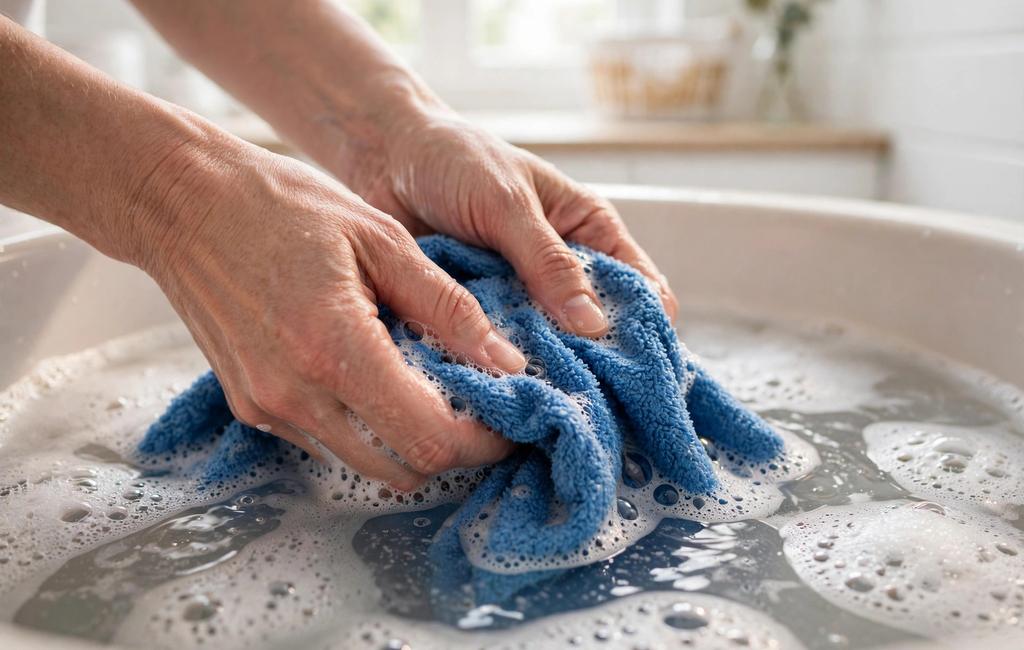
Wash microfiber towels separately in warm water (under 140°F) with a small amount of mild, fragrance-free liquid detergent, then tumble dry low or air dry. Wash sweat towels in warm water with regular detergent and oxy-based cleaner to remove oils and odor. Never use fabric softener, dryer sheets, or bleach — they coat or damage the fibers and eliminate absorbency.
Key Takeaways
- Fabric softener and dryer sheets leave a waxy residue that blocks microfiber from absorbing water and traps odor in cotton sweat towels.
- Wash microfiber in its own load; lint from cotton towels clings to microfiber and reduces its cleaning ability.
- Heat above roughly 140°F can melt or distort microfiber fibers, so keep water and dryer temperatures moderate.
- Wash sweaty towels within a day or two when possible to prevent bacteria and mildew from setting in.
- Skip bleach on microfiber and use oxygen-based cleaners on sweat towels to lift oils without weakening fibers.
Why These Towels Need Different Care
Microfiber and sweat towels look similar in a laundry basket, but they are built differently, and that changes how you should clean them.
How Microfiber Works
Microfiber is made from synthetic fibers — usually a polyester and polyamide blend — split into strands thinner than a human hair. Those tiny split fibers create millions of microscopic edges that lift and trap dust, oil, and moisture. Anything that coats, clogs, or melts those fibers, such as fabric softener, dryer sheets, or high heat, permanently reduces the towel’s performance. That is why microfiber needs gentle, residue-free washing.
How Sweat Towels Differ
Most sweat towels are cotton or a cotton-blend terry. Cotton is durable and handles warmer water and stronger detergents well, but it holds onto body oils, salts, and bacteria. If you let a damp sweat towel sit in a gym bag, the odor becomes difficult to remove because bacteria multiply in the damp fibers. Cotton tolerates more aggressive cleaning than microfiber, but it still suffers from fabric softener buildup.
Step-by-Step: Cleaning Microfiber Towels
- Shake out loose debris outside or over a trash bin before washing.
- Sort microfiber away from cotton, terry, and anything that sheds lint.
- Use warm water — ideally below 140°F — on a normal or gentle cycle.
- Add a small amount of mild, fragrance-free liquid detergent. Use less than you would for a normal load; too much soap leaves residue.
- Skip fabric softener, dryer sheets, and bleach entirely.
- Tumble dry on low heat, or air dry. Remove promptly to prevent wrinkles and static.
If a microfiber towel still smells after washing, the fibers likely hold trapped oils. Rinse it in a diluted white vinegar solution (about half a cup per gallon of water), then rewash with detergent.
Step-by-Step: Cleaning Sweat Towels
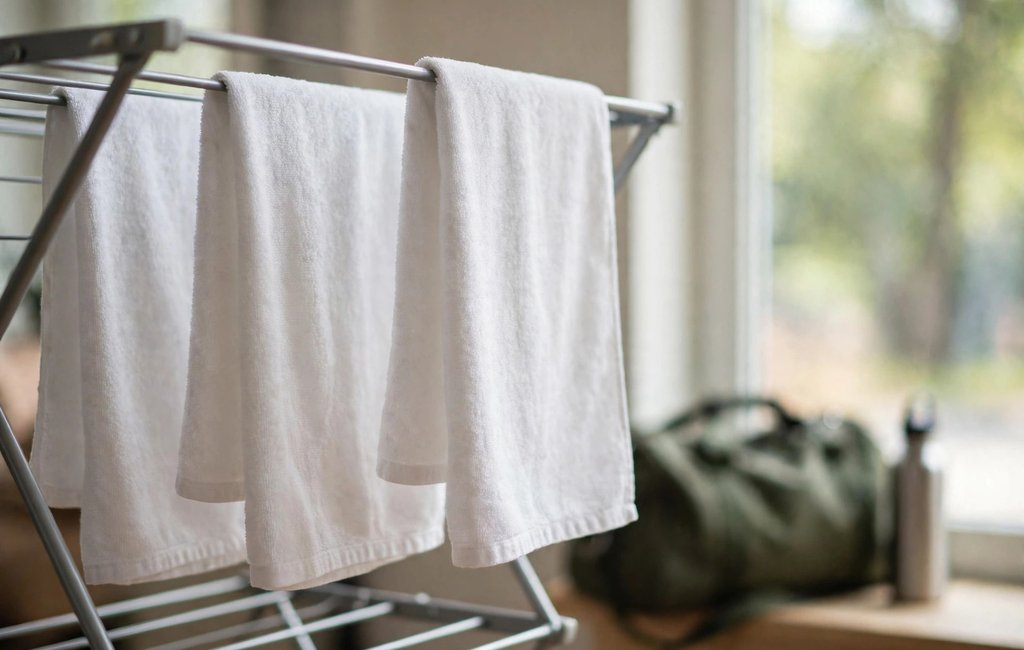
- Rinse the towel in cool water soon after use to flush out fresh sweat and salts.
- Wash in warm water with regular detergent and an oxygen-based (oxy) stain and odor remover.
- Add white vinegar to the rinse cycle if the towel smells musty. Vinegar neutralizes odor without leaving perfume residue.
- For heavy oil or stubborn odor, use a pre-soak in warm water with oxy cleaner for 30–60 minutes before washing.
- Tumble dry on medium heat or line dry in sunlight, which naturally helps kill odor-causing bacteria.
Handling Stubborn Odor
Persistent gym-bag smell usually means bacteria have embedded deep in the cotton loops. A single wash often will not fix it. Try a hot-water wash (check the care label first) with oxy cleaner, then dry thoroughly. If odor remains after two cycles, the towel has likely reached the end of its useful life.
Common Mistakes That Ruin Towels
- Using fabric softener. It coats fibers with a waxy film. Microfiber loses absorbency, and cotton towels stop soaking up water efficiently.
- Washing microfiber with cotton. Lint transfers to the microfiber and clogs its fibers.
- Overloading the machine. Towels need room to agitate and rinse clean; a packed drum leaves detergent and oils behind.
- Using too much detergent. Excess soap does not rinse out fully and leaves towels stiff or greasy-feeling.
- Drying on high heat. Heat damages microfiber and can shrink cotton terry over time.
- Letting damp towels sit. Mildew starts fast, and once it sets in, the smell is difficult to remove.
Protecting Towels Around Your Gear and Routine
Towels take a beating because they work alongside the equipment and apparel you rely on. Golfers who keep clubs, gloves, and microfiber towels in the same bag quickly learn that grit and moisture migrate, so a clean towel protects more than itself. Golfers comparing gear depth will find value in resources such as golfplayerhub, where driver and equipment comparisons sit alongside practical maintenance topics.
Sweat towels deserve the same respect you give to workout gear. Fold and store them dry, keep a spare in your bag, and rotate towels between uses if you sweat heavily. A small rotation habit, say two or three towels in regular use, gives each one time to dry fully between sessions and dramatically extends its lifespan.
How Often Should You Wash Them?
Microfiber towels used for light dusting can go a few uses between washes, but anything that contacts sweat, sunscreen, or skin oils should be washed after every use or two. Wash sweat towels after every workout. For golf or gym towels that touch your face and hands, a single round or session is enough reason to toss it in the laundry — bacteria and oils build up faster than most people expect.
Frequently Asked Questions
Can I wash microfiber and sweat towels together?
No. Wash microfiber separately because cotton and terry shed lint that clings to microfiber fibers and reduces their cleaning performance. Sweat towels also handle stronger detergents than microfiber, so keeping the loads apart protects both.
Is vinegar safe for microfiber towels?
Yes, in diluted form. A mild white vinegar rinse helps strip residue and neutralize odor without damaging fibers. Avoid pouring undiluted vinegar directly onto the fabric, and always follow with a regular wash cycle.
Why do my towels still smell after washing?
Trapped oils and bacteria, usually from leaving damp towels in a bag, cause lingering odor. Rewash with an oxygen-based cleaner, add vinegar to the rinse, and dry thoroughly. If odor survives two wash cycles, the fibers are likely too worn to recover.
Can I use bleach on sweat towels?
You can use color-safe bleach on white or light cotton sweat towels, but avoid chlorine bleach on microfiber, since it damages the fine fibers. For colored towels, use oxygen-based bleach instead to protect the dye.
How do I restore a microfiber towel that stopped absorbing?
Fabric softener or detergent residue is usually the cause. Wash it in warm water with a small amount of mild detergent, add a diluted vinegar rinse, and skip all softeners and dryer sheets. In most cases, absorbency returns after one or two cycles.
Conclusion
The core rule is simple: microfiber needs gentle, residue-free care, while sweat towels need thorough oil and odor removal. Wash microfiber separately in warm water without softener, and clean sweat towels with oxy-based detergent and occasional vinegar rinses. Avoid high heat, fabric softener, and damp storage in both cases. Treat these habits as part of your routine, and your towels will stay absorbent, fresh, and useful far longer than a careless laundry cycle would allow — protecting both your workout and your gear.