How Golf Ball Spin Affects Distance and Control
Every golfer wants two things: longer drives and better control around the green. Yet many players overlook one small factor that directly influences both — golf ball spin. The spin rate of a golf ball determines how it travels through the air, how it reacts when it lands, and how predictable each shot becomes.
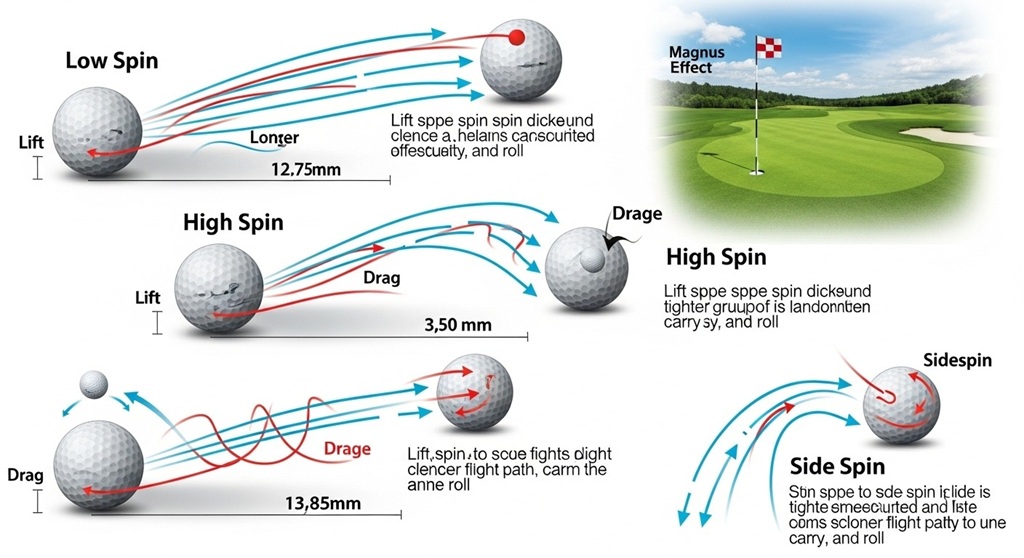
In simple terms, golf ball spin refers to the rotation of the ball during flight. A ball can generate low spin, mid spin, or high spin depending on its design and how it is struck. This rotation affects trajectory, carry distance, stopping power, and shot shaping ability.
For example, golfers seeking more distance often choose low spin golf balls because they reduce air resistance and keep the ball flying straighter. On the other hand, players who want precise short-game control prefer high spin golf balls that stop quickly on the green.
Understanding spin is not just a technical concept. According to launch monitor studies from equipment testing labs and professional fitting centers, spin rate differences of 500–1,000 RPM can change driving distance by more than 10 yards and significantly affect approach shot stopping power.
This guide explains how golf ball spin works, why it matters for distance and control, and how to choose the right ball for your swing. Whether you are a beginner or a low-handicap golfer, learning how spin influences performance can help you make smarter equipment decisions and improve consistency on the course.
What Is Golf Ball Spin and Why Does It Matter?
Quick Answer: Golf ball spin is the rotation of the ball during flight. Spin determines how high the ball launches, how far it travels, and how quickly it stops on the green.
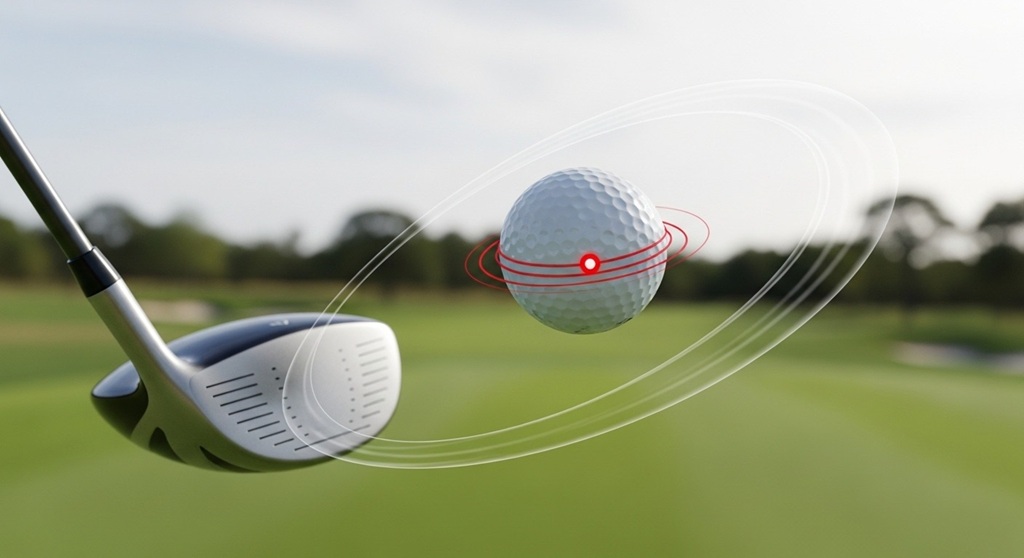
Every golf shot creates spin because the clubface strikes the ball with friction and compression. That interaction causes the ball to rotate backward (backspin) or sideways (sidespin).
The amount of spin depends on several factors:
- Golf ball construction
- Club loft
- Swing speed
- Contact quality
- Groove friction on the clubface
Backspin is especially important. When a golf ball spins backward, it creates lift through aerodynamic forces. This lift helps the ball stay in the air longer, increasing carry distance. However, too much spin can also create excess drag, which reduces total distance.
Professional launch monitor data shows that optimal driver spin typically ranges between 2,000 and 2,600 RPM for most golfers. Higher spin rates often cause ballooning shots that lose forward momentum.
For irons and wedges, higher spin is beneficial because it allows golfers to control landing position and stop the ball quickly.
Understanding this balance between distance and control is the key reason why golf ball spin matters.
How Do Low Spin Golf Balls Increase Distance?
Quick Answer: Low spin golf balls reduce aerodynamic drag, producing straighter shots and longer total distance, especially with drivers.
Low spin golf balls are designed to minimize backspin and sidespin during long shots. This design helps golfers maximize distance while reducing slices or hooks.
Most low spin golf balls achieve this through:
- Larger solid cores
- Firmer compression
- Ionomer or hybrid covers
- Optimized dimple patterns
These features reduce friction at impact, lowering the amount of spin produced by the clubface.
Benefits of Low Spin Golf Balls
- Longer drives
- Straighter ball flight
- Reduced slice or hook
- Lower trajectory for roll distance
A case study from launch monitor testing conducted by equipment fitting centers found that golfers with swing speeds above 95 mph gained an average of 8–12 yards of total distance when switching from high spin balls to low spin models.
This happens because lower spin reduces the “ballooning” effect where shots climb too high and lose forward momentum.
However, there is a trade-off. Lower spin balls may offer less stopping power on approach shots.
How Do High Spin Golf Balls Improve Control?
Quick Answer: High spin golf balls generate more backspin on iron and wedge shots, helping the ball stop quickly on greens.
High spin golf balls are engineered for control rather than maximum distance. These balls typically feature softer urethane covers and multi-layer construction.
The softer cover increases friction when the clubface strikes the ball. This added friction generates higher spin rates.
Advantages of High Spin Golf Balls
- Better approach shot control
- Improved green stopping power
- More predictable shot shaping
- Enhanced short game performance
Data from PGA Tour launch monitors shows that professional golfers often generate wedge spin rates between 9,000 and 11,000 RPM. That level of spin allows the ball to land and stop within a few feet.
High spin golf balls make this type of control possible for skilled players.
However, high spin also increases the chances of slices or hooks on drives. That is why these balls are typically recommended for low handicap players.
What Types of Spin Affect Golf Ball Flight?
Quick Answer: Golf ball flight is influenced mainly by backspin, sidespin, and total spin rate.
Each type of spin changes how the ball moves through the air.
1. Backspin
Backspin creates lift and helps the ball stay airborne longer. It is essential for approach shots that need to stop quickly.
2. Sidespin
Sidespin causes the ball to curve left or right. While skilled players may intentionally shape shots using sidespin, excessive sidespin often leads to slices or hooks.
3. Total Spin Rate
Total spin rate measures the combined rotation of the ball in revolutions per minute (RPM). Launch monitors use this metric to analyze shot performance.
Different clubs generate different spin rates.
| Club | Typical Spin Rate |
|---|---|
| Driver | 2,000 – 3,000 RPM |
| 7 Iron | 6,000 – 7,000 RPM |
| Wedge | 8,000 – 11,000 RPM |
Golf ball design influences these numbers significantly.
How Does Golf Ball Construction Affect Spin?
Quick Answer: The number of layers, core firmness, and cover material determine how much spin a golf ball produces.
Modern golf balls use multi-layer construction to control spin across different types of shots.
Key Design Elements
- Core: Determines compression and energy transfer.
- Mantle layers: Adjust spin between driver and iron shots.
- Cover material: Influences friction and feel.
For example:
- Ionomer covers usually create lower spin.
- Urethane covers generate higher spin.
Manufacturers also adjust dimple patterns to control aerodynamic lift and drag. A typical golf ball contains between 300 and 500 dimples, each carefully designed to optimize flight stability.
These design choices explain why two golf balls can perform very differently even when struck with the same swing.
Which Golfers Should Use Low Spin Golf Balls?
Quick Answer: Golfers with high handicaps, slower swing speeds, or frequent slices benefit most from low spin golf balls.
Low spin balls help reduce curvature in ball flight. That makes them ideal for players who struggle with accuracy off the tee.
Best Players for Low Spin Balls
- High handicap golfers
- Beginners
- Players seeking maximum driver distance
- Golfers with slice tendencies
These balls create a more stable flight path. Less spin means less side movement, which leads to straighter drives.
Who Should Use High Spin Golf Balls?
Quick Answer: Low handicap players and skilled golfers who prioritize short-game control should use high spin golf balls.
Experienced golfers often rely on spin to shape shots and control distance on approach shots.
Best Players for High Spin Balls
- Low handicap golfers
- Competitive players
- Golfers with fast swing speeds
- Players focused on short-game precision
These balls provide the responsiveness needed for precise shot making.
How Can Golfers Optimize Spin for Better Performance?
Quick Answer: Golfers can optimize spin by choosing the right ball, improving strike quality, and using proper club selection.
Spin optimization involves balancing distance with control.
Practical Tips
- Get fitted using a launch monitor.
- Test different golf ball models.
- Focus on clean contact.
- Use wedges with fresh grooves.
Launch monitor testing often reveals that simply changing golf balls can improve distance consistency and shot dispersion.
Conclusion: Finding the Right Spin for Your Game
Golf ball spin plays a critical role in shot performance. It affects trajectory, carry distance, accuracy, and how the ball reacts when it lands.
Low spin golf balls help golfers maximize distance and reduce curvature. They are ideal for beginners and players seeking straighter drives.
High spin golf balls provide better control and stopping power. Skilled golfers often rely on them to shape shots and attack pins with confidence.
The best choice depends on your swing speed, skill level, and playing style. Testing different ball types using launch monitor data can reveal which option produces the best balance of distance and control.
If you want to improve your performance on the course, start by evaluating the spin characteristics of your golf ball. Small equipment changes can produce measurable improvements in both consistency and scoring.
Next step: Test different golf balls during your next practice session and compare launch monitor data. Understanding how spin affects your shots could be the simplest way to unlock better results.
Frequently Asked Questions
Does higher spin always mean better control?
Higher spin generally improves control on iron and wedge shots because the ball stops faster on the green. However, too much spin on drives can reduce distance and increase shot curvature.
Do low spin golf balls reduce slices?
Yes. Low spin golf balls reduce sidespin, which can help minimize slices and hooks. This makes them popular among beginners and high handicap players.
What spin rate is ideal for driver distance?
Most golfers achieve optimal driver distance with spin rates between 2,000 and 2,600 RPM. Higher spin often reduces total distance due to increased drag.
Are tour golf balls high spin?
Many tour-level golf balls are designed for higher spin around the greens while maintaining controlled driver spin. This balance allows professional players to maximize both distance and precision.
How can I measure my golf ball spin rate?
Spin rate can be measured using launch monitors such as TrackMan or GCQuad. These systems analyze ball flight data including launch angle, spin rate, and carry distance.
Do softer golf balls create more spin?
Softer covers, especially urethane covers, typically produce more spin because they increase friction between the clubface and the ball at impact.
Should beginners use high spin golf balls?
Most beginners benefit more from low spin golf balls because they produce straighter shots and help reduce major ball flight errors.
Read More Also: How do I Prepare for the Wonderlic Test?
Find out: Online Games to Play in Class When Bored