
How to Choose the Best Training Rope for Home & Gym Workouts
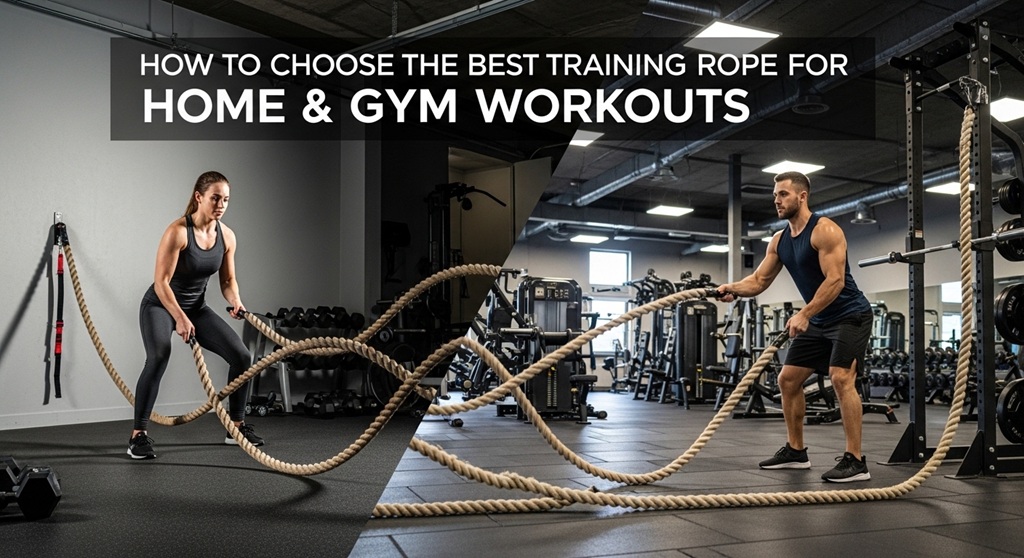
The best training rope depends on your goal. Choose a battle rope for full-body conditioning and strength endurance. Choose a weighted rope for cardio, coordination, and speed. Rope length, diameter, material, and anchor setup matter more than brand.
You want better conditioning. You want visible progress. But you’re not sure which rope fits your training style.
Walk into any gym and you’ll see thick battle ropes anchored to the floor. Scroll social media and you’ll find athletes using weighted jump ropes for conditioning rope workouts. Both look effective. Both burn calories. But they train the body differently.
Choosing the wrong rope wastes time. It can also limit progress. In this guide, you’ll learn how to compare battle rope vs weighted rope, how to select the right size, and how to build effective conditioning rope workouts at home or in the gym.
This article follows practical data, training principles, and real-world use cases so you can make a confident decision.
Battle Rope vs Weighted Rope: What’s the Difference?
Snippet answer: A battle rope is a thick anchored rope used for waves, slams, and power intervals. A weighted rope is a jump rope with added mass designed to increase resistance during skipping.
What Is a Battle Rope?
A battle rope is typically 30–50 feet long and 1.5–2 inches thick. It is anchored to a fixed point. You hold both ends and create waves, slams, circles, or pulls.
Battle ropes primarily train:
- Upper body strength endurance
- Core stability
- Grip strength
- Anaerobic conditioning
Research published in the Journal of Strength and Conditioning Research found that 10 minutes of high-intensity battle rope intervals significantly increased heart rate and oxygen consumption, making it effective for metabolic conditioning.
What Is a Weighted Rope?
A weighted rope is a jump rope with added weight in the handles or cable. It increases resistance compared to a speed rope.
Weighted ropes primarily train:
- Cardiovascular endurance
- Coordination
- Shoulder and forearm endurance
- Calorie burn efficiency
A study from Harvard Medical School estimates that 30 minutes of moderate jump rope training can burn around 300–400 calories depending on body weight.
Quick Comparison Table
| Feature | Battle Rope | Weighted Rope |
|---|---|---|
| Setup | Requires anchor | No anchor needed |
| Main Focus | Strength + conditioning | Cardio + coordination |
| Space Needed | Medium to large | Small |
| Best For | HIIT, strength endurance | Fat loss, agility |
Which Rope Is Better for Conditioning Rope Workouts?
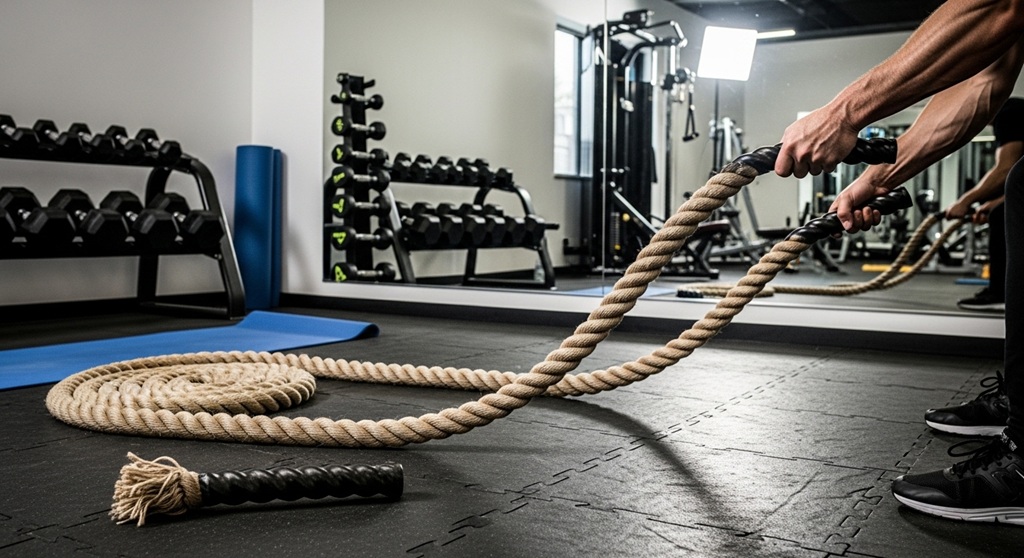
Snippet answer: Battle ropes are better for high-intensity interval training and muscle endurance. Weighted ropes are better for steady cardio and footwork training.
The decision depends on your conditioning goal.
If Your Goal Is Fat Loss
Both ropes work. Battle ropes elevate heart rate quickly. Weighted ropes allow longer sustained sessions. For beginners, weighted ropes may feel easier to maintain for 10–20 minutes.
If Your Goal Is Athletic Conditioning
Battle ropes simulate explosive effort. Athletes use them for power intervals. Movements like alternating waves and rope slams train fast-twitch fibers.
If Your Goal Is Home Convenience
Weighted ropes win. They require minimal space. No anchor. No wall mount.
If you want a rope durable enough for heavy outdoor sessions, you may also consider options similar to climbing-grade ropes. You can explore examples here:
battle rope vs weighted rope.
What Length and Diameter Should You Choose?
Snippet answer: For battle ropes, choose 30–40 ft for home gyms and 1.5 inches for beginners. For weighted ropes, adjust length based on height and start with 0.5–1 lb resistance.
Battle Rope Sizing Guide
- 30 ft: Best for small spaces and beginners.
- 40 ft: Balanced resistance and wave length.
- 50 ft: Higher resistance, advanced users.
Diameter affects difficulty:
- 1.5 inch = moderate intensity
- 2 inch = higher grip and shoulder demand
Weighted Rope Sizing Guide
Stand on the middle of the rope. Handles should reach armpit level. Many adjustable ropes allow trimming.
Weight levels:
- 0.5 lb = beginner cardio
- 1 lb = conditioning focus
- 2 lb+ = strength endurance
How Do You Anchor a Battle Rope Safely?
Snippet answer: Use a wall anchor, heavy sled, squat rack post, or dedicated floor anchor. Ensure it can handle dynamic force.
Improper anchoring causes instability and risk.
Best Anchor Options
- Steel wall-mounted anchor
- Wrapped around a sturdy power rack
- Looped around a heavy kettlebell (temporary)
Avoid sharp edges. Friction reduces rope lifespan. Nylon and polyester blends offer better abrasion resistance.
What Material Is Best for Training Ropes?
Snippet answer: Polypropylene is affordable and lightweight. Polyester offers better durability. Manila provides grip but absorbs moisture.
Polypropylene
- Budget-friendly
- Water resistant
- Good for indoor gyms
Polyester
- Higher durability
- Better abrasion resistance
- Suitable for outdoor use
Manila
- Natural fiber
- Strong grip texture
- Less durable in wet environments
What Are the Most Effective Conditioning Rope Workouts?
Snippet answer: The most effective conditioning rope workouts combine short high-intensity intervals with controlled rest periods.
Battle Rope HIIT Example
- 20 seconds alternating waves
- 20 seconds rest
- 20 seconds slams
- 20 seconds rest
- Repeat for 10 rounds
Total time: 8–10 minutes. High metabolic demand.
Weighted Rope Conditioning Circuit
- 1 minute jump rope
- 30 seconds push-ups
- 1 minute rope
- 30 seconds bodyweight squats
- Repeat 5 rounds
This structure improves cardiovascular endurance and muscular stamina.
Are Training Ropes Effective for Strength Building?
Snippet answer: Training ropes build muscular endurance and power but should complement, not replace, traditional strength training.
Electromyography (EMG) data shows high activation in deltoids, forearms, and core during battle rope waves. However, they do not provide progressive overload like barbell lifts.
Use ropes for:
- Finisher workouts
- Active recovery
- Conditioning days
How Long Should You Train With Ropes?
Snippet answer: 10–20 minutes of structured rope intervals is sufficient for conditioning.
Intensity matters more than duration. Overtraining reduces shoulder recovery. Two to three rope sessions per week is effective for most users.
Common Mistakes When Choosing a Training Rope
- Buying too long for small space
- Ignoring anchor quality
- Choosing thick diameter as beginner
- Skipping grip protection
- Using rope daily without recovery
Start moderate. Progress gradually.
Conclusion: How Do You Make the Final Choice?
The best training rope is not the heaviest or the longest. It is the one aligned with your goal.
If you want explosive conditioning and muscle endurance, choose a battle rope. If you want portable cardio and coordination training, choose a weighted rope.
Both tools improve conditioning rope workouts when used consistently. Focus on correct sizing, durable material, and safe setup. Train with structure. Track progress.
Ready to upgrade your workouts? Choose your rope, set a 10-minute timer, and start today. Conditioning improves with action, not comparison.
Frequently Asked Questions (FAQs)
1. Are battle ropes good for beginners?
Yes. Beginners should start with a 30 ft, 1.5-inch rope and short 15–20 second intervals.
2. Is a weighted rope better than a speed rope?
A weighted rope increases resistance and muscle activation. A speed rope is better for agility and competition-style skipping.
3. Can rope workouts replace cardio machines?
Yes, for many users. High-intensity rope sessions can match treadmill calorie burn in shorter timeframes.
4. Do battle ropes build muscle?
They improve muscle endurance and power but do not replace progressive strength training.
5. How much space do I need for battle ropes?
You need approximately half the rope length in clear space. A 40 ft rope requires about 20 ft usable area.
6. Are conditioning rope workouts safe for shoulders?
Yes, if technique is controlled and volume is moderate. Warm up before high-intensity sets.
7. How often should I replace a training rope?
With regular indoor use, quality ropes can last 1–3 years. Outdoor use may reduce lifespan.
Related Topic: How to Choose Between Instant Read vs Probe Meat Thermometer
Read Next: How to Compare the Best Luggage Brands in 2026