How Contractors Maintain Nail Guns Efficiently in Miami, FL
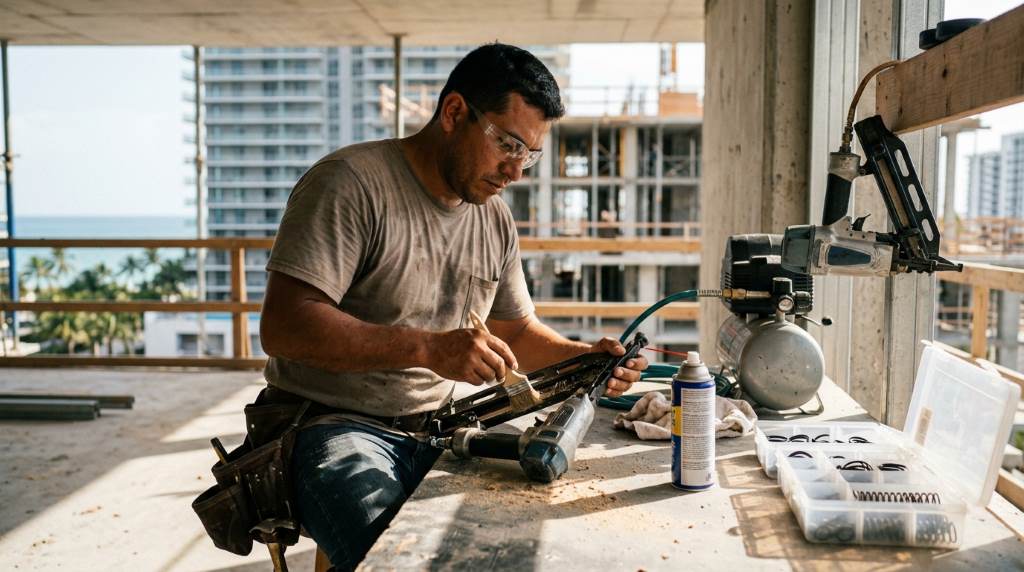
Contractors in Miami rely heavily on nail guns to complete framing, roofing, and finishing tasks quickly and safely. Studies show that proper tool maintenance can extend equipment life by up to 40%, while reducing downtime by nearly 30%. In a humid, coastal city like Miami, maintaining pneumatic and electric nail guns becomes even more critical due to moisture and salt exposure. Many professionals follow proven routines alongside trusted guides like central pneumatic nail gun maintenance tips to ensure consistent performance. This article explains practical, location-specific methods contractors use to keep nail guns efficient and reliable. You will find actionable steps, real-world examples, and maintenance routines tailored to Miami’s unique climate conditions.
Why Nail Gun Maintenance Matters in Miami
Miami’s climate presents challenges that contractors in other regions may not face. High humidity levels often exceed 70%, which increases the risk of internal corrosion in nail guns. Additionally, salty air from the nearby ocean can accelerate rust on metal components. Without regular care, these conditions can reduce tool efficiency and lead to costly repairs. Therefore, consistent maintenance is not just recommended but essential for daily operations. Contractors who neglect upkeep often face unexpected breakdowns that delay projects.
Another important factor is job site variability across Miami. From beachfront construction to inland residential work, environmental exposure changes frequently. Tools used near coastal areas require more frequent cleaning compared to those used in controlled indoor settings. As a result, contractors adjust maintenance schedules based on location. This approach helps maintain performance regardless of working conditions. It also ensures safety standards remain consistent across all job sites.
Moreover, maintaining nail guns improves productivity and accuracy. A well-maintained tool delivers consistent nail depth and firing power. This precision reduces material waste and improves overall workmanship. In contrast, poorly maintained tools can misfire or jam frequently. These issues slow down work and increase frustration on site. Therefore, efficient maintenance directly impacts both quality and speed.
Daily Maintenance Practices Contractors Follow
Cleaning After Every Use
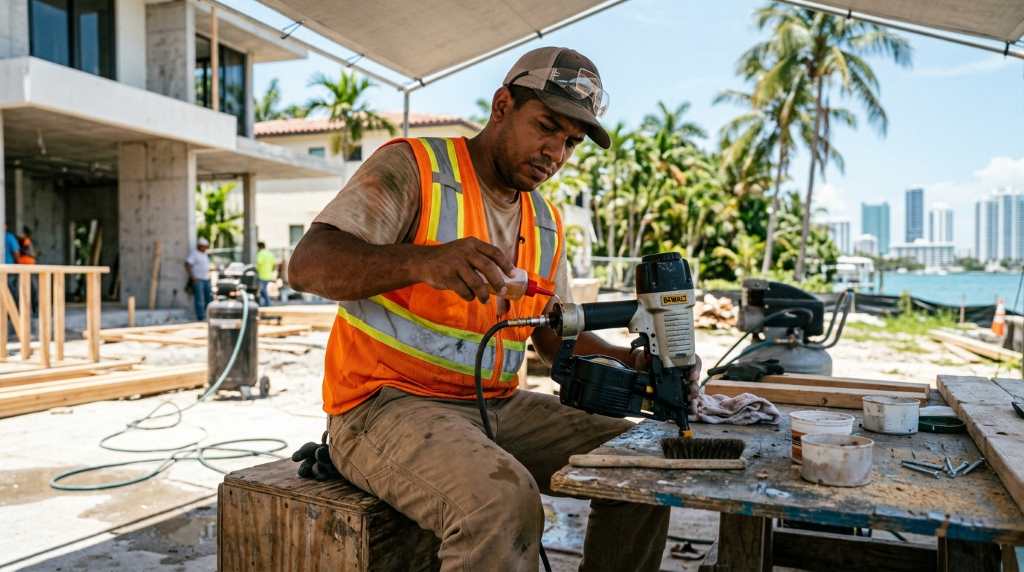
Contractors in Miami prioritize daily cleaning to remove dust, debris, and moisture. After each workday, they wipe down the exterior using a dry cloth to prevent buildup. They also inspect the nosepiece and magazine for jammed nails or dirt. This quick routine helps maintain smooth operation during the next use. Additionally, it reduces long-term wear caused by accumulated debris.
Many professionals use compressed air to blow out internal dust. This step ensures that fine particles do not clog internal mechanisms. However, they avoid excessive pressure to prevent damaging sensitive components. Consistent cleaning keeps the firing system responsive and reliable. Over time, this habit significantly reduces repair costs.
Lubrication for Smooth Operation
Proper lubrication plays a critical role in maintaining pneumatic nail guns. Contractors typically add a few drops of air tool oil before starting work each day. This oil reduces friction between moving parts and prevents internal rust. In Miami’s humid environment, lubrication also acts as a protective barrier against moisture. As a result, tools remain efficient even during long work hours.
It is important to use manufacturer-recommended oil types. Using incorrect lubricants can damage seals and reduce performance. Contractors also avoid over-lubrication, as excess oil can attract dust. Balanced lubrication ensures optimal function without creating additional issues. This practice helps extend the lifespan of the tool.
Inspecting for Wear and Damage
Daily inspections help identify small issues before they become major problems. Contractors check O-rings, seals, and trigger mechanisms for signs of wear. If they notice cracks or leaks, they replace parts immediately. This proactive approach prevents unexpected breakdowns during critical tasks. It also ensures worker safety on busy job sites.
In addition, they examine hoses and air connections for leaks. Even minor air loss can reduce nail gun power and efficiency. Regular inspection ensures consistent air pressure delivery. Consequently, the tool performs at its best throughout the day. This habit supports both productivity and safety.
Weekly Maintenance Routines
Deep Cleaning Procedures
While daily cleaning handles surface debris, weekly maintenance focuses on deeper cleaning. Contractors disassemble parts of the nail gun to access internal components. They remove built-up grease, dust, and moisture from hidden areas. This thorough process helps maintain internal efficiency and prevents long-term damage. It also ensures that all moving parts function smoothly.
Using mild cleaning solutions is recommended during this process. Harsh chemicals can damage rubber seals and plastic parts. Contractors carefully dry all components before reassembly to avoid trapping moisture. This step is especially important in Miami’s humid climate. Proper drying prevents rust formation inside the tool.
Checking Air Pressure Systems
Maintaining correct air pressure is essential for pneumatic nail guns. Contractors test compressors and hoses weekly to ensure consistent pressure levels. Incorrect pressure can lead to misfires or incomplete nail driving. Therefore, they calibrate equipment according to manufacturer specifications. This ensures optimal performance across different tasks.
Additionally, they inspect air filters and regulators. Dirty filters can restrict airflow and reduce efficiency. Cleaning or replacing these components improves overall system performance. Regular checks help maintain steady operation on demanding job sites. This routine supports both reliability and efficiency.
Tightening Loose Components
Frequent use can cause screws and fasteners to loosen over time. Contractors perform weekly checks to tighten all external and internal components. Loose parts can affect alignment and firing accuracy. Therefore, securing these elements ensures consistent operation. It also prevents further mechanical damage.
Using proper tools for tightening is important to avoid over-tightening. Excess force can strip threads or damage components. Contractors follow recommended torque guidelines when available. This careful approach maintains structural integrity. As a result, the nail gun remains stable and reliable.
Monthly and Seasonal Maintenance
Replacing Worn Parts
Over time, certain components naturally wear out due to repeated use. Contractors in Miami schedule monthly inspections to identify parts that need replacement. Common items include O-rings, seals, and driver blades. Replacing these components ensures continued performance and prevents sudden failures. It also helps maintain consistent firing power.
Using high-quality replacement parts is crucial for durability. Cheap alternatives may fail quick and cause additional issues. Contractors often keep spare parts on hand for quick replacements. This preparation minimizes downtime during busy projects. It also ensures tools remain ready for use at all times.
Rust Prevention in Coastal Areas
Miami’s coastal environment increases the risk of rust formation. Contractors apply anti-rust sprays or coatings to metal parts regularly. This protective layer prevents corrosion caused by salt and humidity. Additionally, they store tools in dry, controlled environments whenever possible. Proper storage significantly reduces exposure to damaging elements.
Silica gel packs or moisture absorbers are commonly used in toolboxes. These items help control humidity levels inside storage spaces. Contractors also avoid leaving tools exposed overnight on job sites. Taking these precautions helps maintain tool integrity. Over time, it reduces repair and replacement costs.
Testing Performance Consistency
Monthly testing ensures that nail guns perform consistently under different conditions. Contractors run test cycles to check firing power and accuracy. They adjust settings if they notice inconsistencies. This process helps maintain high-quality workmanship across projects. It also ensures compliance with safety standards.
Performance testing includes checking nail depth and alignment. Incorrect settings can damage materials or compromise structural integrity. Contractors make necessary adjustments based on material type and project requirements. Regular testing keeps tools calibrated and efficient. This step is essential for professional results.
Storage Practices for Miami Contractors
Keeping Tools Dry and Safe
Proper storage is essential in Miami’s humid climate. Contractors store nail guns in sealed cases to protect them from moisture. These cases often include foam padding to prevent physical damage. Keeping tools dry reduces the risk of rust and corrosion. It also maintains internal components in good condition.
Many professionals use climate-controlled storage units for valuable equipment. This approach provides consistent temperature and humidity levels. It is especially useful during rainy seasons or storms. By controlling the environment, contractors protect their investments. This practice ensures long-term reliability.
Organized Storage Systems
Organized storage helps contractors access tools quickly and efficiently. They use labeled compartments for different accessories and parts. This system reduces time spent searching for items on job sites. It also prevents loss or damage of small components. Organized storage supports smoother workflow.
Additionally, contractors maintain separate storage for spare parts. This ensures quick replacements when needed. Keeping everything systematic improves overall productivity. It also reduces stress during busy workdays. A well-organized system enhances efficiency across projects.
Common Problems and How Contractors Fix Them
Nail Gun Jamming
Jamming is one of the most common issues contractors face. It often occurs due to debris or incorrect nail sizes. Contractors fix jams by clearing the magazine and cleaning the nosepiece. They also ensure they use compatible nails for each tool. This prevents recurring problems.
Regular cleaning reduces the likelihood of jams. Contractors also inspect internal components for damage. If the issue persists, they replace worn parts. Addressing jams quickly helps maintain workflow. It also prevents further damage to the tool.
Air Leaks
Air leaks can reduce nail gun performance significantly. Contractors identify leaks by listening for hissing sounds during operation. They check hoses, fittings, and seals for damage. Replacing faulty components restores proper airflow. This ensures consistent firing power.
Using high-quality connectors reduces the risk of leaks. Contractors also tighten all connections regularly. Proper maintenance of air systems improves efficiency. It also enhances safety on job sites. Addressing leaks promptly prevents larger issues.
Related:
How to Maintain Your 3D Printer Using the Right Tools
How Cordless Power Tools Work: Simple Guide for Beginners
Inconsistent Nail Depth
Inconsistent nail depth affects the quality of work. Contractors adjust pressure settings to achieve the desired depth. They also check the driver blade for wear. Replacing damaged components restores accuracy. This ensures professional results.
Regular calibration helps maintain consistency. Contractors test tools on scrap material before starting projects. This step ensures correct settings for each job. It also reduces material waste. Consistent performance improves overall efficiency.
Safety Practices During Maintenance
Disconnecting Power Sources
Safety is a top priority during maintenance. Contractors always disconnect air hoses or power sources before working on nail guns. This prevents accidental firing and injuries. It is a simple yet crucial step in maintenance routines. Following this practice ensures a safe working environment.
Additionally, they release any remaining air pressure before disassembly. This reduces the risk of sudden movement in internal components. Contractors follow manufacturer guidelines for safe handling. These precautions protect both workers and equipment. Safety practices should never be overlooked.
Using Protective Gear
Wearing protective gear is essential during maintenance tasks. Contractors use gloves and safety glasses to prevent injuries. These items protect against sharp parts and debris. Proper gear ensures safe handling of tools. It also reduces the risk of accidents.
Regular training reinforces safety awareness among workers. Contractors educate teams on proper maintenance procedures. This ensures consistent safety standards across job sites. Awareness and preparation reduce workplace hazards. Safety remains a key part of efficient maintenance.
Best Tools and Supplies for Maintenance
Essential Maintenance Items
Contractors rely on a set of essential tools for maintenance tasks. These include cleaning brushes, lubricating oil, and replacement parts. Having these items readily available improves efficiency. It also reduces downtime during repairs. Proper tools make maintenance easier and faster.
Common maintenance supplies include:
- Air tool oil for lubrication
- Cleaning brushes for debris removal
- Replacement O-rings and seals
- Anti-rust spray for protection
- Screwdrivers and wrenches for adjustments
Using quality supplies ensures better results. Contractors invest in reliable products for long-term use. This approach improves overall maintenance outcomes. It also supports consistent tool performance.
Adapting Maintenance to Miami’s Climate
Handling High Humidity
High humidity requires frequent maintenance adjustments. Contractors increase cleaning and lubrication frequency during humid months. This helps prevent moisture buildup inside tools. It also reduces the risk of corrosion. Adapting routines ensures consistent performance.
Using moisture filters in air compressors is another effective strategy. These filters remove water from compressed air systems. This prevents moisture from entering the nail gun. Contractors also monitor humidity levels regularly. This proactive approach improves tool longevity.
Managing Salt Exposure
Salt exposure is common in coastal areas of Miami. Contractors clean tools more frequently when working near the ocean. Removing salt residue prevents corrosion on metal parts. They also apply protective coatings regularly. This reduces long-term damage.
Storing tools away from direct sea breeze is equally important. Contractors use sealed containers to limit exposure. These steps help maintain tool integrity. Over time, they reduce repair costs significantly. Proper management of salt exposure is essential in Miami.
Conclusion
Efficient nail gun maintenance is essential for contractors working in Miami, FL. The combination of humidity, salt air, and heavy usage makes regular care a necessity rather than an option. By following daily, weekly, and monthly maintenance routines, contractors can extend tool lifespan and maintain consistent performance. Proper storage, timely repairs, and safety practices further enhance efficiency and reliability. These strategies not only reduce costs but also improve overall project quality. If you want your tools to perform at their best, start implementing these maintenance practices today and build a routine that fits your work environment.
FAQs
What is the best way to prevent rust on nail guns in Miami?
Apply anti-rust coatings regularly and store tools in dry, sealed cases with moisture absorbers.
How often should contractors lubricate nail guns?
Contractors should lubricate pneumatic nail guns daily before use for optimal performance.
Why do nail guns jam frequently?
Jams usually occur because of debris buildup or using incorrect nail sizes for the tool.
Can humidity damage nail guns permanently?
Yes, prolonged exposure to moisture can cause corrosion and internal damage if not addressed.
What safety steps should be followed during maintenance?
Always disconnect power sources, release air pressure, and wear protective gear before maintenance.