Modern Farmhouse vs. Contemporary Home Exteriors: Which Style Fits You?
A practical comparison of modern farmhouse and contemporary home exteriors, covering rooflines, siding, windows, maintenance, and how to choose the right style for your home.
The choice between modern farmhouse vs. contemporary home exteriors usually comes down to one question: do you want a house that feels warm and familiar or sharp and forward-looking? Both styles borrow from each other more than most people realize, which is why they are so often confused. This guide breaks down the defining features of each, explains where the two overlap, and shows how to pick the one that suits your lot, your budget, and your taste. If you want to see how exterior details like roofing and trim come together in practice, the team at //roofmasterconstruction.com/ covers those elements closely.
Quick answer: Choose modern farmhouse if you want a welcoming, textured exterior with gables, board-and-batten siding, and mixed materials. Choose contemporary if you prefer flat or low-slope rooflines, large glass, and clean geometric forms. Your climate, roofline, and budget will usually decide it before personal taste does.
What is modern farmhouse vs contemporary home exteriors?
The two styles share a focus on simplicity, but they express it in opposite ways. Modern farmhouse softens a traditional rural silhouette with clean lines and a restrained palette. Contemporary strips the form down to geometry: flat planes, big windows, and little ornament. Knowing this difference makes the rest of the comparison easier to follow.
Modern farmhouse exteriors
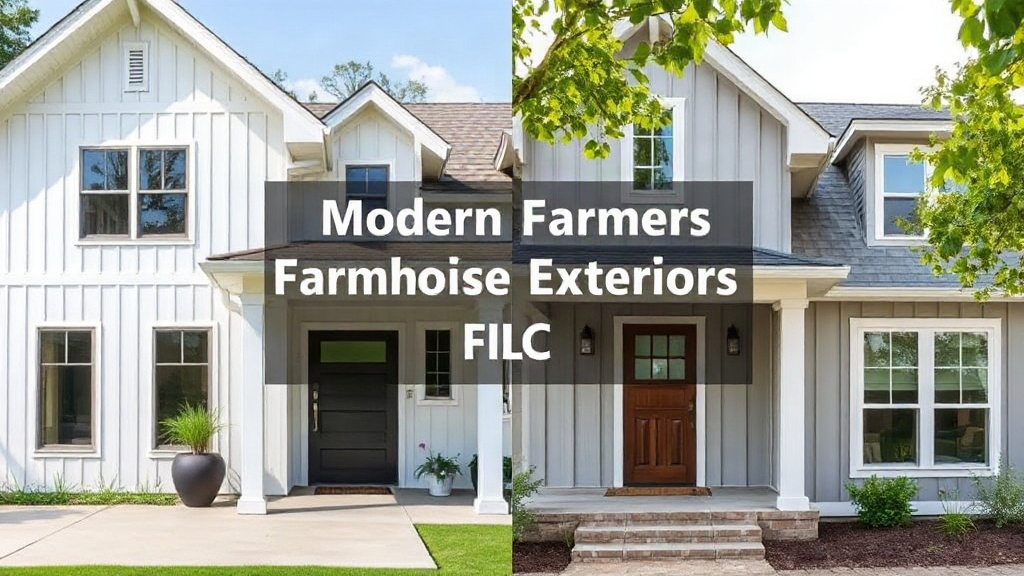
Modern farmhouse takes the classic farmhouse shape and tidies it up. Expect steep gable roofs, white or off-white siding, black window frames, and warm accents like wood or stone. The overall effect is familiar but fresher than a purely traditional home.
Common features include:
- Board-and-batten or lap siding, often mixed with stone or brick
- Steep gable or cross-gable rooflines with visible brackets or rafter tails
- Black-framed rectangular windows, sometimes with divided panes
- A wide front porch with simple posts and a shed or gable roof
- A limited color palette of white, charcoal, and natural wood tones
Contemporary exteriors
Contemporary design is about geometry and restraint. Roofs are flat or very low-slope, walls are smooth, and windows are large and often asymmetrical. Materials lean toward stucco, smooth panels, metal, and glass rather than lap siding.
Typical features include:
- Flat or low-slope roofs with minimal overhang
- Large windows, often floor-to-ceiling or corner-wrapping
- Smooth, monolithic wall surfaces with few visible seams
- An emphasis on horizontal lines and asymmetry
- A neutral palette of gray, white, black, and concrete tones
Takeaway: both styles favor simplicity, but modern farmhouse keeps the pitched roof and welcoming porch, while contemporary replaces them with flat planes and glass.
Why modern farmhouse vs contemporary home exteriors matters
An exterior choice shapes more than curb appeal. It determines how much maintenance your home needs, how well it handles your climate, and how future buyers see its value. Picking the wrong style for your lot or region can create problems that show up years later.
Climate and weather exposure
Roof pitch is the biggest practical difference. A steep modern farmhouse gable sheds rain and snow quickly, which suits wet or snowy regions. A flat contemporary roof needs more careful drainage, sealing, and inspection. In heavy-snow areas, low-slope roofs can also carry structural loads that steep roofs avoid.
Maintenance and long-term cost
Different materials wear differently. Siding and wood accents on a farmhouse need repainting and occasional repair. Smooth stucco or paneled contemporary walls may need less frequent finishing but can show dirt and staining on flat surfaces. Window area matters too, because large contemporary glazing raises heating and cooling loads.
Many exterior decisions ultimately become roofing decisions. Slope, overhang, and material all follow from the style you pick, so it pays to plan both together.
Resale and neighborhood fit
A style that clashes with nearby homes can hurt resale, even if the house itself is well built. Modern farmhouse fits comfortably in most suburban and rural settings. Contemporary stands out more, which is a strength in some neighborhoods and a mismatch in others. If you plan to sell, look at what the surrounding homes share before you commit.
Takeaway: climate, maintenance, and resale all shift with the style you choose, so treat the decision as practical as well as visual.
Best practices
You can get a beautiful result from either style. The difference between a well-executed exterior and a clumsy one usually comes down to discipline: fewer materials, consistent proportions, and a roof that matches the design intent.
Keep the material palette tight
Limit yourself to two or three exterior materials. A farmhouse might use white siding, black trim, and a wood front door. A contemporary home might pair smooth stucco with dark metal and glass. Each additional material adds visual noise and cost.
Get the roof right first
The roofline sets the tone for everything else. A farmhouse needs a visible, well-proportioned gable. A contemporary home needs a crisp flat plane with clean edges and hidden or minimal gutters. Roofing materials, profiles, and colors should match the style rather than fight it. For a closer look at how rooflines and materials shape a facade, this overview of modern roof styles is a useful reference point.
Comparison: modern farmhouse vs contemporary exterior priorities
| Feature | Modern farmhouse | Contemporary |
|---|---|---|
| Roof | Steep gable, visible pitch | Flat or low-slope |
| Siding | Board-and-batten, lap, mixed materials | Smooth stucco, panels, glass |
| Windows | Rectangular, black frames | Large, asymmetrical, floor-to-ceiling |
| Entry | Wide covered porch | Minimal canopy or recessed entry |
| Palette | White, charcoal, wood | Gray, white, black, concrete |
Notice that the roof and window choices drive most of the visual identity in both columns.
Plan windows and entry together
Windows should feel deliberate, not scattered. A farmhouse works best with evenly spaced, symmetrical windows and a clear central entry. Contemporary design can handle asymmetry, but every offset should look intentional. Sketch the facade before construction so proportions stay balanced.
Takeaway: fewer materials, a style-appropriate roof, and a planned window layout do most of the work in either style.
Common mistakes to avoid
Most disappointing exteriors come from a handful of avoidable choices. Catching them early saves money and prevents a facade that never quite looks finished.
Mixing styles without a plan
Combining farmhouse and contemporary elements can work, but only with intent. A flat modern roof on a home with a wide farmhouse porch often looks unresolved. Decide which style leads and let the other play a supporting role.
Ignoring the roof pitch
Building a steep gable because you like the look, then choosing roofing that suits a low slope, creates leaks and wasted cost. Match roofing material to slope from the start. Flat roofs on contemporary homes need especially careful waterproofing and drainage planning.
Oversizing windows and glass
Big glass walls look striking, but they raise energy bills and can glare badly on a sunny lot. Size and orient windows to your climate and lot. Shade structures or overhangs help reduce heat gain.
Forgetting details like gutters and trim
Small elements tie a design together. Dark gutters can look out of place on a pale farmhouse, while bulky gutters can spoil a sleek contemporary edge. Match trim, gutters, and downspouts to the overall palette and let them disappear or work as intentional accents.
Some neighborhoods and historic districts regulate exterior materials and rooflines. Confirm requirements before you finalize plans, or you may face costly revisions.
Takeaway: style mixing, roof mismatches, oversized windows, and overlooked trim details are the most common and most fixable exterior problems.
FAQ
Is modern farmhouse cheaper to build than contemporary?
Not necessarily. Farmhouse siding and porches add material costs, while contemporary homes often spend more on large windows, flat-roof waterproofing, and custom detailing. Cost varies more by size and site than by style alone.
Which style holds its value better?
It depends on your local market. Modern farmhouse tends to fit a broad range of neighborhoods, which can support resale. Contemporary homes appeal to a narrower group of buyers but can command a premium in markets that favor modern design.
Can I combine both styles on one house?
Yes, with care. A common approach is a farmhouse massing with contemporary materials, such as clean-lined siding and black-framed glass. Choose one style as the primary influence so the result reads as intentional.
Which style suits a rainy or snowy climate?
A steep farmhouse roof sheds rain and snow more readily. Contemporary flat roofs can work in wet climates but demand careful drainage design and regular maintenance.
Do contemporary exteriors need more maintenance?
Flat roofs and smooth wall finishes tend to need closer attention to sealant, drainage, and stains. Farmhouse siding and wood accents need repainting and occasional repairs. Both require upkeep, just of different kinds.
Conclusion
The modern farmhouse vs. contemporary home exteriors decision rarely has a single right answer. Farmhouse styling offers warmth, a familiar silhouette, and a steep roof that handles weather well. Contemporary design delivers clean geometry, dramatic glass, and a look that stands apart. Weigh your climate, maintenance appetite, neighborhood, and budget before you commit to a look. The best next step is to sketch your roofline and material palette on paper, then have them reviewed against your lot and local rules. That small step turns a style preference into a plan you can actually build.