How to Select the Best Golf Putter for Washington Greens in 2026
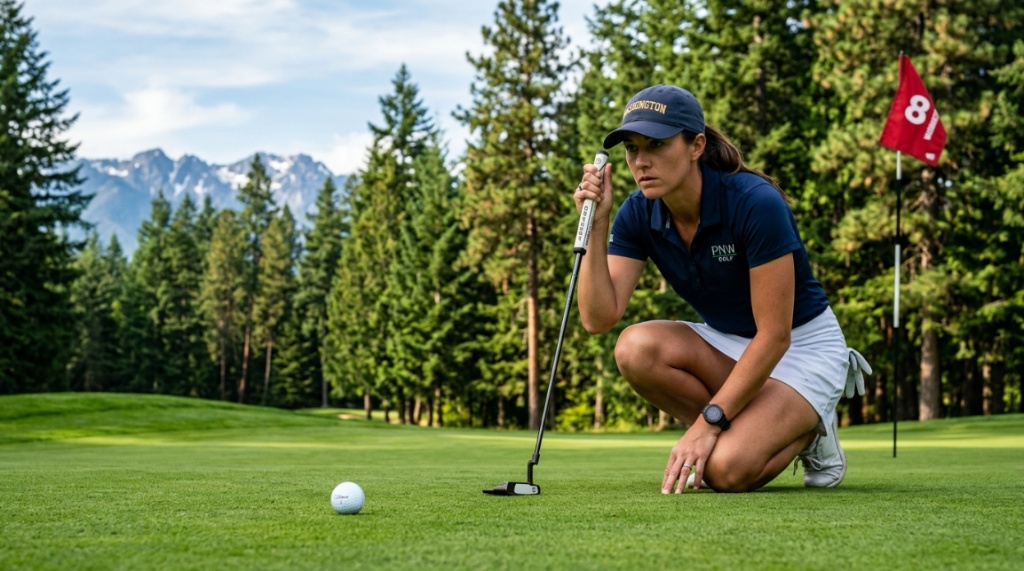
You’ve probably stood over a six-footer at Chambers Bay or a slick municipal course in Seattle, watched your putt slide by the edge, and wondered if your flatstick is the problem. You’re not alone. The reality is that Washington’s diverse greens—from lightning-fast bentgrass to grainy poa annua—demand a specific type of putter that most golfers don’t own. This guide will help you decode the unique challenges of Pacific Northwest putting surfaces and choose a golf putter for Washington greens that actually improves your score, rather than just looking good in your bag.
Forget generic advice about blade vs. mallet. We’re going deep into turf conditions, face technology, and weight distribution. By the end, you’ll know exactly what to look for, what to avoid, and how to match your stroke to the unpredictable weather and grass of the Evergreen State.
What Makes Washington Greens Different from the Rest of the Country?
Washington greens are arguably the most deceptive in the country because they combine high moisture levels with significant undulation. The Pacific Northwest’s cool, damp climate forces courses to use different grass species than you’d find in Arizona or Florida. This fundamentally changes how the ball rolls.
Understanding the biology of the grass is the first step to selecting the right putter. It’s not about adding more speed; it’s about maintaining a consistent roll line despite surface irregularities.
Understanding Poa Annua vs. Bentgrass on the West Coast
Most public and private courses in Washington use a mixture of poa annua (annual bluegrass) and bentgrass. Poa annua is the villain. It grows quickly, creates a bumpy, inconsistent grain, and slows down considerably in the afternoon. Bentgrass, found on high-end courses like Sahalee, is smoother but can become lightning-fast during the dry summer months. Your putter must handle both extremes.
Why Grain Matters More Than You Think in Washington
Grain—the direction the grass grows—is more pronounced in Washington due to the frequent overcast skies. Grass grows toward the sun the moment it peeks out, shifting the grain direction daily. A putter that is too light will get knocked offline by the microscopic blades of grass, especially on poa annua greens.
The “Moss” Effect of Saturated Greens
In the winter and spring, Washington greens are spongy. They hold water. If you use a high-looping, skidding putter, the ball will bounce. You need a putter that gets the ball rolling end-over-end immediately to combat this excess moisture.
Which Putter Head Design Works Best on Washington’s Slick Greens?
The head design dictates forgiveness and alignment. For the undulating, often-sloped greens in Washington, you need a putter that minimizes error on off-center hits. While a classic blade might feel nice, it lacks the stability required for these tricky surfaces.
Here is the professional consensus: Game-improvement mallets with high MOI (Moment of Inertia) are the safest choice for recreational golfers playing in Washington. They are heavier, more stable, and feature alignment aids that help with the extreme side slopes common in the region.
Blade Putters: The High-Risk, High-Reward Option
Blades are for golfers with a perfect, repeatable arc and a smooth tempo. On poa annua, blades often twist on mishits, causing the ball to lose speed before it even reaches the apex of the putt. If you miss the center, you lose distance control hard.
Mallets and High-MOI Designs: The Washington Safe Haven
Mallets distribute weight to the perimeter (heel and toe). This means that if you hit the putt slightly off-center, the face doesn’t twist as much. On bumpy poa greens, this translates to a truer roll.
Alignment Features for Sided Slopes
Washington greens are notorious for severe breaking putts. A putter with a clear, high-contrast alignment line (like a triple track or a wide sightline) helps you square the face to your starting line with confidence.
How Does Putter Weight Affect Performance on Wet Greens?
Putter weight is the most critical technical spec for Washington players. Standard putters weigh around 350 grams. For the Northwest, you typically need 350 to 380 grams. Heavier putters require less effort to swing, which is crucial on slow, wet, or grainy greens.
Heavier heads encourage a pendulum motion and stabilize the stroke, helping you “pop” the ball through the grain without accelerating excessively.
Why Lighter Putters Cause Yips on Slow Poa Greens
When greens are slow (as they are in the fall and winter), golfers naturally hit the ball harder with a light putter. This aggressive, accelerating stroke destroys tempo. A heavier putter allows you to use a longer, smoother stroke for distance, which is much more reliable.
The Role of Grip Weight and Counterbalance
Don’t just look at the head. A heavy grip (like a SuperStroke) can counterbalance a heavy head, keeping your hands quiet. This is vital for the short, nervous putts on fast summer bentgrass.
Midsize vs. Jumbo Pistol Grips
If your hands tend to be active (or if it’s cold and your grip pressure increases), a jumbo grip reduces wrist action. This minimizes the chance of pulling the ball on a left-to-right breaking putt.
What is the Best Putter Face Technology for Washington’s Bumpy Poa?
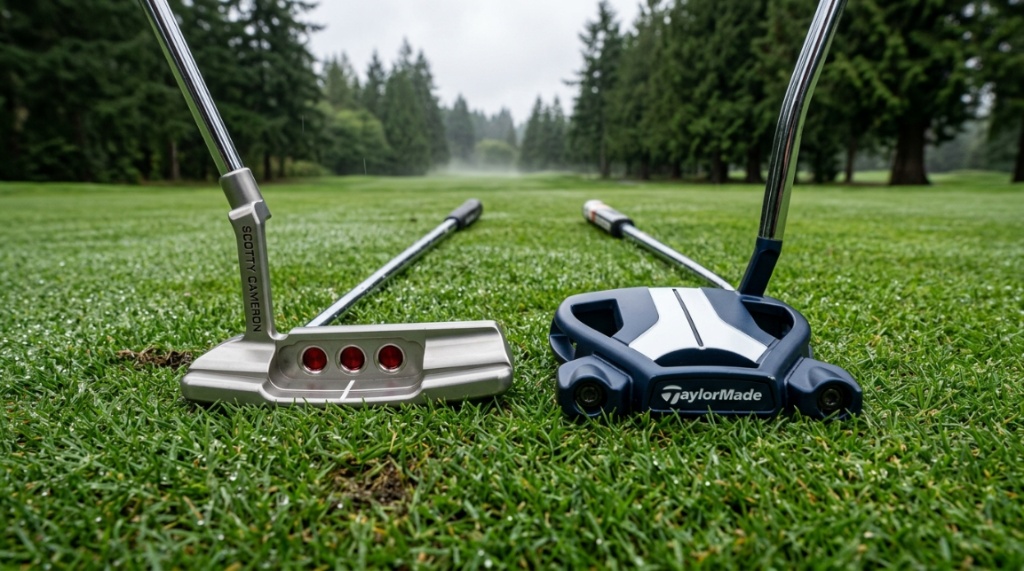
The insert and face technology dictates initial launch and sound. Washington greens require a firm feel to penetrate the grain. Soft inserts can feel nice on the practice green, but they often lead to “dead” putts on poa annua.
For optimal performance, look for firmer inserts or milled faces. These reduce skid, get the ball rolling true sooner, and are far more consistent on greens that have been aerated or have heavy grain.
Steel Milled Faces: Uniformity on All Greens
Milled steel is the gold standard. It has a tighter tolerance for flatness (usually flat to within 0.0001 inches). This ensures the ball starts on your target line even if you hit the toe slightly.
Polymer Inserts: Beware of the Cold
Soft polymer inserts (like the white-hot type) are popular, but in 30-degree weather, they become firmer and unpredictable. The sound changes, and so does distance control. Milled faces remain consistent in the cold.
Groove Technology for Immediate Roll
Look for putters with deep grooves or a “True Path” technology. These grooves channel the ball up the face, creating topspin within the first inch of travel. This is the single most effective way to beat the “bounce” on wet, morning greens.
Are Long Putters or Arm-Lock Styles Viable in Washington?
Yes, absolutely. In fact, arm-lock putters have gained significant traction on the West Coast because they take the wrists out of the stroke. This is a huge advantage when dealing with the instability of poa annua greens.
If you struggle with cleaning up short par putts that wobble due to grain, anchoring the shaft to your forearm can lock in the face angle.
Why Arm-Lock Works for Poa Annua
Poa annua greens are bumpy. A wristy stroke exaggerates the bumpiness. The arm-lock style creates a rigid lever that plows through the grain, ignoring the imperfections in the turf.
The Crossover Putter Trend
This is a mallet head with a longer shaft (~38 inches) that allows you to grip down. It adds length and balance without committing to the belly putter. It is a great compromise for greens that vary wildly in speed between seasons.
The Drawbacks of Traditional Long Putters
While they stabilize the stroke, traditional long putters can hurt your speed control on slow, soft spring greens because the lever geometry is awkward. Arm-lock is usually the safer bet for distance control.
How Important is Lie Angle and Shaft Lean for NW Courses?
This is the most overlooked fitting variable. Washington courses often have dramatic slopes and sidehill lies. If your putter lies flat or upright incorrectly, you will push or pull the ball on these slopes.
The correct lie angle ensures the sole sits flat on the ground. If the toe is up, the face is aimed left (for a right-hander). If the toe is down, the face aims right.
The Flat Stick Phenomenon
Many players stand further away from the ball to accommodate their height. On uneven Washington lies, this creates a nasty pull. Ensure your putter has a flat lie angle (around 70 degrees) to keep the head square on side slopes.
Shaft Lean and the “Apex” Position
You want minimal shaft lean at impact. Bending the shaft forward (delofting) is bad on poa because it creates a trap, or skid. Make sure the putter has some bounce or loft (3-4 degrees) to help the ball get over the grain.
How to Check Your Lie Angle at the Course
Use the sole tape method. Place a piece of tape on the sole, make a putt, and see where the tape is worn. If it’s the toe, you need a flatter lie. If it’s the heel, you need a more upright lie.
Can a Putters’ Toe-Hang Change your Break Reading on Grain?
Toe-hang (the legibility of the club) dictates your stroke arc. In Washington, where grain can pull the ball, this becomes a tactical decision. Toe-hang putters open and close during the stroke, which requires perfect timing.
For the unpredictable grain of the Pacific Northwest, face-balanced putters are superior for 95% of amateurs. They keep the face square for longer, minimizing the effects of a hook or slice spin, Preparing your bag for different regions and turf conditions? Make sure you also check out our guide on the Best Golf Balls for a Texas Golfer to optimize your distance and spin in the heat and wind.
How Toe-Hang Impacts Grain Interaction
A toe-heavy putter tends to close too quickly at impact, adding unintended draw spin to the ball. On grainy greens, this spin is magnified, causing the ball to chew left.
Face-Balanced Mallets: The Predictable Roll
Face-balanced putters resist rotation. They swing straight back and straight through. This linear motion is perfect for “rolling” the ball over the grain rather than “cutting” across it.
Customizable Weights and Toe-Hang
Brands now offer interchangeable weights in the toe and heel. You can start with a face-balanced setup and add toe weight if you find you are leaving the face open.
What is the Top Recommended Putter Specs for Washington Golfers?
Based on agronomic data and performance reviews, the “Washington Spec” is a high-MOI mallet, 360-370 grams, with a firm face insert and a face-balanced or slight toe-hang (less than 20 degrees).
You want the shaft length around 34″ to 35″ to allow for a pendulum arc. Let’s look at a practical comparison to frame your buying decision.
Blade vs. Mallet vs. High-MOI: A Quick-Reference Table
| Feature | Blade | Standard Mallet | High-MOI Mallet |
|---|---|---|---|
| Forgiveness | Low | Medium | High |
| Grain Penetration | Poor | Good | Excellent |
| Best For | Scratch golfers on fast greens | Mid-handicappers | High handicappers on wet/grainy greens |
| Alignment Aids | Minimal | Moderate | Strong, high contrast |
| Washington Suitability | 2/5 | 3.5/5 | 5/5 |
Why Scotty Cameron and Bettinardi Are Popular but Tricky
These blades are beautiful, but they are often too light. If you buy a premium blade, you must ensure it is the Heavy version (350g+) to handle the wet winter greens. Otherwise, you will struggle.
The Budget Factor: You Don’t Need to Spend $400
Many brands like Cleveland and Odyssey make face-balanced mallets with similar specs for under $200. The technology has trickled down. When looking for the best budget options, check the weight first—ignore the brand stamping if the weight is right. If you are looking for specific models that excel in these conditions, check out this curated list of the best golf putter for Washington greens to see which heads are designed with the Northwest in mind.
When Should You Change Your Putter for the Seasons in Washington?
Serious Washington golfers use two putters—one for summer and one for winter. The difference is too vast to ignore. If you only have one putter, you must prioritize the heavy mallet for year-round consistency.
Summer greens are fast, slick, and true. Winter greens are slow, bumpy, and wet. Your setup must change.
Winter Setup: The Heavyweight Champion
From November to April, use your heaviest putter (370g+). The heavy head helps you maintain tempo on slow greens. If you stick with a light blade, you will develop a “jabby” stroke that ruins your game when summer arrives.
Summer Setup: Speed and Feel
From June to September, greens are firm. A putter with a harder milled face will give you the speed you need. The ball rolls faster. The grain is less of an issue, but the wind can be. A lower-profile mallet is great here.
Spring/Fall Transition: The Hybrid Approach
During the switch, use a mid-weight putter (355g) and focus on putting with a longer, slower motion. This will help you adapt to the changing speeds without changing clubs.
How Can You Practice Effectively on Washington Greens?
Practicing on poa annua requires focusing on “speed control” over “line reading.” Because the surface is bumpy, a perfectly stroked putt can still wobble. You must ensure you have enough pace to overpower the grain.
Washington putting is all about pace. A putt that is going too slow will be swallowed by the grain; a putt with too much pace will be difficult to stop on the slick summer surfaces.
Drill 1: The “Lag” Drill for Poa
Practice putting to a tee 20 feet away. Try to land the ball just past the tee. On poa, the ball sometimes stops abruptly. This drill trains you to hit harder than you think you need to, ensuring you don’t come up short.
Drill 2: The “Gate” Drill for Bumpy Greens
Place two alignment sticks just wider than your putter head. Stroke putts through the gate. This ensures you are hitting the center of the face, which is critical on grainy greens. Off-center hits die quickly.
Drill 3: The “Read the Grain” Test
Look at the hole. If the grass is shiny, the grain is down. If it appears dull, the grain is into you. This dictates your read on every putt.
Frequently Asked Questions
Question: Is a mallet putter better than a blade for Washington courses?
Yes, for most golfers. Mallets offer higher forgiveness and more weight, which helps maintain speed control on the bumpy poa annua and slower winter greens common in Washington.
Question: How heavy should my putter be for wet greens?
Aim for a putter between 360 and 380 grams. This heavy head helps you hit through the moisture without over-swinging, leading to more consistent distance control.
Question: Does toe-hang matter for fast greens?
Yes. Face-balanced putters are safer for the sloping, grain-influenced greens of Washington. They help keep the face square, reducing the chance of getting “grabbed” by the grain.
Question: Can I use a soft insert putter on poa annua?
You can, but it is not recommended. Firm inserts or milled faces provide a more consistent ball speed on poa, whereas soft inserts tend to decompress and lose energy on the thicker grass blades.
Question: What shaft length is recommended for a putting stroke in the PNW?
Standard lengths of 34 or 35 inches work best. Avoid extra-long shafts unless you are using an arm-lock style, as you need the control to navigate the undulating terrain.
Question: How often should I check my putter loft in Washington?
Check it every 6 months. Hitting putts on hard, compacted winter sand can dent the sole and decrease loft. You need 3-4 degrees of loft to get the ball rolling over the wet grass.
Conclusion
Selecting the right putter for Washington isn’t about chasing the latest tour trend; it’s about respecting the turf. Your goal is to eliminate variables. The bumpy poa annua, the winter moisture, and the slick summer bentgrass all require a heavy, stable, face-balanced putter. Forget the delicate blades—embrace the technology of high-MOI mallets.
Focus on getting the ball rolling end-over-end quickly. Check your putter’s weight and face loft. Practice with a tempo that handles the slow greens, and you will see your three-putts drop significantly. It’s time to take a hard look at your flatstick and ask if it’s truly built for the Northwest. If it isn’t, make the change before your next round.
Your scores will thank you.
Focus Keyphrase: adjust your
Meta Description: