7 Mistakes Dog Owners Make When Cleaning Dirty Paws
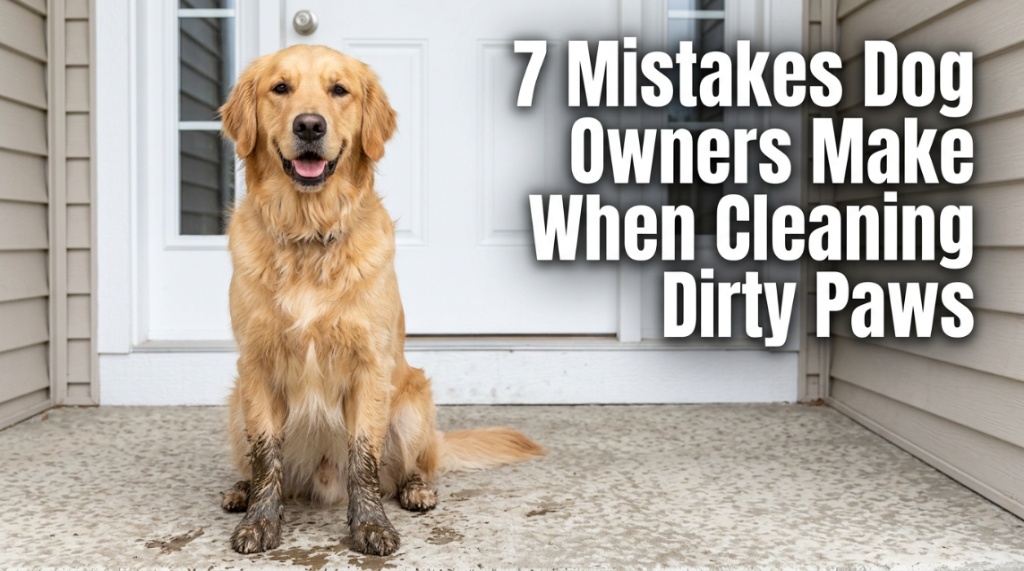
My golden retriever once tracked a perfect trail of mud prints from the back door, across the living room carpet, up onto the couch, and straight onto a pile of freshly folded white laundry — all in the four seconds it took me to grab a towel. That disaster was entirely my fault, not hers. Most dog owners repeat the same dog paw hygiene errors after every walk without realizing they are making their cleanup harder, damaging their dog’s paw pads, or spreading bacteria through their home. Proper dog paw maintenance is not just about clean floors — it protects your dog from infections, chemical burns from road salt, and irritation from trapped debris between the toes. These seven mistakes range from using the wrong products to skipping paw checks entirely, and fixing them takes zero extra time once you know what to change.
Mistake #1: Waiting Too Long to Clean Paws After a Walk — Why Does Timing Matter?
Cleaning paws immediately at the door prevents mud from drying and hardening between paw pads, stops bacteria from spreading through your home, and catches irritants like road salt or lawn chemicals before they cause pad damage.
The moment your dog steps inside with dirty paws, a countdown begins. Wet mud takes 3–5 minutes to start drying on paw pads. Once dry, it bonds to fur and skin, requiring scrubbing that irritates sensitive pad tissue. Meanwhile, every step your dog takes deposits bacteria, allergens, and chemicals onto your floors, furniture, and anywhere they walk.
What happens when you delay cleaning:
- Mud dries and hardens: Requires aggressive scrubbing that can crack dry paw pads
- Bacteria multiply: Warm, moist debris between toes creates ideal bacterial growth conditions
- Chemicals absorb: Road salt, fertilizers, and pesticides penetrate the skin within minutes
- Allergens spread: Pollen and environmental allergens transfer to every surface your dog touches
- Debris embeds: Small stones, thorns, or glass fragments work deeper between pads with each step
The fix is simple: establish a paw-cleaning station at your entry door. Keep your supplies within arm’s reach so cleaning happens before your dog moves past the doormat. A 30-second wipe at the door eliminates the need for a 30-minute floor cleaning later.
Mistake #2: Using Harsh Soaps or Human Products — What Should You Actually Use on Dog Paws?
Use only pH-balanced, dog-specific cleansers or plain warm water on paw pads — human soaps, dish detergent, and antibacterial products strip natural oils and disrupt the skin barrier that protects against infection.
Dog skin has a pH of 6.2–7.4 (neutral to slightly acidic). Human soaps are formulated for human skin pH (4.5–5.5). This mismatch causes:
- Stripped natural oils: Paw pads rely on a thin oil layer for moisture retention and crack prevention
- Disrupted microbiome: Healthy bacteria on paw skin protect against pathogenic organisms
- Dryness and cracking: Repeated soap use leads to painful fissures in the pad tissue
- Contact dermatitis: Fragrances and chemicals in human products trigger allergic reactions
Safe cleaning options ranked by effectiveness:
| Cleaning Method | Best For | Pros | Cons |
|---|---|---|---|
| Plain warm water | Light dirt, daily use | Zero irritation risk, free | Does not remove oils or stubborn grime |
| Dog-specific paw wash | Moderate dirt, regular walks | pH-balanced, often contains moisturizers | Ongoing cost ($8–$15/bottle) |
| Portable paw washer cup | Muddy paws, quick cleanup | Fast, thorough, minimal mess | Requires rinsing the device after |
| Dog grooming wipes | Light dust, travel | Convenient, no water needed | Less thorough than washing |
| Diluted chlorhexidine (vet-recommended) | Post-injury, infection prevention | Antimicrobial without disrupting skin pH | Should not be used daily without vet guidance |
If you have been using dish soap or hand soap on your dog’s paws, switch immediately. The damage accumulates — you may not notice cracking until pads are already compromised.
Mistake #3: Skipping the Space Between Toes — Why Is This Area So Important?
The spaces between a dog’s toes trap mud, debris, bacteria, and moisture that cause interdigital cysts, yeast infections, and foreign body abscesses — making between-toe cleaning the most critical and most commonly skipped step in paw hygiene.
The interdigital spaces (between toes) are warm, dark, and moist — a perfect environment for problems. Common issues from neglected between-toe cleaning:
- Interdigital cysts: Painful, fluid-filled lumps caused by trapped debris or ingrown hairs. Require veterinary treatment.
- Yeast overgrowth: That “corn chip” smell from your dog’s feet indicates yeast proliferation in moist interdigital skin.
- Foreign body reactions: Grass seeds (foxtails), small thorns, or splinters work between toes and migrate into tissue.
- Bacterial infections: Trapped organic matter decomposes, creating bacterial colonies that infect surrounding skin.
Proper between-toe cleaning technique:
- Gently spread each toe apart with your fingers
- Wipe or rinse the webbing between each toe
- Check visually for embedded debris, redness, or swelling
- Dry thoroughly — moisture left between toes promotes yeast growth
- Pay extra attention after walks through tall grass, muddy trails, or sandy areas
This adds 20 seconds per paw to your cleaning routine but prevents veterinary visits that cost $100–$300 per interdigital issue.
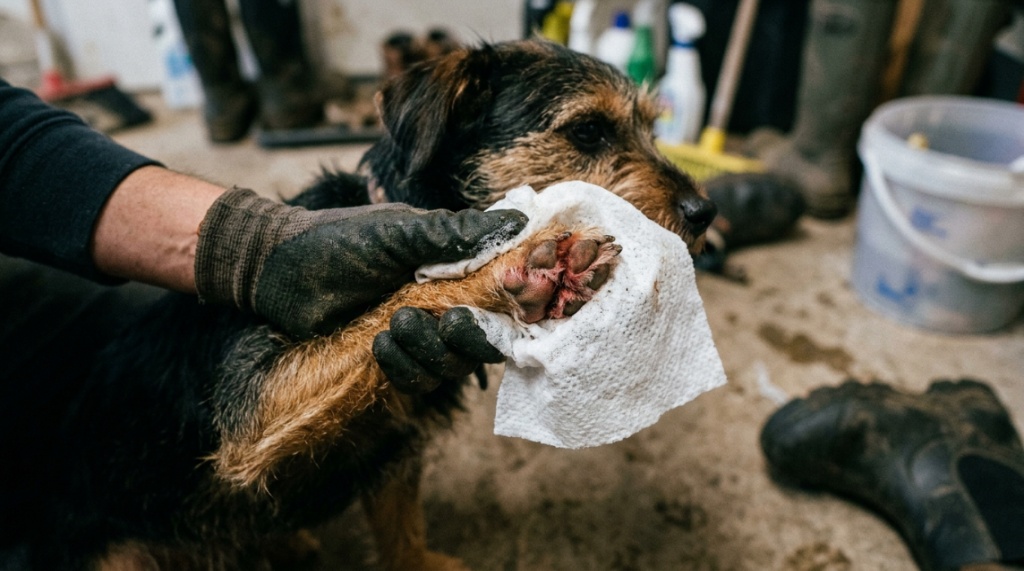
Mistake #4: Not Drying Paws After Cleaning — What Happens When Paws Stay Wet?
Leaving paws wet after cleaning creates the exact moisture conditions that promote yeast infections, bacterial growth, and pad maceration (softening of skin tissue that leads to tears and cracks).
Many owners wash paws diligently but skip drying — essentially replacing one problem (dirt) with another (excess moisture). Consequences of wet paws:
- Yeast infections: Malassezia yeast thrives in warm, moist environments. Chronically damp paws can develop persistent yeast overgrowth, causing itching, redness, and odor.
- Pad maceration: Prolonged moisture exposure softens pad tissue, making it vulnerable to tears, abrasions, and punctures during the next walk.
- Bacterial proliferation: Wet organic matter between toes becomes a bacterial breeding ground within hours.
- Slipping hazard: Wet paw pads lose traction on hard floors, risking joint injuries especially in older dogs.
Drying protocol:
- Use a dedicated dog towel (microfiber absorbs best)
- Pat — do not rub aggressively — between each toe
- Lift each paw and dry the pad surface and edges
- In winter, ensure complete drying to prevent chapping from cold air on wet skin
- For dogs with heavy foot fur, consider a low-heat blow dry or absorbent paw bands
Keep a designated paw towel at your cleaning station. Wash it weekly to prevent bacterial buildup on the towel itself from transferring back to clean paws.
Mistake #5: Ignoring Seasonal Paw Hazards — What Threats Change With the Seasons?
Each season introduces specific paw hazards — road salt and ice melt chemicals in winter, hot pavement in summer, allergens in spring, and sharp debris in fall — requiring adapted cleaning routines throughout the year.
Seasonal paw threats most owners miss:
Winter:
- Road salt causes chemical burns on the pad tissue
- Ice melt products (calcium chloride, magnesium chloride) are toxic if licked from paws
- Ice balls form between toes in long-haired breeds, causing pain and frostbite risk
- Action: Rinse paws immediately after winter walks. Consider paw wax as a protective barrier before walks.
Summer:
- Asphalt reaches 140°F+ on 85°F days — enough to blister paw pads in seconds.
- Lawn chemicals (fertilizers, herbicides, pesticides) coat grass and transfer to paws
- Sand and hot beach surfaces abrade the pad tissue.
- Action: Walk during cooler hours. Rinse after any treated lawn contact. Check for burns after hot-surface exposure.
Spring:
- Pollen accumulates on paws and triggers allergies when licked
- Mud season means daily heavy cleaning needs
- Emerging plant matter (seeds, burrs) embeds between toes
- Action: Daily paw washing during high-pollen periods. Thorough debris checks after trail walks.
Fall:
- Fallen acorns, walnut shells, and seed pods puncture or bruise pads
- Decomposing leaf matter harbors bacteria and mold
- Foxtail grass seeds are at peak dispersal and embed aggressively
- Action: Visual inspection after every walk. Remove embedded debris immediately.
For a comprehensive guide to choosing the right paw cleaning tools for different seasonal conditions, check out the best dog paw cleaners reviewed for hot climates — particularly useful for owners dealing with summer pavement heat and chemical exposure year-round.
Mistake #6: Using One Dirty Towel for All Four Paws — Why Does This Spread Problems?
Using a single dirty towel across all four paws transfers bacteria, yeast, and debris from one paw to another — potentially spreading a localized infection to all four feet and contaminating every subsequent cleaning session.
This seems like a minor detail, but it creates real problems:
- Cross-contamination: If one paw has a developing yeast infection, wiping all four paws with the same towel inoculates the other three
- Bacterial transfer: Fecal bacteria from hthe ind paws transfers to the front paws (which dogs lick more frequently). The redistribution: Sand and grit picked up from the first paw scratches the pads of subsequent paws during wiping
- Accumulated filth: A towel used for weeks without washing becomes a bacterial colony that deposits more organisms than it removes
Better approaches:
- Use a fresh section of towel for each paw (fold a large towel into quarters)
- Keep multiple small microfiber cloths at your cleaning station — one per paw
- Wash paw towels every 3–4 days minimum (hot water, unscented detergent)
- Replace towels monthly or when they develop a persistent odor despite washing
- For dogs with active paw infections, use disposable paper towels until the infection resolves
A pack of 10 microfiber cloths costs under $15 and lasts for months. Rotate through them daily and wash the batch weekly — a simple system that eliminates cross-contamination.
Before you grab those household wet wipes, review these Best Rope Leashes for Daily Dog Walking.
Mistake #7: Never Inspecting Paws During Cleaning — What Should You Look For?
Every paw cleaning session should double as a health inspection — checking for cuts, cracks, swelling, foreign objects, nail damage, and color changes that indicate developing problems before they require veterinary intervention.
Cleaning time is inspection time. You already have the paw in your hand — take 5 extra seconds to check:
- Cuts or punctures: Small wounds on pads can become infected rapidly. Clean with diluted chlorhexidine and monitor.
- Cracked pads: Dry, fissured pads indicate environmental damage or nutritional deficiency. Apply dog-safe paw balm.
- Swelling between toes: Early sign of interdigital cyst, foreign body, or insect sting. Vet visit if it persists for 48 hours.
- Nail condition: Broken, split, or overgrown nails cause gait changes and pain. Trim or seek vet care for breaks.
- Color changes: Redness indicates inflammation. Brown staining (from licking) suggests chronic irritation or allergy. Pale pads may indicate circulation issues.
- Lumps or growths: Any new mass between toes or on pads warrants veterinary evaluation.
- Odor: A persistent foul smell despite cleaning indicates infection (bacterial or yeast).
Early detection saves money and suffering. A small cut caught on day one needs a $5 antiseptic wash. That same cut ignored for a week may need a $200 vet visit with antibiotics. Dogs hide pain instinctively — your cleaning routine is often the only opportunity to catch paw problems before they escalate.
Conclusion
Every one of these seven dog paw hygiene mistakes is fixable with awareness and a 60-second routine adjustment. Clean immediately at the door. Use dog-appropriate products. Get between the toes. Dry thoroughly. Adapt to seasonal hazards. Use clean towels. Inspect while you clean. That is the complete protocol — no expensive equipment or veterinary training required.
The dog owners who never deal with paw infections, muddy floor disasters, or expensive vet bills for interdigital cysts are not lucky — they simply built a 90-second paw cleaning habit that prevents every common problem. Start tonight after your next walk. Your floors, your dog’s health, and your veterinary budget will all thank you within the first week.
Which of these mistakes surprised you most? Share your paw cleaning routine below — your tip might help another dog owner avoid a costly mistake.
Frequently Asked Questions
How often should I clean my dog’s paws?
Clean your dog’s paws after every outdoor walk or yard session. At a minimum, wipe paws once daily for dogs that go outside. During muddy seasons, rainy weather, or after walks on treated surfaces (salted roads, fertilized lawns), thorough washing is necessary rather than just wiping. Indoor-only bathroom breaks on clean surfaces may only need a quick visual check.
Can dirty paws make my dog sick?
Yes. Dogs lick their paws regularly, ingesting whatever is on them — bacteria, lawn chemicals, road salt, pesticides, and mold spores. Chronic ingestion of these substances causes gastrointestinal issues, chemical toxicity, and allergic reactions. Paw cleaning directly reduces your dog’s oral exposure to environmental contaminants.
What is the fastest way to clean muddy dog paws?
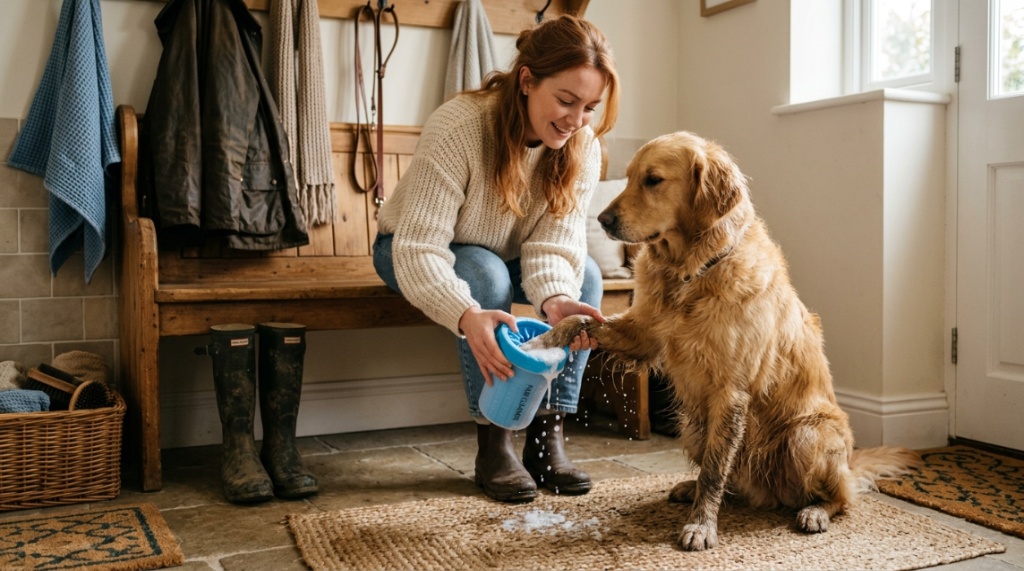
A portable paw washer cup (silicone bristle cup filled with water) cleans all four muddy paws in under 60 seconds. Dip each paw, twist gently, remove, and towel dry. For lighter dirt, pre-moistened dog grooming wipes work in 30 seconds. The key is having supplies staged at the door so there is zero setup time.
Should I use paw balm after cleaning?
Apply paw balm 2–3 times per week during dry or cold seasons, or whenever pads feel rough or show early cracking. Daily balm is unnecessary for healthy pads and can make floors slippery. Use balm as a preventive treatment rather than waiting until pads are already damaged. Look for products with beeswax, shea butter, or coconut oil as primary ingredients.
Why does my dog hate having their paws cleaned?
Paw sensitivity is common because paws contain dense nerve endings. Dogs may also associate paw handling with nail-trimming discomfort. Desensitize gradually — handle paws during calm moments with treats, start with brief touches, and build to full cleaning over 1–2 weeks. Never force or restrain aggressively, as this creates lasting negative associations.
Are dog paw wipes as effective as washing?
Wipes remove surface dirt and light contaminants effectively but cannot reach deep between toes or remove caked mud. They work well for daily maintenance after short walks on clean surfaces. For muddy, sandy, or chemically contaminated paws, a water wash with a paw washer cup provides significantly more thorough cleaning. Use wipes as a supplement, not a replacement for washing.
Can I use baby wipes on my dog’s paws?
Unscented, alcohol-free baby wipes are generally safe for occasional use but are not ideal long-term. They may contain propylene glycol or other ingredients that irritate dog skin with repeated use. Dog-specific paw wipes are formulated for canine skin pH and are the safer daily choice. If using baby wipes in a pinch, choose the most basic, fragrance-free option available.