
How to Buy a Street Legal Golf Cart for Neighborhood Driving
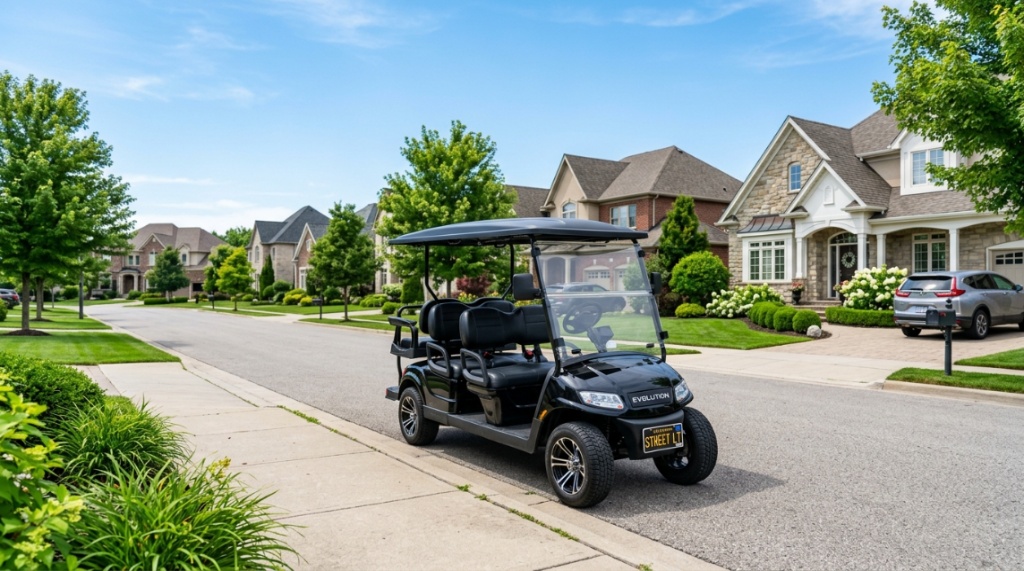
A homeowner in The Villages, Florida received a $287 fine last year for driving his golf cart across a public road without proper registration — a cart he’d been driving “legally” for three years without anyone stopping him. The rules changed, and he didn’t know. Buying a street legal golf cart for neighborhood driving isn’t as simple as adding headlights and hoping for the best. It requires understanding federal LSV (Low-Speed Vehicle) classifications, state-specific registration requirements, and the exact equipment package that transforms a recreational golf cart into a road-legal vehicle. A street legal golf cart is a low-speed vehicle equipped with DOT-approved headlights, taillights, turn signals, mirrors, seatbelts, a VIN plate, and capable of reaching 20–25 mph — meeting federal NHTSA standards for operation on roads with posted speed limits of 35 mph or less.
Over 1.2 million golf carts operate on U.S. public roads, and that number grows 15% annually as more communities embrace low-speed transportation. But golf cart registration requirements vary wildly between states — what’s legal in Florida may get you ticketed in Texas. This guide covers exactly what equipment you need, how registration works in major golf cart states, and how to buy a cart that’s street-legal from day one without expensive aftermarket conversions. Here’s everything you need to know about buying a street legal golf cart for safe, legal neighborhood driving.
What Makes a Golf Cart “Street Legal” Under Federal Law?
Under federal NHTSA regulations, a street legal golf cart must be classified as a Low-Speed Vehicle (LSV) — meaning it can reach 20 mph but not exceed 25 mph, and includes specific safety equipment mandated by FMVSS 500.
Required equipment under federal LSV standards:
- Headlights: DOT-approved, functional low and high beam
- Taillights: Red, visible from 500 feet
- Turn signals: Front and rear, amber/red
- Brake lights: Activated by brake pedal
- Rearview mirror: Minimum one center mirror
- Windshield: DOT-approved automotive safety glass (AS-1 or AS-5 rated)
- Parking brake: Must hold vehicle on grade
- Seatbelts: Three-point for all seating positions
- VIN plate: 17-character Vehicle Identification Number assigned by manufacturer
- Reflex reflectors: Side-mounted, visible from both sides
Important distinction: a “golf cart” and an “LSV” are legally different vehicles. A golf cart is designed for golf course use and typically limited to 15 mph. An LSV is manufactured to meet federal safety standards for road use. Some states allow golf carts on certain roads without LSV classification, but requirements vary significantly.
What Are the State-by-State Registration Requirements?
Registration requirements range from no registration needed (golf-cart-only communities) to full DMV title, registration, and insurance requirements identical to automobiles. Always verify your specific state and municipality rules.
Major golf cart states and their requirements:
| State | Registration Required? | Insurance Required? | Driver’s License? | Road Speed Limit | Special Notes |
|---|---|---|---|---|---|
| Florida | Yes (LSV) / No (golf cart on designated roads) | Yes for LSV | Yes | 35 mph roads | Counties set local rules |
| South Carolina | Yes | Yes | Yes (valid license) | 35 mph roads | Must be registered with DMV |
| Arizona | Yes for LSV | Yes | Yes | 35 mph roads | Golf carts restricted to 25 mph roads |
| California | Yes | Yes | Yes (Class C) | 35 mph roads | Strict emissions exempt but safety required |
| Texas | Yes for public roads | Yes | Yes | 35 mph roads | County-specific permissions |
| Georgia | Yes | Recommended | Yes (16+) | 35 mph roads | Local ordinances vary widely |
Critical tip: even within states, individual cities and HOAs may have additional restrictions on routes, hours of operation, and passenger age requirements. Contact your local municipality directly — don’t rely solely on state law.
Should You Buy a Factory Street-Legal Cart or Convert an Existing One?
Buying factory street-legal is easier, cheaper overall, and avoids registration complications. Converting an existing cart costs $1,500–$4,000 in parts and labor, plus potential DMV inspection hurdles.
Factory street-legal advantages:
- VIN plate assigned at manufacturing (required for registration in most states)
- All safety equipment meets DOT standards from factory
- MSO (Manufacturer’s Statement of Origin) simplifies title and registration
- Warranty covers all street-legal components
- No inspection required in most states — just register and drive
Conversion challenges:
- Obtaining a VIN for a cart that never had one (requires state inspection in many states)
- Aftermarket windshields may not meet DOT AS-1 standards
- Lighting kits vary in DOT compliance — cheap kits often fail inspection
- Speed must be verified at 20–25 mph range (some carts need controller reprogramming)
- Total conversion cost often approaches the price difference of buying factory street-legal
Recommendation: if you’re buying new, spend the extra $500–$1,500 for a factory street-legal package. If you already own a cart, conversion is viable but budget $2,000–$4,000 and expect the process to take 2–4 weeks including DMV paperwork.
What Does a Street-Legal Golf Cart Cost?
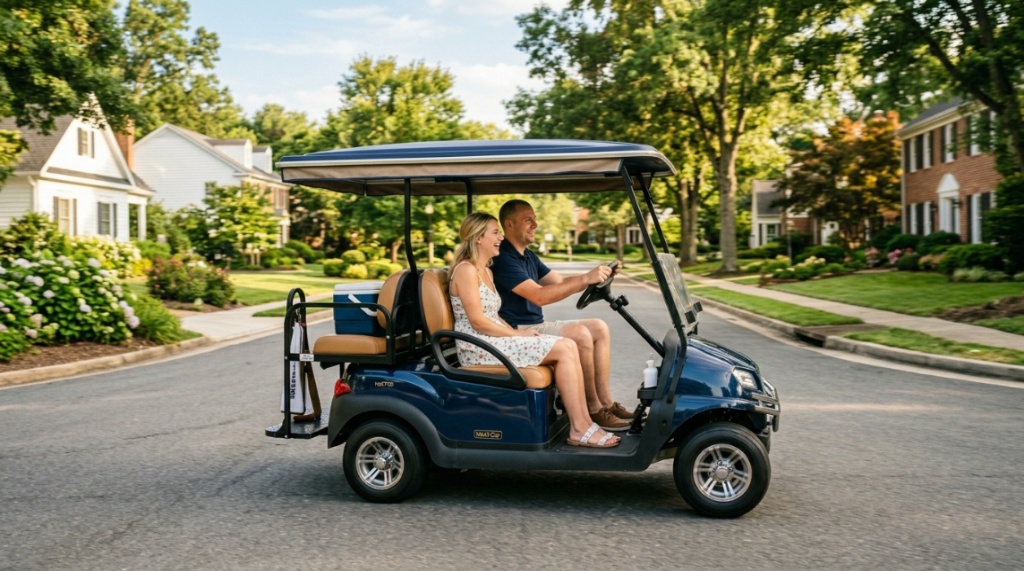
Factory street-legal golf carts range from $6,000 to $14,000 new depending on brand, battery type, and features. The street-legal package itself adds $500–$2,000 to base cart pricing.
Price breakdown by category:
- Budget street-legal ($6,000–$8,000): ICON i40, Evolution Classic 4 base model. Lithium batteries, basic street-legal equipment, minimal luxury features.
- Mid-range street-legal ($8,000–$11,000): Club Car Onward LSV, E-Z-GO Freedom TXT LSV. Established brands, full safety package, optional lithium upgrade.
- Premium street-legal ($11,000–$14,000+): Club Car Onward HP, Yamaha Drive2 LSV with full options. Premium batteries, advanced features, maximum comfort.
Additional costs beyond purchase price:
- Registration/title: $25–$150 (varies by state)
- Insurance: $100–$400/year
- Annual inspection (if required): $25–$75
What Insurance Do You Need for a Street-Legal Golf Cart?
Most states require minimum liability insurance for street-legal golf carts driven on public roads — typically $25,000/$50,000 bodily injury and $25,000 property damage, matching standard auto minimums.
Insurance options:
- Liability only: $100–$200/year. Covers damage you cause to others. Required in most states for road use.
- Comprehensive + collision: $200–$400/year. Also covers theft, vandalism, and accident damage to your cart.
- Umbrella policy addition: Some homeowner’s policies cover golf carts as an add-on for $50–$100/year. Check with your existing insurer first.
Important: standard homeowner’s insurance typically does NOT cover golf cart accidents on public roads. You need a separate golf cart policy or auto policy endorsement. Don’t assume you’re covered — verify with your insurance agent in writing. Cruising around the neighborhood is all about comfort and style, but keeping your ride pristine requires the right gear. Just like maintaining the seats, keeping your clubs and gear clean is essential, which is why checking out a Golf Towel Buying Guide for Beginners and Pros can help you choose a durable, absorbent option to clip right onto your cart’s accessory bar.
Where Can You Legally Drive a Street-Legal Golf Cart?
Street-legal golf carts (LSVs) can operate on roads with posted speed limits of 35 mph or less in most states. They cannot use highways, interstates, or roads with speed limits above 35 mph.
Typical driving permissions:
- Allowed: Residential streets, neighborhood roads, designated golf cart paths, roads posted 35 mph or under, crossing multi-lane roads at designated crossings
- Prohibited: Highways, interstates, roads posted above 35 mph, sidewalks (in most jurisdictions), bike lanes (varies by locality)
- Varies by locality: Downtown areas, commercial districts, school zones during certain hours, bridges and overpasses
Many golf cart communities (The Villages FL, Peachtree City GA, Sun City AZ) have extensive dedicated cart path networks that connect neighborhoods, shopping centers, and recreation areas — allowing cart-only transportation for daily errands without ever touching a public road.
What Safety Precautions Should Neighborhood Golf Cart Drivers Follow?
Treat your street-legal golf cart like any other vehicle on the road — obey traffic signals, use turn signals, maintain safe following distance, and never assume other drivers see you.
Critical safety practices:
- Visibility: Add a slow-moving vehicle triangle to the rear. Use headlights even during daytime. Wear bright clothing.
- Defensive driving: Assume cars don’t see you. Golf carts sit lower than most vehicles and are easily hidden in blind spots.
- Passenger safety: All passengers must be seated with seatbelts fastened. No standing, no sitting on laps, no riding on rear-facing seats without belts.
- Speed awareness: Your maximum speed is 25 mph. Maintain awareness of faster traffic approaching from behind.
- Weather: Golf carts have minimal weather protection. Avoid driving in heavy rain, fog, or low-visibility conditions.
- Night driving: Ensure all lights function. Add reflective tape to sides and rear for additional visibility.
- Children: Most states require drivers to be 16+ with a valid license. Never allow unlicensed minors to operate on public roads.
How Do You Register a Golf Cart as Street Legal?
Registration typically requires visiting your state DMV with the MSO or title, proof of insurance, completed application, and payment of registration fees. Some states also require a physical vehicle inspection.
General registration process:
- Step 1: Obtain MSO (new cart) or title (used cart) from seller
- Step 2: Purchase liability insurance meeting state minimums
- Step 3: Complete your state’s LSV/golf cart registration application
- Step 4: Pass vehicle inspection if required (verify all safety equipment functions)
- Step 5: Pay registration fees and receive plate/decal
- Step 6: Display registration plate/decal as required by your state
Timeline: most registrations complete within 1–3 weeks. Some states offer same-day processing at DMV offices. Dealers often handle registration as part of the purchase process for an additional $50–$200 fee — worth it to avoid DMV visits.
Conclusion
Buying a street legal golf cart for neighborhood driving requires more than picking a model you like. It requires understanding federal LSV standards, your state’s specific registration and insurance requirements, and the equipment that makes road operation both legal and safe. The investment in proper street-legal equipment — whether factory-installed or aftermarket converted — protects you from fines, liability, and safety risks that come with operating an unregistered vehicle on public roads.
Start by checking your state and local municipality requirements. Then decide whether to buy factory street-legal (recommended) or convert an existing cart. Budget for insurance and registration beyond the purchase price. And always drive defensively — you’re sharing roads with vehicles that weigh 20 times more than your cart and travel twice as fast.
Not sure if your area allows street-legal golf carts? Drop your city and state in the comments — I’ll help you find the specific local regulations that apply to your situation.
Frequently Asked Questions
Do you need a driver’s license to drive a street-legal golf cart?
Yes, in most states. Any golf cart operated on public roads requires the driver to hold a valid driver’s license. Some states allow operation at age 16 with a learner’s permit on designated golf cart roads. Private property and golf courses typically have no license requirement.
Can you drive a golf cart on the sidewalk?
No, in most jurisdictions. Sidewalks are designated for pedestrians. Golf carts must use the road, bike lanes (where permitted), or designated cart paths. Some communities make exceptions for specific cart paths that run alongside sidewalks, but these are separate designated lanes.
How fast can a street-legal golf cart go?
Federal LSV regulations cap street-legal golf carts at 25 mph maximum. Carts must also be capable of reaching at least 20 mph. Modifying a cart to exceed 25 mph may reclassify it as a motor vehicle requiring full automotive registration, insurance, and safety equipment.
Do you need insurance for a golf cart?
Yes, if driving on public roads. Most states require minimum liability insurance ($25,000/$50,000 bodily injury, $25,000 property damage). On private property or golf courses, insurance isn’t legally required but is strongly recommended. Golf cart accidents cause over 15,000 injuries annually in the U.S.
Can you make any golf cart street legal?
Most golf carts can be converted to street-legal status, but the process varies in difficulty and cost. Carts must reach 20–25 mph, accept DOT-approved safety equipment, and receive a VIN (if not already assigned). Very old carts or those with non-standard frames may not pass state inspection requirements.
What happens if you drive an unregistered golf cart on the road?
Penalties vary by state but typically include fines of $100–$500, potential vehicle impoundment, and liability exposure if involved in an accident. In some states, repeated violations can result in misdemeanor charges. Your homeowner’s insurance will likely deny any accident claims involving unregistered road use.
How long does it take to register a golf cart?
Registration typically takes 1–3 weeks from application to receiving plates/decals. Same-day processing is available at some DMV offices. The longest delays occur when VIN inspections are required (2–4 weeks for appointment scheduling in busy states). Dealers can often expedite the process.