7 Signs Your Brakes Need Replacing Before a Major Repair
Key Takeaways
- Squealing is the built-in early warning that pads are running low.
- Grinding means metal is cutting metal, and rotor damage is already happening.
- A soft pedal, vibration, or pulling all deserve same-week attention.
- Pad replacement costs $150 to $300 per axle, while rotor damage triples the bill.
- According to NHTSA, brake problems are a leading vehicle-related cause of crashes.
As automotive specialists at Tradecarhub.com frequently point out, brakes never fail without a warning—but their warnings are easy to ignore. Mine started with a light squeal on rainy mornings. Then the squeal stayed all day. I kept driving for four more months because the car still stopped. One Tuesday, I heard a deep grinding sound at a stoplight, and my stomach dropped.
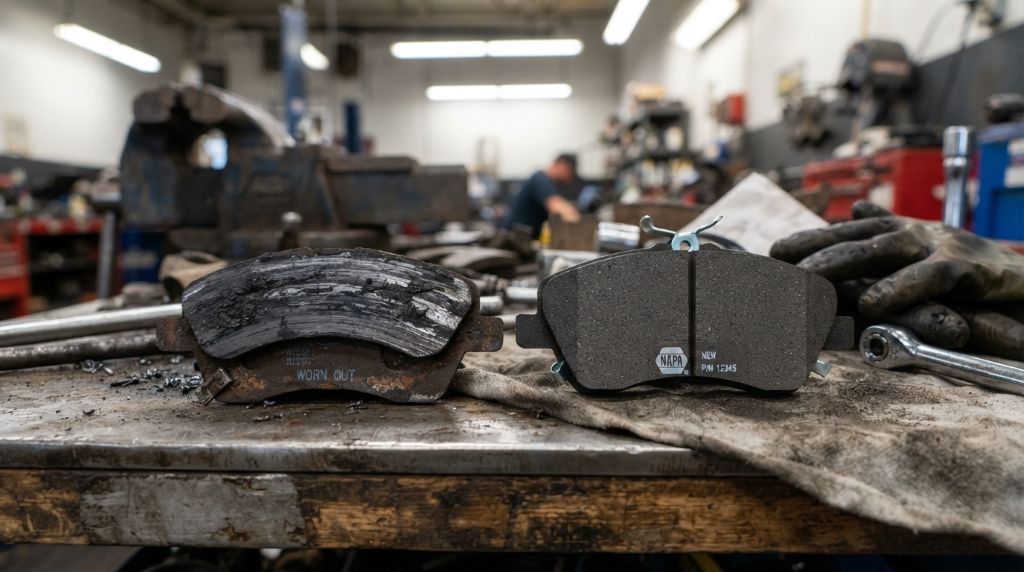
The repair bill explained everything. My pads were gone, and the backing plates were carving grooves into both front rotors. The job cost me $650 instead of the $180 a pad swap would have cost. Therefore, I now treat every brake sound as urgent business.
This guide covers the seven signs your brakes need replacing, explained in plain language. You will learn what each sound and feeling means, which repairs cost the most, and how to act before small wear becomes major damage. Additionally, you will see why the cheapest brake repair is always the earliest one.
Why Brake Problems Get Expensive Fast
Brake systems wear in a chain reaction. Pads grip rotors, so worn pads quickly damage rotors. Damaged rotors then heat unevenly, which stresses calipers and fluid. Therefore, one ignored symptom eventually touches every part of the system.
The safety stakes are just as serious. According to NHTSA’s crash causation research, brake-related problems were the critical factor in roughly 22 percent of crashes linked to vehicle issues. That makes brakes the single most common vehicle-related cause. You can read the agency’s guidance on its NHTSA brakes page.
The money math tells the same story. Brake pads typically last 30,000 to 70,000 miles, depending on driving style. Replacing pads alone is a routine, affordable job. However, letting pads grind down to metal adds rotor replacement, and sometimes calipers too. As a result, a two-hour job becomes a full-day repair.
Here is the good news. Your car announces every stage of this decline. Pads even carry built-in wear indicators designed to squeal on purpose. Therefore, you never need special tools or training. You only need to listen, feel, and look. The seven signs below cover every warning your brakes can give.
Sign 1: Squealing and Squeaking Noises
Squealing is the most famous brake complaint, and it exists by design. Most pads include a small metal wear indicator. When the friction material wears down, this tab contacts the rotor and produces a high-pitched squeal. Therefore, that annoying sound is literally an alarm clock telling you to book service.
Intermittent squeaks are not always urgent. Moisture, morning dew, and light surface rust can cause brief squeaking that fades after a few stops. Additionally, some performance pads squeak normally in cold weather. However, consistent squealing that grows louder each week means the indicator is touching. At that point, your pads have only a few millimeters of material left.
Listen for the pattern before you panic. Squealing only while braking points to the pads. Squealing while driving straight, without touching the pedal, often points to a stuck caliper or dragging hardware. Either way, the message is the same. Something needs attention soon.
Act within a week or two of steady squealing. A shop will measure the remaining pad thickness, usually for free. If the pads still have life, you pay nothing for the inspection. If they are low, replacing them now costs a fraction of what comes next. Consequently, the squeal is your best friend, if you respect it.
Sign 2: Grinding Sounds
Grinding is the emergency stage, and it means the squealing stage has already passed. This deep, harsh, metal-on-metal growl happens when the pad material is completely gone. The steel backing plate now presses directly against the iron rotor. Therefore, every stop is actively destroying your rotors.
The damage is fast and physical. Rotors develop deep grooves, and their thickness drops below safe limits. Once rotors wear too thin, they cannot be resurfaced. They must be replaced entirely. Additionally, the debris and heat can damage the caliper, which triples the repair cost again.
Some grinding has gentler explanations. A small stone trapped between the pad and rotor can grind temporarily. Additionally, severe rust after a snowy, salted winter can cause rough noise for the first few stops. However, these causes resolve quickly. Grinding that persists for more than a day or two means real metal contact.
Here is my honest advice from painful experience. Do not drive across town on a grinding brake. My four months of denial cost $650. The shop told me two more weeks would have risked a cracked rotor and a stuck caliper. Therefore, treat grinding as a this-week repair, or better yet, a today repair. Every mile adds damage you will pay for later.
Sign 3: A Soft, Spongy, or Sinking Pedal
Your brake pedal should feel firm and predictable. When it feels soft, mushy, or slowly sinks to the floor, the hydraulic system has a problem. This sign deserves the most urgency on the whole list, because it can appear suddenly and remove stopping power.
Several culprits create a soft pedal:
- Air bubbles trapped in the brake lines
- A brake fluid leak at a hose, caliper, or cylinder
- Moisture-contaminated fluid that boils under hard use
- A failing master cylinder losing internal pressure
Start with the simplest check. Look at the brake fluid reservoir and check the level. Low fluid usually means a leak somewhere, because brakes do not consume fluid. Additionally, look under each wheel for dark, oily drips on the ground or inside the wheels.
Spongy pedal after a long downhill drive points to boiled fluid instead. Old fluid absorbs moisture over time, and wet fluid boils at much lower temperatures. Therefore, brake fluid flushes every two to three years prevent this entirely.
One test confirms the danger level. With the car parked, press the pedal steadily for ten seconds. A firm pedal should not move. A pedal that slowly sinks means pressure is escaping. Therefore, do not drive the car normally until a shop inspects it. This sign can graduate from annoyance to emergency without further warning.
Sign 4: Vibration or Pulsation When Stopping
A smooth brake pedal should feel the same at every stop. When you feel pulsing, shaking, or a rhythmic vibration under your foot, uneven rotor surfaces are the usual cause. The pedal pushes back at you once per wheel revolution.
Warped rotors cause most pulsation. Rotors warp through extreme heat cycles, which is why towing, mountain driving, and hard braking lead the list. Over time, the rotor face develops thick and thin zones. Therefore, the pads grip unevenly, and you feel each uneven spot. The steering wheel may shake too, especially with warped front rotors.
However, pulsation is not always permanent damage. Light surface rust after a rainy week can cause temporary roughness that smooths out with driving. Additionally, uneven lug nut tightening after a tire rotation can mimic warping. A shop can measure rotor thickness variation and settle the question in minutes.
Mild warping sometimes allows resurfacing, where a machine shaves the rotor flat again. Severely worn or thin rotors need full replacement. Prices range from $300 to $500 per axle for parts and labor. Therefore, remember the connection to earlier signs. Pulsation today often started as ignored pad wear months ago. Regular checks break that expensive chain.
Sign 5: The Car Pulls to One Side
Release the steering wheel on a flat, empty road, and the car should track straight. If it drifts gently left or right during braking, one brake is working harder than the others. This imbalance deserves prompt attention, because it lengthens stopping distances and wears parts unevenly.
A stuck caliper is the most common cause. Calipers squeeze the pads against the rotors, and their small pistons must slide freely. Corrosion, dirt, or a damaged piston seal can leave one caliper partially engaged. Therefore, one wheel brakes hard while the others lag. The car yanks toward the working side.
Other causes also exist:
- A seized caliper slide pin on one corner
- Uneven pad wear between the left and right wheels
- A collapsed brake hose feeding only one caliper
- Contaminated pads from an oil or grease leak
Uneven braking matters most in emergencies. During a panic stop, a pulling car can wander toward another lane or off the road. Therefore, this sign is about safety, not just comfort.
Diagnosis is usually quick. A technician lifts the car, spins each wheel, and finds the dragging corner. Sometimes only the slide pins need cleaning and grease. However, a seized caliper needs replacement, which runs $300 to $500 with labor. Either way, fixing it early protects your pads, your rotors, and your steering on wet roads.
Sign 6: A Brake Warning Light on the Dash
Modern dashboards watch your brakes constantly, and two different lights can appear. Neither one should be ignored, but they mean different things. Therefore, learn to tell them apart before trouble finds you.
The red brake warning light usually signals one of two problems. First, it may mean the fluid level in the reservoir has dropped. Low fluid points to a leak or to pads worn thin enough to need more fluid volume. Second, on some cars, it means the parking brake is engaged. Check that simple possibility first, because it happens more often than anyone admits.
The amber or yellow ABS light tells a different story. It means the anti-lock system has detected a fault, often at a wheel speed sensor. Your normal brakes likely still work. However, the anti-lock feature that prevents skids during hard stops is offline. Therefore, drive gently and book service soon.
A flashing or alternating pair of lights deserves immediate care. Additionally, some cars combine the brake light with battery or traction warnings, which hints at electrical faults. My rule is simple. Red means stop driving soon, and amber means gentle driving until inspected. Either way, a diagnostic scan often identifies the exact fault in fifteen minutes, and many parts stores read the codes for free.
Sign 7: Thin Pads You Can See Yourself
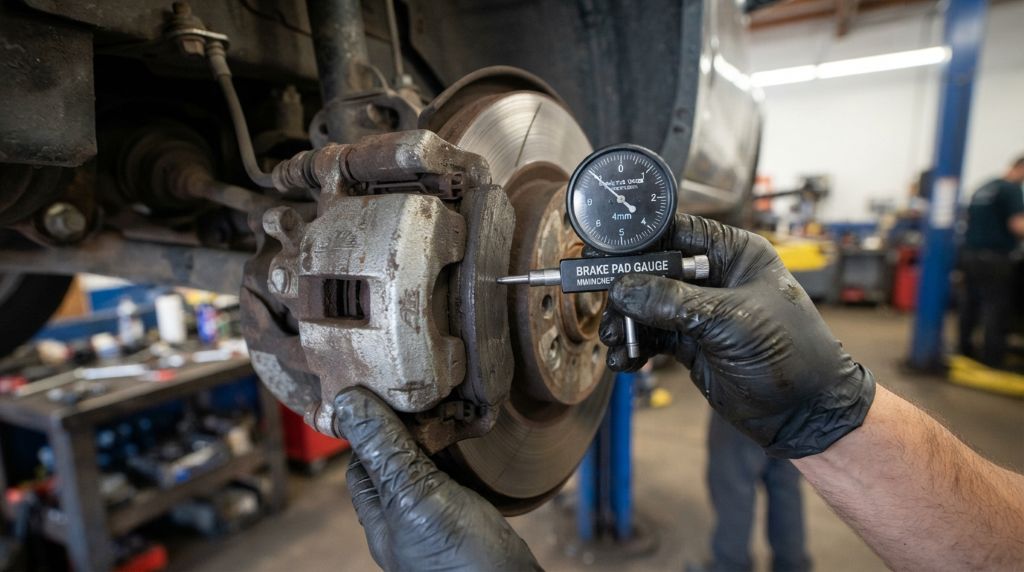
The most reliable sign requires no sounds or feelings at all. You can simply look at your pads. Most wheels have open spokes wide enough to see the brake caliper and pad assembly behind them. Therefore, a flashlight and thirty seconds per wheel tell you everything.
Here is what to check. Look for the pad, which presses against the shiny rotor disc. New pads carry about 12 millimeters of friction material. Worn pads approach 3 to 4 millimeters. According to most manufacturer guidance, pads at or below 3 millimeters need replacement immediately. Therefore, use the quarter-inch rule. If the pad material looks thinner than a quarter coin, book service this week.
Add these checks to your routine:
- Inspect pads during every tire rotation
- Peer through the spokes during a monthly tire pressure check
- Ask the shop to measure and write down pad thickness
- Photograph the pads so you can track wear over time
Additionally, watch for uneven wear between the two pads on one corner. That difference reveals a sticking caliper or slide pin. Therefore, the visual check catches problems that sounds and pedals miss entirely. If your wheels are too tight to see through, most shops will measure pads free during an oil change. My grinding lesson cost $650, and it started with pads I could have photographed myself. Look early, and pay less.
What Repairs Cost When You Wait
Prices vary by vehicle, however, the pattern is always the same. Early repairs cost a fraction of late ones:
- Pad replacement only: $150 to $300 per axle
- Pads plus rotors: $350 to $600 per axle
- Caliper replacement added: $300 to $500 per corner
- Fluid flush: $80 to $150
- Master cylinder replacement: $400 to $600
Therefore, the $180 brake job is real, but only for drivers who act on the first squeal. Every skipped warning moves you one row down this list. Additionally, the Car Care Council notes that brake service consistently ranks among the most neglected maintenance items, despite being among the most safety-critical.
Final Thoughts
The signs your brakes need replacing follow a clear order. Squealing comes first, grinding comes last, and the pedal, vibration, pulling, warning lights, and visible thinness fill the middle. Catch the early signs, and brake service stays cheaper. Ignore them, and the bill can multiply three times over.
Remember my $650 Tuesday. Four months of squealing cost me two rotors and a full afternoon at the shop. Therefore, I now inspect my pads every oil change and act within a week of any new sound. If a warning light appears alongside these symptoms, it’s also worth understanding whether your service engine soon light is a serious issue before continuing to drive.
Walk outside tonight and peek through your wheel spokes with a flashlight. Have you ever ignored a brake warning until the repair grew? Share your story in the comments below. Additionally, share this guide with a new driver in your family, because these seven signs are lessons everyone learns eventually. The cheap way or the expensive way.
Frequently Asked Questions
How long do brake pads usually last?
Most pads last 30,000 to 70,000 miles. City driving and heavy braking wear them faster.
Can I drive with grinding brakes?
You can, but you should not. Grinding means metal is cutting metal, and rotor damage grows with every mile.
What does a spongy brake pedal mean?
Air, a leak, or old fluid in the lines usually causes it. Have the car inspected before driving far.
How thick should brake pads be before replacing?
Replace pads at 3 millimeters or less. A quick visual check through the wheel spokes shows the thickness.
How much does a full brake job cost?
Pads and rotors per axle typically cost $350 to $600. Calipers or master cylinders raise the total.