
Ultimate Golf Towel Buying Guide for Beginners and Pros

A golf towel might seem like a minor accessory. Many golfers, especially beginners, treat it as an afterthought. However, the right towel plays a more important role in your game than most people realise. It keeps your clubs clean, protects your grips from moisture, and helps you maintain consistent contact with the ball throughout a round.
Whether you are stepping onto a course for the first time or you have been playing for decades, choosing the right towel makes your experience cleaner and more professional. This guide covers everything you need to know, from materials and sizes to attachment methods and care tips.
Why a Golf Towel Is an Essential Piece of Kit
Every serious golfer carries a towel in their bag. It is not just about wiping your hands after a muddy bunker shot. Dirty grooves on a clubface reduce spin and accuracy. A wet grip changes how the club feels in your hands and can cause it to twist at impact.
Additionally, maintaining clean equipment is a sign of respect for the game. It shows that you take your round seriously and that you care for your gear. A good towel is therefore one of the first items any golfer should add to their bag, regardless of skill level. When building out your golf gear checklist, a quality towel deserves a spot right alongside your gloves and tees.
Understanding Golf Towel Materials
The material of a golf towel determines how well it absorbs moisture, how long it lasts, and how soft it feels against your hands. There are three main options to consider.
Terry Cotton Towels
Terry cotton is the most traditional and widely used material in golf towels. It features a looped pile on the surface that increases the total surface area of the fabric, which improves absorbency. Terry cotton feels soft, grips dirt and moisture effectively, and holds up well through frequent washing.
The main drawback is drying time. A thick terry cotton towel holds a lot of water and can feel heavy and damp during a long round in wet conditions. However, for most golfers playing in dry or moderate climates, terry cotton remains an excellent all-round choice.
Microfiber Towels
Microfiber has become increasingly popular in recent years. It is made from extremely fine synthetic fibres, usually a blend of polyester and nylon. Microfiber absorbs water quickly, dries fast, and is lightweight. It is also exceptionally gentle on clubfaces and grips, making it a strong choice for golfers who are particular about protecting their equipment.
One consideration is durability. Lower-quality microfiber towels can pill or deteriorate after repeated washing. Therefore, when choosing a microfiber option, look for a GSM of at least 300 and a tightly woven construction for longer-lasting performance.
Waffle-Weave Towels
Waffle-weave towels use a distinctive grid-like pattern that creates small pockets across the surface. These pockets trap dirt and moisture efficiently and release it easily when the towel is wrung out or washed. Waffle-weave towels are typically lighter and faster-drying than terry cotton, but slightly less soft to the touch.
They are a popular choice among golfers who walk the course in all weather conditions, since their quick-dry properties mean the towel stays more functional in wet rounds.
Key Golf Towel Features to Look For
Understanding what separates a good golf towel from a basic one helps you make a smarter purchase. Several golf towel features consistently make a difference on the course.
Size and Coverage
Golf towels typically range from small hand-towel size to larger caddie-style towels. Smaller towels, around 30 by 50 centimetres, are easy to attach to a bag and suitable for wiping hands and grips. Larger towels, around 40 by 60 centimetres or bigger, provide more surface area for cleaning clubs and gear.
A larger towel is more versatile. However, it also takes longer to dry and can feel cumbersome if you prefer to travel light.
Attachment Options
Almost every golf towel comes with a clip or grommet for attaching to your bag. The quality of this attachment point matters more than most people think. A weak clip can break mid-round, leaving you without your towel at an inconvenient moment.
Look for a metal carabiner-style clip or a reinforced grommet with a strong ring. These hold securely to bag straps and handles and withstand the movement of carrying a bag across 18 holes. Plastic clips are fine for casual rounds but tend to snap under regular use.
Dual-Zone Design
Many modern golf towels feature a dual-zone construction. One side is typically a scrubbing surface for cleaning grooves and removing mud from clubheads. The other side is softer for wiping hands and grips without causing irritation.
This design is one of the most practical golf towel features available and is worth paying a small premium for. It means you carry one towel that handles every task, rather than fumbling for different cloths at different points during your round.
Colour and Personalisation
While performance should be your priority, aesthetics are a reasonable secondary consideration. Golf towels come in a wide range of colours and patterns. Some brands offer embroidered logos or custom text, which makes them a popular gift choice.
If you tend to leave gear behind at clubs or pro shops, a distinctive colour or personalised design makes your towel easy to identify.
Comparing Popular Options: What Golf Towel Reviews Tell Us
Spending time reading golf towel reviews before you buy is always worthwhile. Reviews from real golfers reveal practical details that product descriptions often skip, such as how a towel performs after multiple washes or whether the clip holds up on a carry bag.
Across a wide range of golf towel reviews, a few patterns emerge consistently. Towels with at least 300 GSM fabric receive better long-term feedback than thinner options. Dual-zone designs earn higher marks for convenience. And towels with metal attachment hardware almost universally outlast those with plastic clips.
Budget options below $10 often look appealing but frequently show wear within a season. Mid-range options between $15 and $30 tend to hit the best balance of performance and durability. Premium towels above $30 are worth considering if you play multiple times a week and want a product that holds up to heavy use over several years.
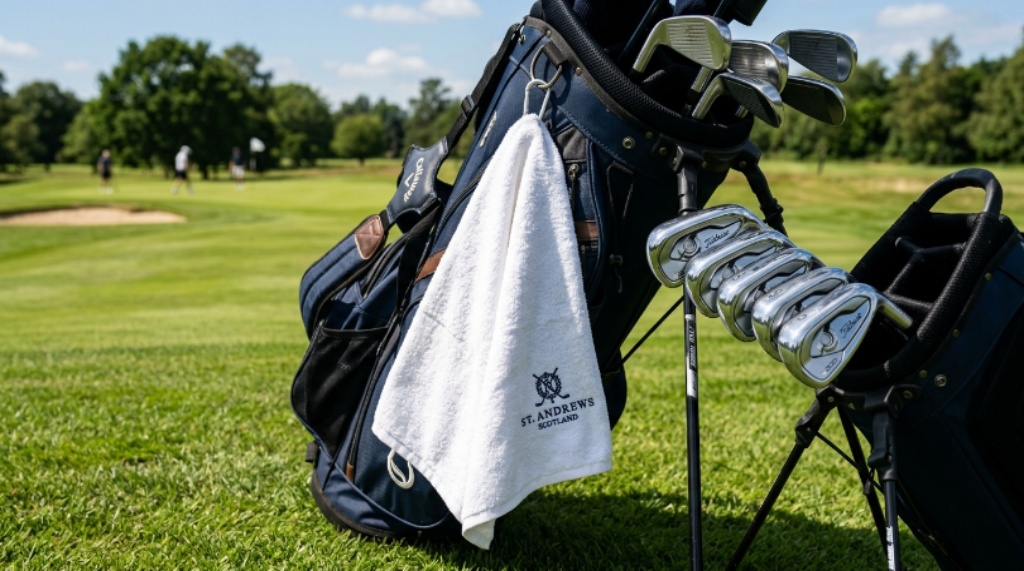
Golf Towel Sizing: Choosing What Fits Your Game
Size is a more personal choice than most buyers realise. The right size depends on how and where you play.
Cart golfers have the luxury of space. A larger towel is easy to manage when your bag sits on the back of a cart throughout the round. You can keep it wet on one side and dry on the other, and it is always within easy reach.
Walkers and carry bag users face different demands. A smaller, lighter towel reduces the overall weight of your setup. Additionally, a compact towel is easier to wring out and reattach while walking between shots.
Beginners often do fine with a mid-size towel in the 30 by 50 centimetre range. It handles all the essential tasks without being unwieldy. As you develop preferences and play more frequently, you will naturally gravitate toward a size and style that suits your routine.
How to Care for Your Golf Towel
Proper care extends the life of any towel significantly. Most golf towels, whether terry cotton or microfiber, can be machine washed in cold or warm water on a gentle cycle. Avoid using fabric softener, as it coats the fibres and reduces absorbency over time.
Tumble drying on low heat is usually safe for cotton towels. Microfiber dries best when air-dried or dried on a low heat setting, since high heat can damage the fine fibres and reduce their effectiveness.
After a round in wet or muddy conditions, rinse your towel thoroughly before washing. Leaving dirt and grass residue in the fabric weakens the weave over time. Additionally, hanging your towel to dry rather than leaving it bundled in your bag prevents mildew and keeps it fresh for your next round.
Building a Golf Bag Setup That Works
A towel is just one part of a well-organised golf bag. When putting together your golf gear checklist, think about how each item supports your performance and comfort on the course.
Your towel should be easy to access at all times. Clip it to an exterior ring near the top of your bag, not buried under headcovers or tucked into a pocket. Some golfers keep two towels: one wet for cleaning clubs and one dry for hands and grips. This approach adds a small amount of weight but eliminates the frustration of reaching for a dry surface and finding a wet one.
Pair your towel with a groove cleaning brush for the most thorough club maintenance routine. Together, these two accessories are inexpensive, lightweight, and make a measurable difference in how your equipment performs.
Conclusion
A golf towel is a small investment with a meaningful impact on your game. The right one keeps your clubs clean, your grips dry, and your hands comfortable through all 18 holes. Start by choosing a material that suits your climate and playing style. Look for solid construction, a reliable attachment clip, and a dual-zone design if possible.
Read golf towel reviews before committing to a purchase. Pay attention to long-term durability feedback, not just first impressions. Size your choice to how you carry your bag, and care for your towel properly so it lasts for seasons rather than months.
Whether you are ticking items off your golf gear checklist for the first time or upgrading your current setup, a well-chosen towel earns its place in every golf bag. It is a simple accessory that experienced golfers never overlook, and once you have a good one, you will understand why.
Frequently Asked Questions
How many golf towels should I carry in my bag?
Most golfers carry one, but two is a practical setup for wet conditions or long rounds. One towel stays damp for cleaning clubfaces and grooves, while the second stays dry for wiping hands and grips. This approach keeps your gear clean and your hands comfortable throughout the entire round.
What is the best material for a golf towel?
It depends on your priorities. Terry cotton is soft and highly absorbent, making it the best all-round choice for most golfers. Microfiber dries faster and is lighter, which suits walkers and those who play in wet climates. Waffle-weave sits in between, offering good moisture management and a quick-dry performance.
Does the size of a golf towel matter?
Yes, it does. Larger towels provide more cleaning surface and versatility but add weight and bulk. Smaller towels are easier to manage on a carry bag. As a general guide, a towel between 30 and 40 centimetres wide and 50 to 60 centimetres long works well for most golfers in most situations.
How often should I wash my golf towel?
After every two to three rounds is a good routine for most golfers. If you have played in particularly muddy or wet conditions, wash it after that round specifically. Regular washing keeps the fabric absorbent and hygienic and prevents the build-up of oils from your hands that can reduce grip effectiveness over time.
Can I use a regular household towel instead of a golf-specific one?
You can, but it is not ideal. Regular towels lack a clip or grommet for bag attachment and are often too large to manage conveniently on the course. Golf-specific towels are designed with the right size, weight, and attachment hardware to make them practical during a round. The difference in price is usually small enough to make the dedicated option the sensible choice.